

Key Takeaways
Choosing the right SsangYong water pump parts starts with identifying the exact engine and understanding how the cooling system is arranged. Careful installation and coolant maintenance matter just as much as the part itself.
- Match the pump to the vehicle identification number, engine code, and OE reference.
- Inspect the gasket, seal, pulley, bearing, and drive components as a complete system.
- Treat leaks, overheating, unusual noise, and poor cabin heat as warning signs.
- Use the correct coolant and follow the manufacturer’s bleeding and torque procedures.
- Recheck the system after installation and monitor temperature and coolant level.
Understand how SsangYong cooling systems work
A cooling system carries heat away from the engine and releases it through the radiator. The water pump provides the circulation needed for that process, while the thermostat controls when coolant is sent through the radiator. Knowing the basic flow makes it easier to choose parts and interpret symptoms.
The water pump’s role in engine temperature control
The pump moves coolant through passages in the engine so heat does not remain concentrated around the cylinders and cylinder head. A worn impeller, damaged seal, or failing bearing can reduce circulation or allow coolant to escape. The result may be overheating even when the radiator itself appears clean and intact.
How coolant moves through the engine and radiator
Coolant typically leaves the pump, passes through the engine’s internal passages, and reaches the thermostat. Once the engine is warm enough, the thermostat opens and directs coolant toward the radiator, where airflow removes heat before the fluid returns to the pump. The heater core branches from this circuit and uses hot coolant to warm the cabin.
Key components that work with the water pump
The pump is only one part of a working cooling system. The thermostat, radiator, hoses, drive belt or timing drive, expansion tank, and heater circuit all affect coolant movement and temperature control. A replacement pump should therefore be assessed alongside nearby parts, especially if the old unit failed after a leak or overheating event.
Differences between mechanical and electric water pumps
A mechanical pump is driven by a belt or timing system and commonly has a pulley, bearing, shaft, impeller, and mechanical seal. An electric pump uses a motor and electrical controls to move coolant, so diagnosis also includes wiring, connectors, and control signals. Do not assume the two designs can be exchanged simply because their housings look similar.
Identify the SsangYong water pump parts you need
The phrase SsangYong water pump parts can refer to a complete assembly or to individual service pieces. Before ordering, compare what has failed with what the repair procedure requires. A complete kit may save time, but a sound pulley or drive component does not always need replacement.
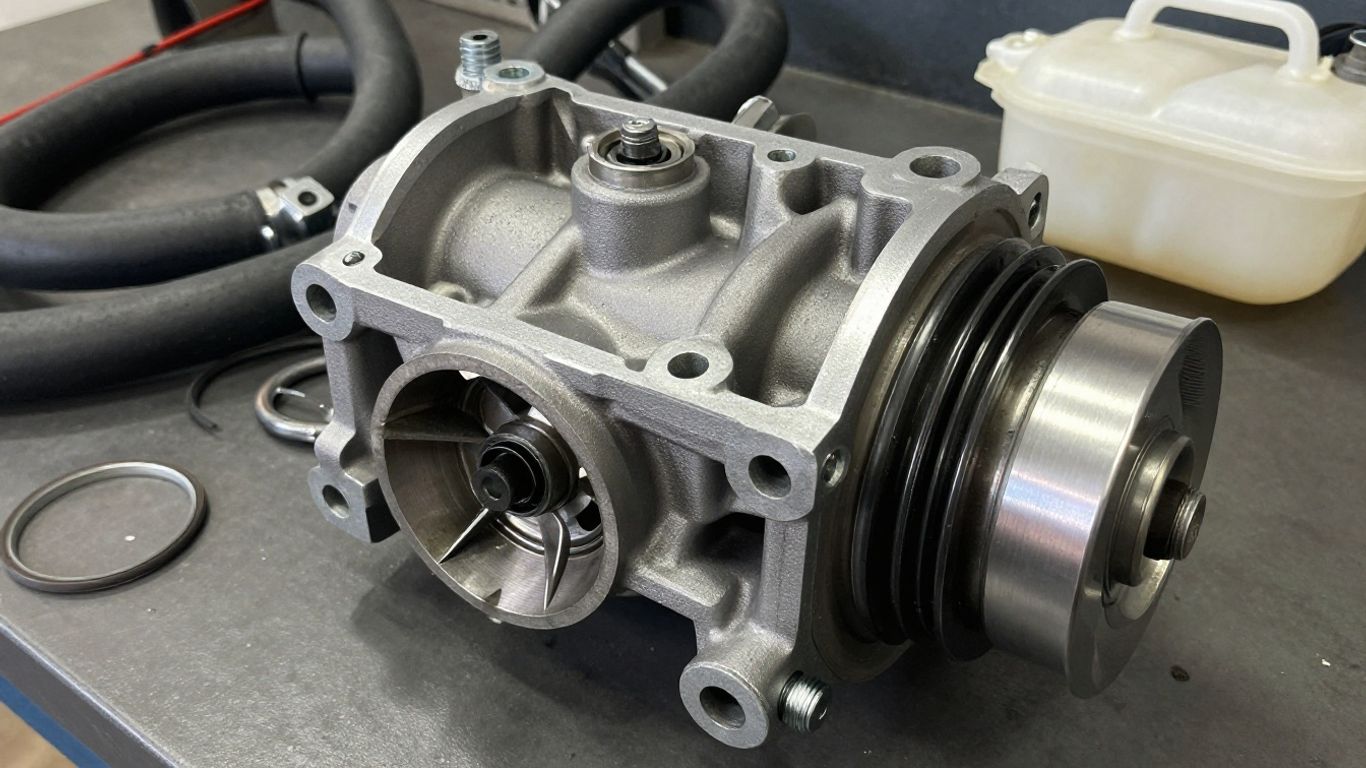
Water pump assemblies and replacement kits
A complete assembly normally includes the pump housing and internal rotating parts, while a replacement kit may also include a gasket or O-ring. Check the contents rather than relying on the product photograph. For a Korando K320 application, this Korando K320 water pump page is a useful example of why fitment should still be confirmed by OE number or VIN.
Gaskets, seals, O-rings, and mounting hardware
A new pump can leak if the mating gasket is reused, the O-ring is damaged, or the mounting surface is dirty. Some designs use a formed gasket, others an O-ring or a specified sealant. Inspect bolt condition and compare the supplied hardware with the original before beginning assembly.
Impellers, bearings, pulleys, and drive components
The impeller determines how effectively the pump moves coolant, while the bearing supports the shaft and the seal keeps coolant away from the bearing. On a mechanical design, the pulley and belt or timing drive must run true. If the drive belt is cracked, contaminated, or loose, replacing only the pump may leave the underlying problem unresolved.
Thermostats, hoses, and related cooling-system parts
Thermostats and hoses are not automatically part of a water pump kit, yet they can cause similar temperature symptoms. A collapsed hose may restrict flow, and a thermostat stuck closed can create rapid overheating. Inspect these related components while access is available, but replace them only when condition and specification justify it.
Match parts to your SsangYong model and engine
Parts that look alike can differ in mounting points, pulley position, impeller depth, connector arrangement, or gasket shape. Model name alone is rarely enough because production years and engine variants can change the required pump. Use several identification checks before placing an order.
Using the vehicle identification number and engine code
The VIN ties the vehicle to its production specification, while the engine code identifies the power unit more precisely. Record both, along with model year, drivetrain, and whether the pump is mechanical or electric. A registration lookup, such as this vehicle fitment lookup, can narrow the search, but the final comparison should still use the vehicle’s identification details.
Comparing OEM, aftermarket, and genuine SsangYong parts
An OEM part is made to the original equipment specification, while an aftermarket part is produced by another supplier and may be offered in several quality levels. A genuine part is sold under the vehicle maker’s parts identity. Compare construction, included seals, warranty terms, and documented application rather than treating the labels as interchangeable.
Checking part numbers and superseded references
Write down the number stamped or printed on the old pump, then compare it with the listing’s OE and superseded references. A superseded number can be valid when the manufacturer has replaced an earlier reference, but it should lead to a confirmed application, not merely a similar-looking component. When uncertain, ask the supplier to verify the complete number against the VIN.
Confirming fitment for Korando and other SsangYong models
Korando, Actyon, Kyron, Rexton, Rodius, and Stavic applications can differ by engine and production period. A compatibility list is useful only when its engine and year details match the vehicle in front of you. The 6652000520 water pump listing illustrates why a broad model list should be read together with the detailed engine fitment information.
Recognize signs of water pump failure
A failing pump does not always announce itself with one dramatic symptom. Coolant may escape slowly, a bearing may become noisy, or circulation may weaken only when the engine is under load. Because several cooling faults overlap, use symptoms as reasons to inspect and test rather than as a final diagnosis.
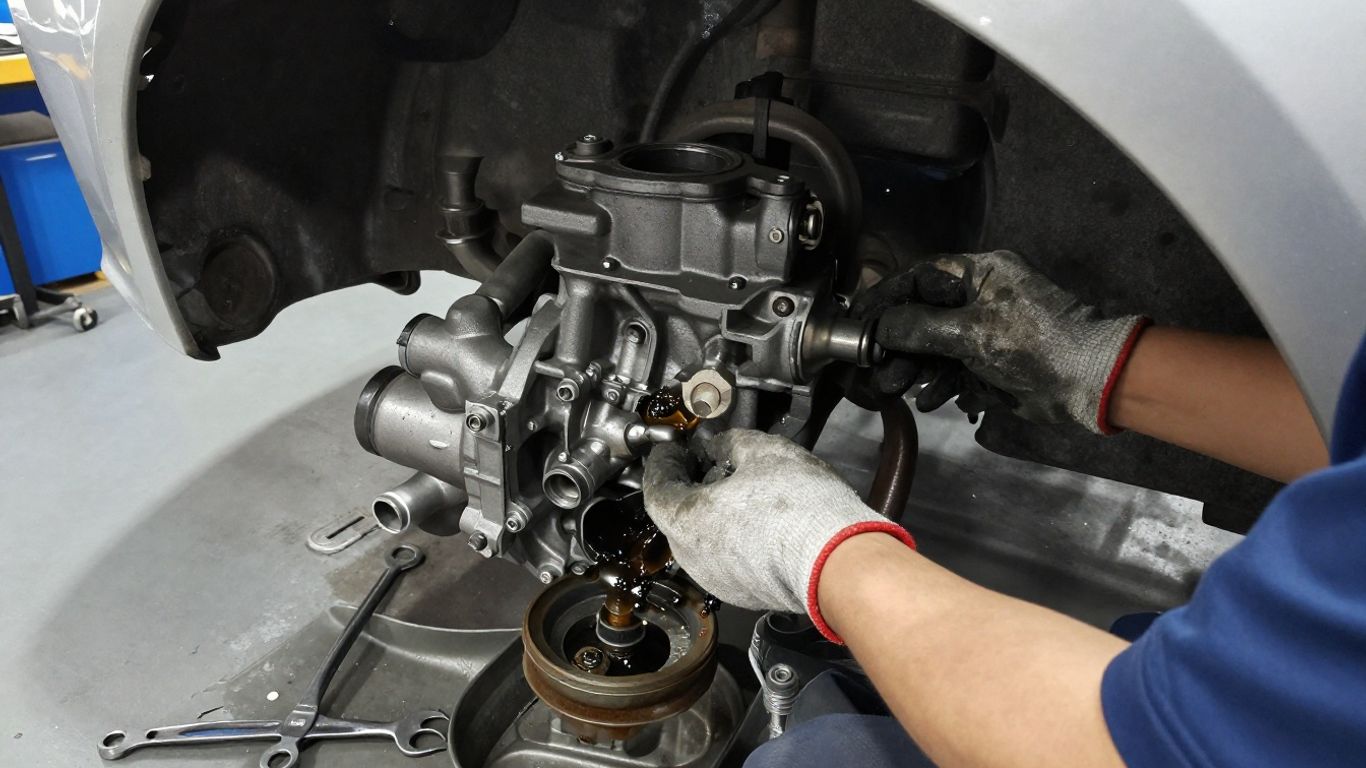
Coolant leaks around the pump housing
Look for wetness, dried coolant residue, or a sweet smell near the pump housing and drain area. A leak may appear only while the engine is warm and the system is pressurized. Never reach near a moving belt or open a hot cooling system; allow the engine to cool before tracing the source.
Overheating, temperature fluctuations, and warning lights
A rising gauge, sudden temperature spike, coolant warning, or repeated overheating deserves prompt attention. Low coolant, a thermostat fault, a blocked radiator, and air in the system can produce similar signs. If the gauge moves beyond its normal position, stop safely and investigate rather than continuing to drive.
Unusual noise from bearings or the pulley
Grinding, whining, rumbling, or a change in noise with engine speed can point to a worn pump bearing or pulley. It can also come from a belt tensioner or another accessory, so isolate the sound carefully. Excessive pulley movement is especially concerning on a belt-driven pump.
Steam, coolant loss, and poor cabin heating
Steam from the engine bay suggests that coolant is escaping or boiling and should be treated as an urgent warning. A heater that blows cold at idle but warmer at higher speed may indicate low coolant or weak circulation. Check the reservoir only when safe, and do not use cabin heat as proof that the pump is healthy.
Choose quality SsangYong water pump replacements
Quality is more than a polished housing or a low advertised price. The pump must have the correct dimensions, a suitable seal, and an impeller designed for the intended application. It should also arrive with clear fitment information and the components needed for the planned repair.
Evaluating materials, impeller design, and seal quality
Inspect the casting, impeller, shaft, bearing, and sealing surfaces for clean manufacture and consistent finish. The impeller should be secure, correctly shaped, and free from damage or corrosion. Reliable packaging and a traceable part reference are practical signs that the supplier takes quality control seriously.
When to replace the gasket or full pump assembly
Replace the gasket or O-ring whenever the pump is removed unless the repair instructions specifically provide another procedure. If the bearing, impeller, seal, or housing is damaged, a complete assembly is usually more sensible than trying to renew one isolated element. The surrounding belt and tensioner should also be assessed on mechanical systems.
Balancing price, warranty, and supplier reputation
A cheaper component may cost more if it leaks soon after installation and requires the same labor twice. Compare the warranty, return conditions, technical support, delivery packaging, and fitment process. For buyers seeking genuine SsangYong parts, order details and refund terms are worth reviewing alongside the quoted price.
Avoiding incorrect or low-quality compatible parts
Words such as “compatible” do not replace an engine code or confirmed part number. Avoid listings with vague applications, missing dimensions, unclear contents, or no information about the seal and gasket. Exact fitment comes first because even a well-made pump is unsuitable if its mounting or flow characteristics do not match the engine.
Replace and maintain the water pump safely
Water pump replacement can involve coolant, rotating drives, tight fasteners, and hot engine components. Follow the service information for the specific engine, use suitable tools, and leave the job to a qualified technician if access or timing-drive work is beyond your experience. Keep coolant away from children, pets, and drains.
Preparing the vehicle and draining the cooling system
Park on a level surface, let the engine cool completely, disconnect the battery when required by the service procedure, and protect painted surfaces. Raise and support the vehicle safely if access requires it. Drain the coolant into a suitable container and dispose of it according to local requirements.
Removing the old pump and cleaning the mating surface
Before removal, photograph belt routing and note bolt locations because fasteners may vary in length. Remove the drive components according to the engine procedure, then loosen the pump evenly. Clean the mating surface without gouging it, and inspect for corrosion, distortion, or coolant damage before installing anything new.
Installing the replacement parts with correct torque
Fit the specified gasket or O-ring in the correct position and keep sealant use within the manufacturer’s instructions. Tighten bolts in the stated sequence and use a calibrated torque wrench. Refit the belt or timing components with the correct alignment and tension; a shortcut here can damage the engine even when the pump itself is sound.
Refilling, bleeding, and testing for leaks
Use fresh coolant of the correct specification and mix it as directed. Fill slowly, open the prescribed bleed points, or follow the electric-pump bleed procedure where applicable. After the first warm-up, inspect for leaks and confirm stable temperature, heater operation, and normal belt behavior before taking a longer drive.
A short visual demonstration can help with general orientation, but it cannot replace the service manual for torque values, bleeding steps, or timing-drive alignment. Recheck the coolant level after the system has cooled and inspect again after a short road test.
Maintaining coolant condition and monitoring future performance
Use the specified coolant, keep the reservoir at the correct level, and observe the service interval rather than topping up indefinitely. Watch for residue, changes in temperature, recurring warning lights, or new bearing noise. A simple record of the repair date, part number, coolant type, and follow-up checks makes future diagnosis easier.
Conclusion
The right water pump replacement begins with accurate vehicle identification and ends with careful installation, proper bleeding, and regular monitoring. By treating the pump, seal, drive, thermostat, and hoses as connected parts of one cooling system, you can make a more dependable repair and catch renewed problems early.
Frequently Asked Questions
What does a water pump do?
It circulates coolant through the engine and radiator so heat can be carried away and the engine can operate within its normal temperature range.
How can I tell whether a water pump is failing?
Common clues include coolant leakage, overheating, temperature changes, unusual bearing or pulley noise, steam, and poor heater performance. Testing is needed because other cooling faults can look similar.
Should I replace the gasket with the pump?
Usually, yes. A removed gasket or O-ring may not reseal reliably, so fitting the specified new seal helps prevent leaks after reassembly.
Can a bad thermostat seem like a bad water pump?
Yes. A thermostat stuck closed or open can cause overheating or unstable temperatures, so the cooling system should be diagnosed rather than relying on one symptom.
How often should coolant be changed?
Follow the vehicle and coolant manufacturer’s service interval. The correct interval depends on the coolant type and the vehicle’s maintenance schedule.
Is it safe to open the radiator cap when the engine is hot?
No. A hot cooling system can be pressurized and release scalding coolant or steam. Wait until the engine is fully cool before opening it.
What should I check after replacing a water pump?
Check for leaks, correct coolant level, stable temperature, heater output, belt alignment, unusual noise, and any warning lights during and after the first drive.