
Key Takeaways
Choosing the right Ssangyong transmission parts depends on more than a visual match. Confirm the drivetrain details, diagnose the fault carefully, and compare the full cost of each replacement route.
- Identify the vehicle and transmission before ordering.
- Match components by code, specification, and drivetrain configuration.
- Treat symptoms as clues, not proof of a failed part.
- Compare new, used, and remanufactured options alongside warranty terms.
- Plan installation, fluid service, and electronic calibration together.
Understand the Ssangyong transmission system
A transmission transfers engine power to the driven wheels while allowing the vehicle to start, accelerate, reverse, and cruise at practical engine speeds. The exact arrangement varies between automatic and manual systems, and four-wheel-drive vehicles add a transfer case and additional differential components. Understanding that layout prevents a common mistake: ordering a part that looks similar but belongs to a different drivetrain.
How automatic and manual transmissions differ
A manual transmission uses a driver-operated clutch and a gear selector to connect the engine to selected gearsets. An automatic transmission manages gear changes through hydraulic pressure, clutches, planetary gearsets, and electronic controls. Because the operating principles differ, parts such as clutch assemblies, valve bodies, filters, and torque converters must be identified by transmission family rather than by vehicle appearance alone.
The role of the transfer case and differential
The transfer case distributes torque between axles in a four-wheel-drive system and may contain chains, gears, bearings, seals, and shift mechanisms. Differentials then allow wheels on the same axle to rotate at different speeds while cornering. A fault in one unit can feel like a transmission problem, so the complete driveline should be considered before dismantling anything.
For a four-wheel-drive vehicle, a transfer case supplier can be a useful starting point for comparing the assembly type and vehicle application. The listing still needs to be checked against the vehicle identification details rather than accepted as a universal match.
Common transmission components and their functions
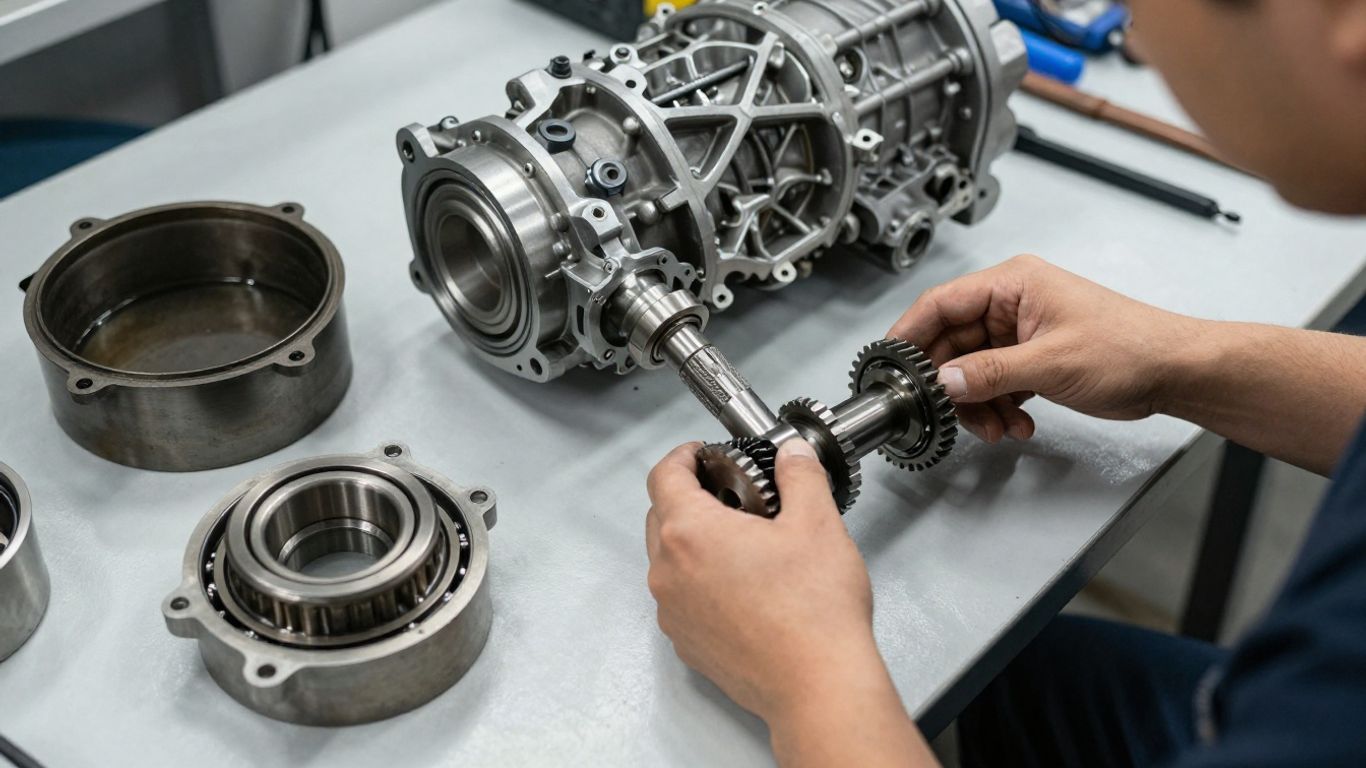
Gears and shafts carry torque, bearings support rotating parts, and synchronizers help manual gearsets engage smoothly. Automatic systems use clutch packs, a torque converter, a valve body, solenoids, and a filter to control power flow and hydraulic cleanliness. Seals and gaskets keep fluid in the system, while sensors and control modules help regulate electronically managed operation.
Why drivetrain configuration affects parts compatibility
Engine size, drive layout, transmission type, production changes, and final-drive ratios can all affect compatibility. Even two vehicles with the same body style may use different shafts, mounts, gear ratios, or transfer-case fittings. Compatibility comes before price: a cheaper component is not a saving if it requires modification or cannot be calibrated.
Identify the correct transmission parts
Accurate identification is the foundation of a successful order. Start with the vehicle identification number, then add the transmission code, engine specification, model year, and drivetrain configuration. Photographs help, but they should support written identification rather than replace it.
Finding the vehicle identification number
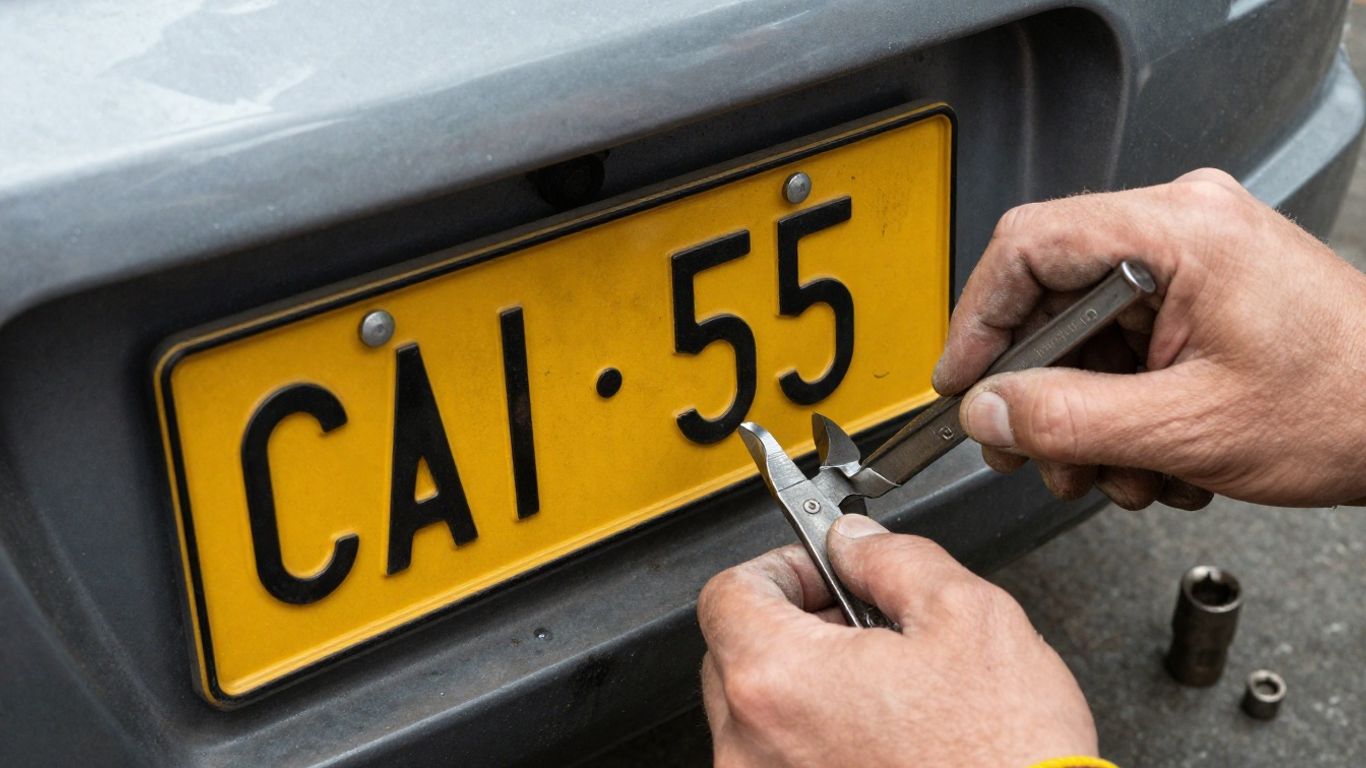
The vehicle identification number may appear on the dashboard, door frame, registration documents, or service records, depending on the vehicle and market. Record it exactly, including every letter and digit, and avoid relying on a partial number copied from memory. A supplier can use the full identifier to narrow the catalog search, but the buyer should still confirm the result.
Reading transmission codes and build details
Transmission codes are commonly found on identification plates, labels, service documentation, or the transmission casing. Record the code, production date, engine, drive arrangement, and any visible casting or serial numbers. These details can distinguish revisions that share an external housing but use different internal components.
Matching parts by model year and engine
Model year is a useful filter, not a complete answer. Production changes may occur within a model year, while the same engine family can be paired with more than one transmission. Ask for confirmation of the engine output, transmission type, number of speeds, drive layout, and whether the part is intended for a particular production range.
Using original part numbers and superseded references
An original part number gives a stronger basis for comparison than a generic description such as “automatic gearbox component.” If the number has been superseded, request the documented replacement reference and verify that the supplier treats it as an approved interchange. Keep the old number, photographs, measurements, and purchase records together in case the part must be returned.
Explore essential Ssangyong transmission parts
A transmission is a system of interacting parts, so replacing only the visibly damaged item is not always enough. Metal debris, heat, contaminated fluid, or a worn mating surface can damage a newly installed component. The sensible approach is to inspect the related parts and determine whether the repair is component-level or assembly-level.
Gears, shafts, and synchronizers
Gears must be assessed for chipped teeth, pitting, scoring, and abnormal wear patterns. Shafts should be checked for distortion, worn splines, and bearing-seat damage, while synchronizers need inspection for worn friction surfaces and damaged engagement teeth. Gear noise under a particular load or in a particular ratio can help guide inspection, but the casing must usually be opened for confirmation.
For a replacement gear, compare tooth count, dimensions, material, heat treatment information, and the matching shaft. A listing for Actyon II transmission gears may provide useful specification details, but the exact vehicle and transmission code remain decisive.
Torque converters and clutch assemblies
A torque converter transfers power hydraulically in an automatic transmission and can contribute to shuddering, slipping, or delayed engagement when its internal clutch or bearing surfaces are worn. Manual clutch assemblies instead use a friction disc, pressure plate, release mechanism, and often a pilot or release bearing. These parts should be assessed as a working set where wear is shared across the assembly.
When comparing torque converter parts, check the transmission application, mounting pattern, dimensions, and any balance or installation requirements. A converter that fits the bellhousing physically may still have the wrong internal specification.
Valve bodies, solenoids, and transmission filters
The valve body directs hydraulic pressure through passages and valves, while solenoids respond to electronic commands to control shifting and clutch application. A restricted filter can reduce fluid flow and contribute to pressure problems. Before replacing a valve body or solenoid, test wiring, connectors, fluid condition, and stored diagnostic codes.
Seals, gaskets, bearings, and repair kits
Seals prevent fluid loss at shafts, pumps, housings, and connectors. Gaskets establish a reliable joint between covers and casings, while bearings maintain alignment under load. A repair kit can be efficient when it includes the correct combination of friction plates, steels, seals, gaskets, and other service items, but its contents should be listed clearly rather than assumed.
Transfer case chains, gears, and internal components
Transfer-case chains can stretch, gears can develop chipped or worn teeth, and bearings may create rumbling or vibration. Internal inspection should include the chain guides, sprockets, shafts, bearings, seals, and engagement mechanism. Since transfer-case wear can affect the rest of the driveline, check tyre sizes and rolling circumferences as well as the assembly itself.
Recognize signs of transmission component failure
Symptoms rarely identify one failed component with certainty. A slipping sensation may come from clutch wear, low fluid, hydraulic pressure loss, or an electronic control issue, while a noise may originate in the differential or transfer case. Record when the symptom occurs, whether the vehicle is hot or cold, and which gear or drive mode is selected.
Symptoms of worn gears and bearings
Worn gears may produce whining, grinding, or a rumble that changes with road speed or selected gear. Bearing noise often changes under acceleration, deceleration, or cornering. Visible metal particles in drained fluid can support the diagnosis, but they do not reveal the full source without inspection.
Causes of slipping, shuddering, and delayed engagement
Slipping can result from worn friction material, inadequate hydraulic pressure, incorrect fluid level, or a control fault. Shuddering may involve a torque-converter clutch, clutch pack, mount, or driveline angle. Delayed engagement can follow a low fluid level, restricted filter, internal leak, or valve-body problem, so replacing a single part without testing may leave the original cause unresolved.
Warning signs of torque converter problems
A converter fault may appear as shuddering during light acceleration, inconsistent lock-up, unusual vibration, or a delay when selecting drive. Similar sensations can come from engine misfire or worn mounts. Compare the symptom with scan data and fluid condition before ordering a converter.
Fluid leaks, overheating, and unusual noises
Fluid on the ground, a burning smell, discolored fluid, or rising temperature indicates that continued driving may increase the damage. Inspect cooler lines, seals, the pan, casing joints, and transfer-case housings. A new noise after a repair also deserves attention rather than being dismissed as normal bedding-in.
When diagnostic testing is necessary
Professional testing is worthwhile when symptoms overlap or when electronic controls are involved. A technician may combine a road test, scan-tool data, pressure testing, fluid inspection, and mechanical examination. The resulting evidence helps distinguish a service issue from a component failure and gives the parts supplier a clearer specification.
Choose between new, used, and remanufactured parts
The best replacement route depends on the failed component, vehicle value, availability, and the cost of labor. New parts offer predictable condition but may be expensive or unavailable. Used and remanufactured parts can make sense when their identity, inspection process, and warranty are clearly documented.
Advantages and limitations of new components
New components generally provide unworn friction surfaces and fresh seals, but “new” should still be defined. Ask whether the item is an original, aftermarket, or newly manufactured replacement and whether it includes every required fitting. A new part cannot compensate for an incorrect diagnosis or a damaged mating component.
When used transmission parts are a practical option
A used part may be reasonable for a low-demand repair, an older vehicle, or a component with a known service history. Request mileage, donor vehicle details, storage conditions, and test information where available. Used assemblies should be inspected for corrosion, contamination, damaged connectors, and fluid leakage before installation.
What to check in remanufactured assemblies
A remanufactured assembly should have a stated process, not merely a cleaned exterior. Ask which wear items were replaced, which clearances were measured, whether the unit was pressure- or bench-tested, and what is included in the sale. The answer should match the actual assembly and its transmission code.
Evaluating warranties, mileage, and supplier reputation
Warranty length matters, but its conditions matter just as much. Check whether installation by a qualified technician, fluid specification, cooler flushing, or proof of diagnosis is required. Mileage and supplier history are useful comparison points, yet neither removes the need to verify compatibility.
Buy Ssangyong transmission parts with confidence
Good sourcing is a process of verification rather than a quick search for the lowest listing. Give the supplier the full vehicle details and ask them to confirm the application in writing. Keep the quotation, part number, photographs, and agreed warranty together until the installation is complete.
Questions to ask a parts supplier
Ask whether the part is new, used, or remanufactured, and request its exact part number and transmission application. Also ask about mileage, testing, included components, dispatch timing, warranty conditions, return requirements, and any core charge. A supplier who answers these questions clearly makes comparison much easier.
A broad automatic transmission parts listing can help you see what categories are available, while a torque converter supplier may be more relevant when the converter is the suspected fault. Treat online descriptions as a starting point and request confirmation for the specific vehicle.
How to verify photos, measurements, and specifications
Compare mounting holes, connectors, splines, shaft lengths, sensor positions, casting marks, and overall dimensions. Ask for current photographs if the listing uses stock images. Measurements should be taken from the part itself, with the measuring points explained, because a small difference can prevent installation.
Checking return policies and core charges
Read the return period before ordering and confirm whether opened packaging, installed parts, or fluid-filled assemblies are excluded. A core charge may be refundable only when the old unit is returned in an agreed condition and within a stated time. Shipping damage should be reported with photographs immediately.
Avoiding counterfeit or incompatible components
Be cautious of missing labels, inconsistent casting marks, unusually vague specifications, and prices that do not match the part’s complexity. Do not assume that a generic photograph proves authenticity. Confirm the number, application, warranty, and supplier identity before payment.
Comparing total cost, shipping, and availability
The purchase price is only one part of the calculation. Add shipping, taxes, seals, fluid, filters, labor, programming, and the potential cost of returning a wrong part. A part available sooner may reduce vehicle downtime, but only if the specification is correct.
For vehicle-fleet administrators, even a car and van return process can illustrate why condition records and timing affect total costs. The same practical discipline applies here: document the starting condition, the work performed, and the final checks.
Plan installation and transmission maintenance
Installation quality can determine whether a good component performs properly. Transmission work often involves heavy assemblies, precise clearances, fluid cleanliness, and electronic procedures. Plan the labor, tooling, fluid, calibration, and post-installation testing before the vehicle is disabled.
Deciding between professional and specialist installation
A general repair shop may handle straightforward servicing, while internal transmission work often benefits from a specialist with pressure-testing equipment and relevant experience. Ask who will diagnose the fault, what inspection is included, and how the shop handles a part that proves incompatible. The cheapest labor quote is not necessarily the lowest total cost.
Preparing for fluid replacement and system flushing
Use the specified fluid and fill quantity, and inspect the pan, magnet, filter, cooler lines, and seals during service. Flushing may be appropriate when contamination or a failed component has circulated debris, but the procedure should suit the transmission and its condition. Record the fluid type and service date for future work.
Calibrating electronic transmission components
Electronic components may require scan-tool checks, relearn procedures, adaptations, or coding after replacement. Inspect connectors and wiring before condemning a solenoid or control unit. Follow the applicable service procedure and verify shift quality with a controlled road test.
Breaking in replacement parts
New friction components and remanufactured assemblies may require a measured break-in period. Avoid heavy loads, aggressive acceleration, and towing until the installer confirms that the unit has reached normal operating condition. Recheck for leaks, warning lights, abnormal temperatures, and shift concerns after the initial drive.
Maintenance practices that extend transmission life
Regular inspection helps catch small problems before they become internal failures. Useful habits include:
- Check fluid level, color, smell, and visible contamination at appropriate service intervals.
- Repair leaks promptly and inspect cooler lines, seals, and housings.
- Use the correct fluid and avoid mixing specifications without technical confirmation.
- Investigate new noises, delayed engagement, or shuddering instead of driving until failure.
These steps do not guarantee a fault-free transmission, but they improve the chance of detecting wear early. Maintenance records also give the next technician useful context when symptoms appear.
Conclusion
The right Ssangyong transmission parts are selected through identification, diagnosis, compatibility checks, and careful installation rather than appearance alone. Confirm the transmission code and drivetrain, compare replacement routes honestly, and include fluid service and calibration in the repair plan. That method reduces avoidable returns and gives the replacement component the best chance of lasting.
Frequently Asked Questions
How do I know which transmission part fits my vehicle?
Use the complete vehicle identification number together with the transmission code, engine, model year, drivetrain, and original part number. Confirm the application with the supplier before ordering.
Can a visual inspection identify a replacement part?
A visual inspection can reveal obvious differences, but it cannot confirm internal ratios, clearances, calibration, or material specifications. Use photographs alongside measurements and identification data.
Is a used transmission component worth buying?
It can be practical when the part has a known application, documented mileage or testing, and a workable warranty. Factor in the risk of hidden wear and the labor cost of replacing it again.
What does remanufactured mean for a transmission assembly?
The term should refer to a documented inspection and rebuilding process. Ask which wear items were replaced, what was measured, and whether the finished assembly was tested.
Why does transmission fluid condition matter?
Fluid lubricates, cools, and supports hydraulic operation. Low, contaminated, overheated, or incorrect fluid can cause symptoms that resemble mechanical failure and can accelerate wear.
When should a transmission be diagnosed professionally?
Seek professional testing when symptoms overlap, warning lights appear, fluid contains debris, the vehicle overheats, or electronic controls may be involved. Pressure testing and scan data can prevent unnecessary parts replacement.
What should be checked after installing a replacement part?
Check fluid level and leaks, confirm fasteners and connectors, complete required calibration, and perform a controlled road test. Reinspect the vehicle after the initial drive for noise, temperature changes, and new symptoms.