

Key Takeaways
A well-chosen suspension component should match the vehicle, its use, and the condition of the surrounding parts. Careful identification and regular checks matter as much as the replacement itself.
- Match every part to the exact model, year, drivetrain, and body style.
- Understand how springs, dampers, arms, joints, and bushings share the workload.
- Treat uneven tire wear, instability, noise, and leaks as inspection clues.
- Compare fitment, materials, warranty terms, and expected service life—not price alone.
- Arrange alignment and a follow-up inspection after suspension work.
Understanding the SsangYong suspension system
Suspension is the mechanical link between the vehicle body and the road. It helps the tires remain in contact with uneven surfaces while limiting unwanted body movement. When the system is working properly, steering feels more predictable and the ride is controlled without becoming harsh.
How the suspension supports handling and ride comfort
The suspension has to balance two competing needs: allowing the wheels to follow bumps while keeping the body stable. Springs carry the vehicle’s weight and absorb much of the initial movement, while dampers control how quickly that movement occurs. Tire condition, wheel alignment, load, and road surface all influence the final result.
A vehicle that feels loose over a series of bumps may not have one single failed component. Wear can develop across several connection points, gradually changing steering response and comfort. That is why diagnosis should consider the complete suspension rather than relying on one symptom.
The role of springs, shocks, struts, and control arms
Springs support the vehicle and determine much of its ride height. Shock absorbers slow spring movement after bumps, braking, and cornering, while a strut assembly may combine a damper with structural and mounting functions. Control arms guide wheel movement and connect the hub area to the vehicle structure.
These parts are not interchangeable in purpose. A tired spring can affect height and load support, whereas a worn damper may allow repeated bouncing. A damaged control-arm bushing can permit unwanted movement even when the spring and damper appear sound.
Differences between front and rear suspension layouts
Front suspension must accommodate steering, so its geometry and joints are closely tied to directional control. Rear layouts may use different combinations of links, springs, dampers, or axles, depending on the vehicle design and intended load. The same replacement approach should never be assumed for both ends.
Before ordering parts, identify whether the vehicle has separate shock absorbers or a complete strut arrangement, and check how the spring is retained. Rear components can also differ between passenger-focused configurations and vehicles expected to carry heavier loads.
How suspension components work together
The system works as a chain. The tire receives the road input, the spring manages load and movement, the damper controls oscillation, and the arms and bushings keep the wheel located within its intended path. Stabilizer components then help moderate the difference in movement between the two sides of an axle.
A useful diagnosis follows that chain instead of replacing parts by guesswork. The Musso suspension range can be a useful reference when comparing replacement categories, but the vehicle identification details still need to be checked before purchase.
Common SsangYong suspension parts and their functions
Suspension parts are often sold individually, yet they operate as a connected system. Replacing one worn item may restore some control while leaving play in a nearby joint or mount. The sensible starting point is a visual and mechanical inspection, followed by a decision about whether related components should be renewed together.
Shock absorbers and strut assemblies
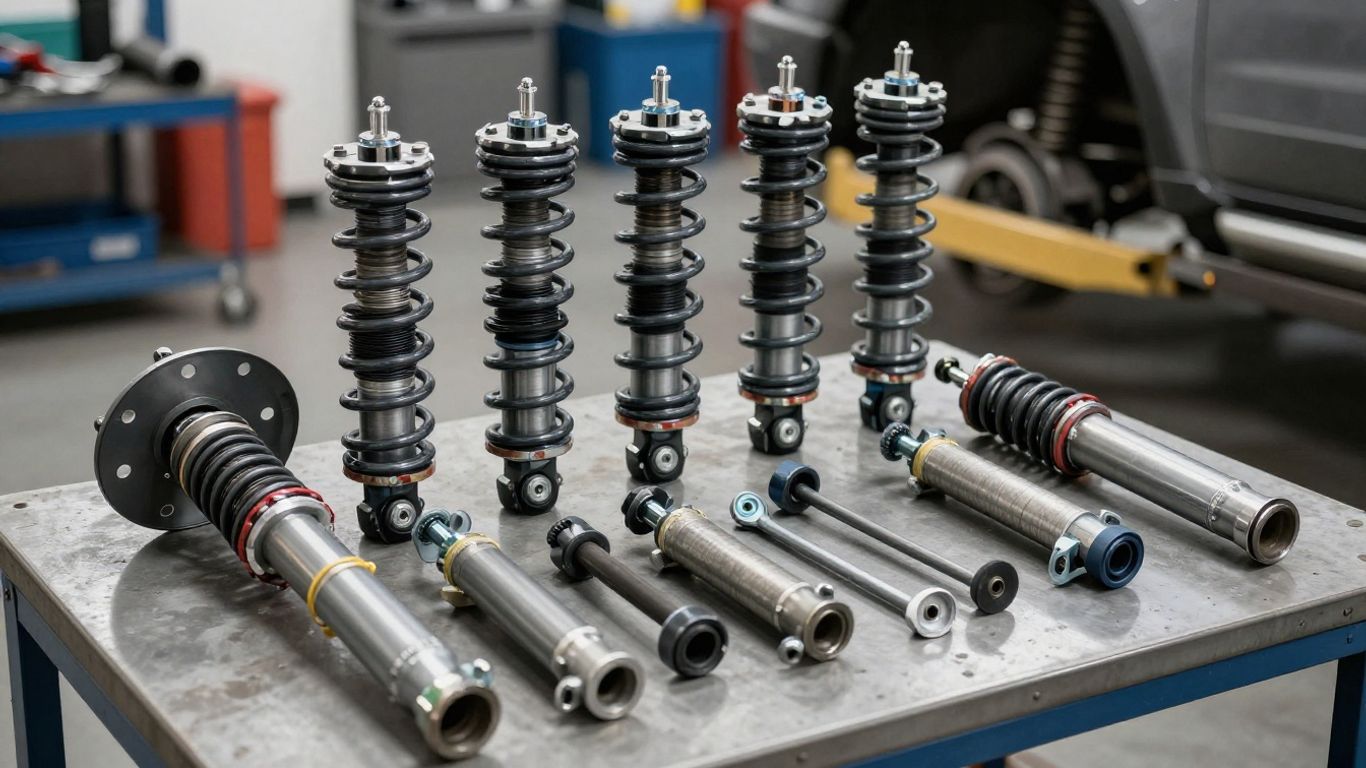
Shock absorbers reduce the repeated movement created by the springs. Signs of trouble can include a floating sensation, extended bouncing after a bump, nose-diving during braking, or increased body movement in corners. An oil film or wetness around the damper body also deserves attention.
Strut assemblies require extra care because the spring may be compressed and retained under considerable force. If the design uses a complete assembly, confirm whether the replacement includes the spring, mount, bearing, and related hardware or only the damper insert.
Coil springs, leaf springs, and air suspension components
Coil springs are common in many passenger-vehicle applications, while leaf springs can provide both springing and axle-location functions in some utility layouts. Air suspension uses an air spring or bag, together with valves, lines, and control equipment. Each arrangement has different inspection points and replacement procedures.
A sagging corner, uneven ride height, or a spring that has cracked at its end can affect geometry and tire loading. Do not select a spring solely by its shape; load rating, installed height, and the vehicle’s actual configuration are equally relevant.
Control arms, ball joints, and bushings
Control arms guide the wheel through its range of movement. Ball joints allow angular movement between connected components, while bushings isolate vibration and permit controlled flex. Wear in any of these parts can produce vague steering, irregular tire wear, or a knock over rough surfaces.
The front suspension parts available for a vehicle may include arms, ball joints, springs, shocks, struts, bushings, and stabilizer links. That broad category is helpful for planning an inspection, but it does not replace a compatibility check for the exact vehicle.
Stabilizer links, sway bars, and suspension mounts
A sway bar limits the difference in compression between the two sides of an axle, and stabilizer links connect it to the suspension. Mounts and bushings hold components in place while filtering some vibration. Small parts can therefore have a noticeable effect when they develop looseness.
When investigating a noise, check the links, bar bushings, upper mounts, and fasteners as well as the larger arms and dampers. A low-cost component may be the source of the sound, but the repair still needs to address the actual point of movement.
Choosing parts for your SsangYong model
Correct fitment starts before the shopping cart. Model names can cover multiple generations, engines, drivetrains, and body configurations, and suspension parts may change between them. The most reliable process combines the vehicle identification number with the original part number and a seller’s fitment information.
Matching parts to Musso, Rexton, Korando, and Tivoli models
Musso, Rexton, Korando, and Tivoli applications should be treated as separate fitment searches, even when a component looks similar. The axle design, mounting points, ride height, and load requirements can differ between models or production periods.
Begin with the model and generation, then confirm the axle position and component type. If a catalog groups several vehicles together, read the listed exclusions carefully instead of assuming that shared branding means shared suspension hardware.
Checking model year, engine, drivetrain, and body style
Record the model year, engine, transmission, drivetrain, wheelbase where relevant, and body style. A pickup, SUV, and long-wheelbase variant may use different springs or dampers, particularly when load capacity and rear geometry change.
This information also matters when comparing standard and modified vehicles. A lifted vehicle may require altered damper travel, revised geometry, or supporting hardware rather than a standard replacement alone.
Comparing genuine, aftermarket, and heavy-duty components
Genuine parts may be preferred when retaining the original specification is the priority. Aftermarket components can offer additional availability or a different construction, while heavy-duty parts may be intended for higher loads or more demanding use. None of those labels guarantees suitability by itself.
Compare dimensions, materials, load ratings, mounting details, and warranty coverage. A part that is firmer or taller is not automatically a better choice for a daily-driven vehicle; it needs to suit the intended use and the rest of the suspension.
Verifying OEM numbers and vehicle compatibility
An OEM number is a valuable cross-check, but it should be read alongside the catalog application. Numbers can supersede one another, and a catalog may list several revisions or axle-specific options. Ask the seller to confirm the part against the vehicle identification number when uncertainty remains.
A simple record of the old part number, measurements, photographs, and vehicle details can prevent an expensive mismatch. For broader purchasing decisions, even unrelated resources such as Ontario home buying, Methylene Blue drops, or Mt. Baden Powell illustrate the same basic habit: verify the specific option rather than relying on a broad label.
Signs that suspension parts need replacement
Suspension wear is often gradual. Drivers may first notice a slightly different steering feel, a new noise, or extra movement before a component becomes obviously damaged. Treat these changes as prompts for inspection, especially when they appear with tire wear or a change in ride height.
Uneven tire wear and steering instability
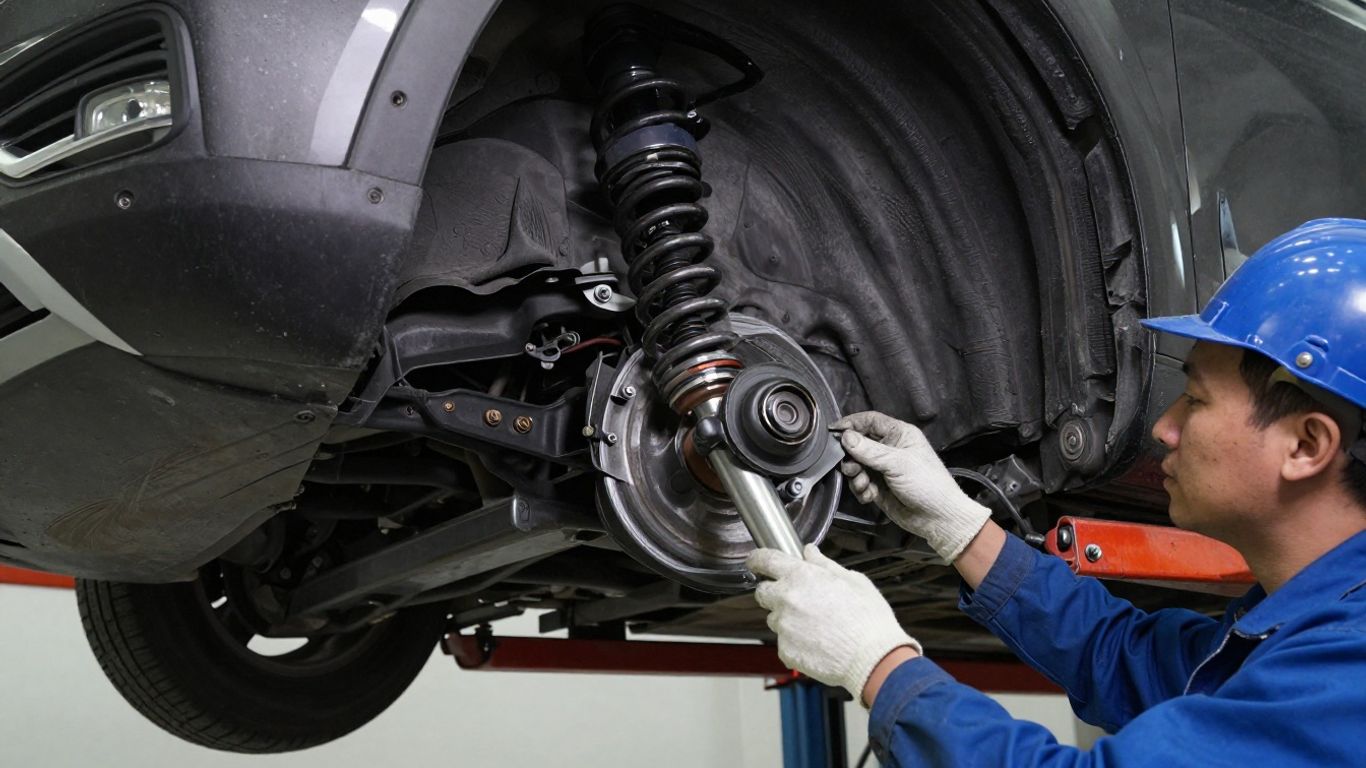
Uneven tread wear can indicate altered wheel geometry, loose joints, worn bushings, or inadequate damping. Feathering, cupping, or wear concentrated on one edge should be investigated rather than corrected only with a new tire. Tire pressure and alignment should also be checked because they can create similar patterns.
Steering that feels vague, wanders, or requires constant correction may reflect suspension play. Since steering and suspension overlap at several connection points, diagnosis should include tie rods and wheel bearings as well as the listed suspension parts.
Excessive bouncing, dipping, or body roll
A vehicle that continues to bounce after a bump may have reduced damping. Excessive dipping under braking, squatting under acceleration, or leaning in corners can also point to worn components, an unsuitable spring, or a problem affecting the stabilizer system.
Use the symptom as a starting clue, not a final diagnosis. Road surface, tire condition, vehicle load, and driving style can all change how movement feels, so a workshop inspection is wise when the behavior is pronounced.
Clunking, knocking, and other suspension noises
A clunk over a pothole can come from a loose link, worn bushing, ball joint, mount, or fastener. A creak may have a different cause from a sharp metallic knock, and a noise that occurs only while steering narrows the investigation in another direction.
Note when the sound occurs: over bumps, while braking, during low-speed turns, or when one wheel rises. That detail helps separate suspension movement from exhaust, brake, body, or drivetrain noise.
Visible leaks, damaged bushings, and broken springs
Inspect dampers for fluid leakage, bushings for tearing or separation, and springs for cracks, corrosion, or an unusual gap at the seat. Also look for shifted mounts, damaged dust boots, and contact marks that suggest excessive movement.
Do not handle a compressed spring casually, and do not continue driving a vehicle with a visibly broken spring or a joint that has significant play. Photographing the damage can help when confirming the required part and discussing the repair.
How to buy reliable SsangYong suspension parts
A reliable purchase is more than a low listed price. The component should be identifiable, correctly specified, available with appropriate hardware, and supported by clear seller information. Buying one part at a time without checking the surrounding system can also create repeat labor and mismatched performance.
Assessing material quality and manufacturer reputation
Look for clear information about construction, dimensions, application, and testing rather than vague promises. Consistent packaging, traceable part numbers, technical instructions, and a manufacturer with an established catalog are useful signs of a serious supply chain.
Reviews can reveal packaging or fitment problems, but they should not replace technical verification. The best evidence is a part that matches the required specification and comes with enough information to install and inspect it correctly.
Balancing price, warranty coverage, and expected service life
The cheapest component may cost more if it fails early or requires the job to be repeated. Compare the purchase price with shipping, included hardware, warranty duration, exclusions, and the labor involved in replacement. A higher initial price can be reasonable when the specification and support are clearer.
Warranty coverage is not the same as a guaranteed service life. Installation conditions, vehicle loading, road salt, water exposure, and suspension modifications all affect how long a part remains usable.
Confirming availability for standard and lifted vehicles
Standard-height and lifted vehicles may need different travel ranges, brackets, springs, or geometry corrections. Confirm whether the listing is for the original ride height, a specified lift range, or a particular kit. Do not combine random lifted-vehicle parts simply because each appears to fit the same model.
For modified applications, keep a complete record of current spring height, damper length, wheel and tire size, and any geometry changes. The lifted suspension kits page is a useful example of the kinds of components that may be involved, including adjustable and heavy-duty options, but each combination still requires vehicle-specific checking.
Reviewing return policies and installation requirements
Before ordering, check whether returns are accepted for opened or installed parts, who pays return shipping, and whether special tools are required. Confirm the side, axle position, included hardware, and packaging condition expected for a valid return.
Clear photographs and measurements are especially useful when a catalog image is generic. If the part arrives damaged or differs from the listing, document it before installation and contact the seller promptly.
Installing and maintaining SsangYong suspension parts
Suspension work affects safety-critical connections and wheel geometry. Some replacements are straightforward for an experienced home mechanic, while others involve compressed springs, seized fasteners, or components that must be tightened at a particular ride height. A careful plan reduces the chance of damage and repeat work.
When professional installation is the safer choice
Professional help is the safer option when spring compression is required, a ball joint is pressed into place, fasteners are heavily corroded, or the vehicle’s construction is unfamiliar. It is also sensible when the repair involves steering geometry or when the vehicle cannot be supported securely.
A qualified technician can inspect related parts while the suspension is apart. That may prevent replacing a damper only to discover later that a mount or bushing is also allowing movement.
Essential checks before removing old components
Record ride height, component orientation, and the routing of brake hoses or sensor wires before disassembly. Compare the new part with the old one for length, mounting holes, bracket position, and supplied hardware. Support the vehicle at approved points and never rely on a jack alone.
A compact pre-installation check helps keep the work orderly:
- Confirm the vehicle identity and axle position.
- Photograph routing, orientation, and mounting positions.
- Check replacement dimensions and included hardware.
- Inspect adjacent joints, boots, bushes, and mounts.
These steps do not replace the workshop manual, but they make errors easier to catch. After installation, check that nothing is twisted, trapped, rubbing, or left loose before lowering the vehicle.
Why wheel alignment is necessary after suspension work
Removing control arms, struts, knuckles, or other locating components can alter camber, caster, or toe. Even when the new part is the correct specification, small changes in seating, bushing position, or ride height can affect the final geometry.
Alignment is therefore more than a comfort adjustment. Correct geometry supports stable steering and even tire loading, and it provides a useful check that the repair has not left a mounting or component problem unresolved.
Inspection intervals and practices that extend part life
Inspect suspension components at routine service intervals and after severe impacts, deep potholes, flooding, or unusually heavy loading. Keep tires correctly inflated, wash corrosive road contamination from exposed areas, and address small noises before they become larger faults.
For broader process planning, the MSP marketing guide and document remediation resources are unrelated to vehicle repair, but their emphasis on repeatable checks is a useful general reminder: consistent records make maintenance easier to manage. After a suspension repair, recheck fasteners as specified, monitor tire wear, and schedule another inspection if the vehicle’s behavior changes.
Conclusion
Selecting and maintaining suspension parts is mainly an exercise in identification, diagnosis, and disciplined follow-through. Match the component to the exact vehicle, investigate the surrounding system, use safe installation practices, and finish with alignment and ongoing checks. That approach is more dependable than choosing by appearance or price alone.
Frequently Asked Questions
How often should suspension parts be replaced?
There is no universal replacement interval. Inspect them according to the service schedule and whenever symptoms such as noise, leaks, uneven tire wear, or unstable handling appear.
Can worn suspension parts affect tire wear?
Yes. Loose joints, damaged bushings, poor damping, altered ride height, and incorrect alignment can change how the tire contacts the road and produce uneven wear.
Should shocks or struts be replaced in pairs?
Replacing them in axle pairs is commonly recommended so damping remains more balanced from side to side. Follow the vehicle and component manufacturer’s guidance.
Do new springs require a wheel alignment?
They can. A change in ride height or spring seating may alter wheel geometry, so an alignment check is prudent after spring replacement.
Are heavy-duty suspension parts better for every vehicle?
No. Heavy-duty components may suit higher loads or demanding use, but they can change ride quality and may be inappropriate for a vehicle used mainly for ordinary commuting.
Can suspension work be completed at home?
Some tasks can be completed by an experienced mechanic with proper support and tools. Work involving compressed springs, pressed joints, or steering geometry is safer when handled professionally.
What should be checked when a replacement part does not fit?
Stop installation and compare the part number, vehicle identification, axle position, dimensions, mounting points, and included hardware. Contact the seller before modifying the component or forcing it into place.