

Key Takeaways
Choosing Ssangyong brake parts is mainly a matter of precise compatibility, sensible quality checks, and careful installation. A few minutes spent verifying the vehicle and the part can prevent noise, uneven wear, and costly returns.
- Match every component to the exact vehicle, year, engine, trim, and axle.
- Treat pads, discs, calipers, drums, and hydraulic parts as one working system.
- Compare friction quality, heat control, corrosion protection, and warranty terms.
- Bed in new pads and discs carefully, then monitor braking feel and noise.
- Buy from a reputable seller and keep compatibility and return information on hand.
Understanding Ssangyong brake parts and their roles
A vehicle’s braking system turns pressure at the pedal into controlled friction at the wheels. Several mechanical, hydraulic, and electronic components share that job, so a fault in one area can affect the feel of the whole system. Understanding the basic roles makes it easier to identify the right replacement and explain symptoms to a technician.
How the braking system works
When the driver presses the brake pedal, the master cylinder converts that movement into hydraulic pressure. Brake fluid carries the pressure through lines and hoses to the calipers or wheel cylinders, which press friction material against a rotating disc or drum. Electronic systems such as ABS can adjust braking force when a wheel begins to lock, but they do not replace the basic hydraulic and friction components.
The process should feel progressive and predictable. A firm pedal, even response, and straight-line stopping usually indicate that the principal parts are working together properly. A soft pedal, pulling, vibration, or sudden change in travel deserves attention rather than continued testing on the road.
Brake pads, discs, calipers, and drums explained
Pads are friction blocks fitted in disc-brake assemblies, while discs, also called rotors, rotate with the wheel. The caliper holds the pads and moves them against the disc when hydraulic pressure arrives. Drum brakes use shoes that press outward against the inside of a drum, and they are often found at the rear or within a parking-brake arrangement.
Wear is not always limited to the most visible part. A worn pad can score a disc, a seized slider can produce uneven pad contact, and a distorted drum can create an inconsistent pedal or handbrake. Replacing the related hardware when it is damaged often gives a better result than fitting new friction material alone.
The difference between hydraulic and electronic brake components
Hydraulic components physically transmit pedal pressure. They include the master cylinder, fluid reservoir, pipes, flexible hoses, calipers, wheel cylinders, and seals. Electronic components monitor wheel speed or manage pressure, with sensors, wiring, and control units supporting functions such as ABS and stability assistance.
These two groups require different diagnostic thinking. Fluid loss or air in a line can create a soft pedal, whereas a warning lamp may point toward a sensor, wiring, or control-unit issue. Replacing a mechanical part will not necessarily resolve an electronic fault, so scan results and a physical inspection should be considered together.
Signs that a brake component may be failing
Brake symptoms tend to develop gradually, although some faults can appear suddenly. Squealing may come from pad material or fitting hardware, while grinding suggests that the friction layer may be exhausted. Vibration under braking can be linked to disc thickness variation, wheel issues, or suspension movement rather than one single cause.
Useful warning signs include:
- A pedal that feels soft, sinks, or requires repeated pumping.
- The vehicle pulling to one side during moderate braking.
- A scraping sound, burning smell, or unusually hot wheel.
- A brake warning or ABS lamp that remains illuminated.
These clues help narrow the inspection, but they do not replace it. If braking performance changes markedly, have the vehicle checked before ordering parts or driving farther than necessary.
Choosing the right brake parts for your SsangYong
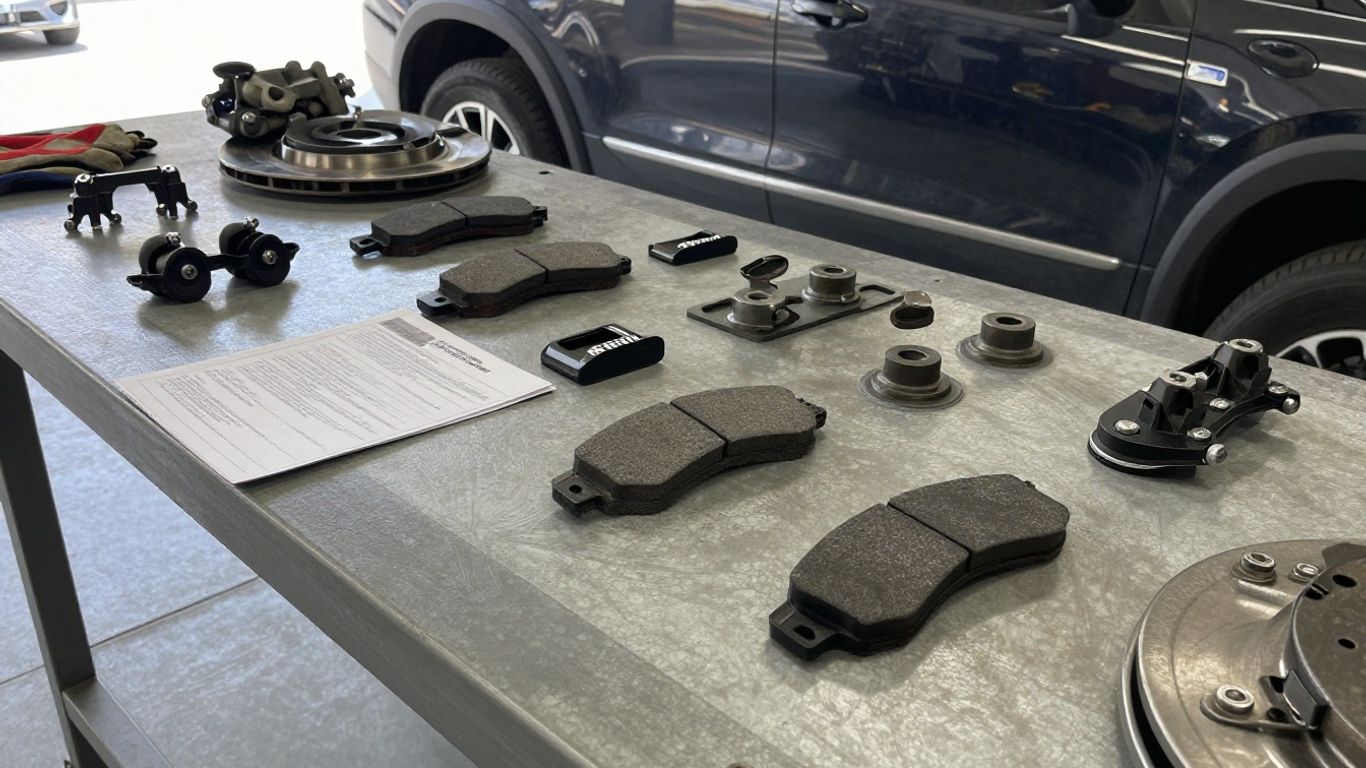
The safest purchase begins with identification, not price. Even vehicles sharing a model name may use different discs, pad shapes, calipers, or rear-brake arrangements. Gather the vehicle identification number and current registration details, then confirm the listing against a reliable catalog or parts specialist.
Matching parts to the exact model and year
Start with the model generation and production year, since facelifted versions can use different braking hardware. The front and rear axles normally require separate references, and left-right fitment can matter for some components. If the vehicle has already been modified, measure the existing parts rather than relying only on a broad model description.
A catalog that covers Ssangyong brake discs and pads can be useful for comparing the basic component categories, but the final match should still be checked against the vehicle’s full specification. A photo that looks similar is not proof of fitment.
Checking engine, trim, and axle specifications
Engine size and trim can influence the weight, wheel size, and brake package fitted at the factory. Some versions use different front disc diameters or pad dimensions, while rear brakes may be discs on one configuration and drums on another. Confirm the axle position, disc thickness, diameter, and pad dimensions wherever those details are available.
The vehicle identification number is especially helpful when several options appear in a catalog. Keep the old part beside the replacement during installation, but do not use visual similarity as the only check; small differences in clips, sensor locations, or mounting holes can matter.
Comparing original equipment and aftermarket components
Original-equipment parts are designed around the vehicle’s specified braking system, while aftermarket parts can offer several material grades and price points. A reputable aftermarket component may be entirely suitable, but its published specifications, certification information, and warranty deserve more attention than its packaging or discount.
Compare like with like. A complete kit may include fitting hardware, while a cheaper listing may contain pads only. For a broader catalog of Ssangyong car and truck brake parts, filters such as placement, component type, warranty, condition, and price can narrow the search, but the selected reference still needs vehicle-level confirmation.
Understanding brake part numbers and compatibility
Part numbers are more reliable than informal descriptions such as “front brakes” or “fits most models.” Check whether the number is for a single item, an axle set, or a complete kit, and look for superseded references that the manufacturer has replaced. Also confirm whether wear sensors, shims, bolts, or clips are included.
Write down the original reference, dimensions, and the seller’s stated application before placing an order. This creates a simple record if the part arrives incorrectly listed and makes it easier to compare two offers without overlooking a small but important difference.
Exploring the main types of Ssangyong brake parts
Brake parts are easier to compare when grouped by their position and function. Friction components do the stopping, while calipers, sliders, hoses, and hardware make sure that force reaches them evenly. Parking-brake parts follow a slightly different mechanism and should not be confused with ordinary service pads.
Front and rear brake pads
Front pads commonly handle a larger share of the vehicle’s stopping work because weight transfers forward during braking. Rear pads still matter for stability and balanced deceleration, so they should be selected for the correct axle rather than treated as interchangeable with front pads.
Look for even wear across each axle set. If one pad is much thinner than its partner, investigate slider movement, piston condition, or hose restriction before fitting replacements. New pads should normally be installed as an axle set so braking remains consistent from side to side.
Brake discs and rotors
A disc must provide a flat, stable surface for the pads. Its diameter, thickness, ventilation, center bore, and mounting pattern all affect compatibility. Measure wear against the manufacturer’s minimum thickness where possible, and inspect the disc for deep grooves, cracks, blue heat marks, or a pronounced outer lip.
New pads fitted to badly worn discs may not bed in evenly. In some cases, replacing both parts together is the sensible option, particularly when the disc is below its service limit or its surface damage is extensive.
Calipers, sliders, and fitting hardware
Calipers apply the pads, and their pistons and seals must move without leaks or binding. Slider pins allow the caliper to follow the disc, while abutment clips, shims, springs, and retaining hardware keep the pads positioned correctly. Corrosion around contact points can restrict movement and create uneven wear.
Cleaning and lubrication must follow the component maker’s instructions. Brake friction surfaces should remain free of grease, and damaged rubber boots or seized sliders should be addressed rather than hidden beneath fresh pads.
Brake shoes, drums, and parking brake components
Drum systems use shoes, springs, adjusters, and wheel cylinders inside a drum. Parking brakes may use a cable, an electric actuator, or separate shoes inside a rear-disc hat section, depending on the vehicle design. These parts can wear even when the foot-pedal braking system feels normal.
A handbrake that travels too far, fails to hold on a slope, or releases unevenly needs inspection. Drums should be checked for scoring and excessive diameter, while springs and adjusters deserve attention whenever the assembly is opened.
Evaluating brake part quality and performance
Quality is more than a low purchase price or a polished box. The useful questions concern friction consistency, temperature control, corrosion resistance, dimensional accuracy, and support if the part proves unsuitable. For ordinary road use, the best choice is usually the component that matches the vehicle and performs predictably in varied conditions.
Friction materials and stopping performance
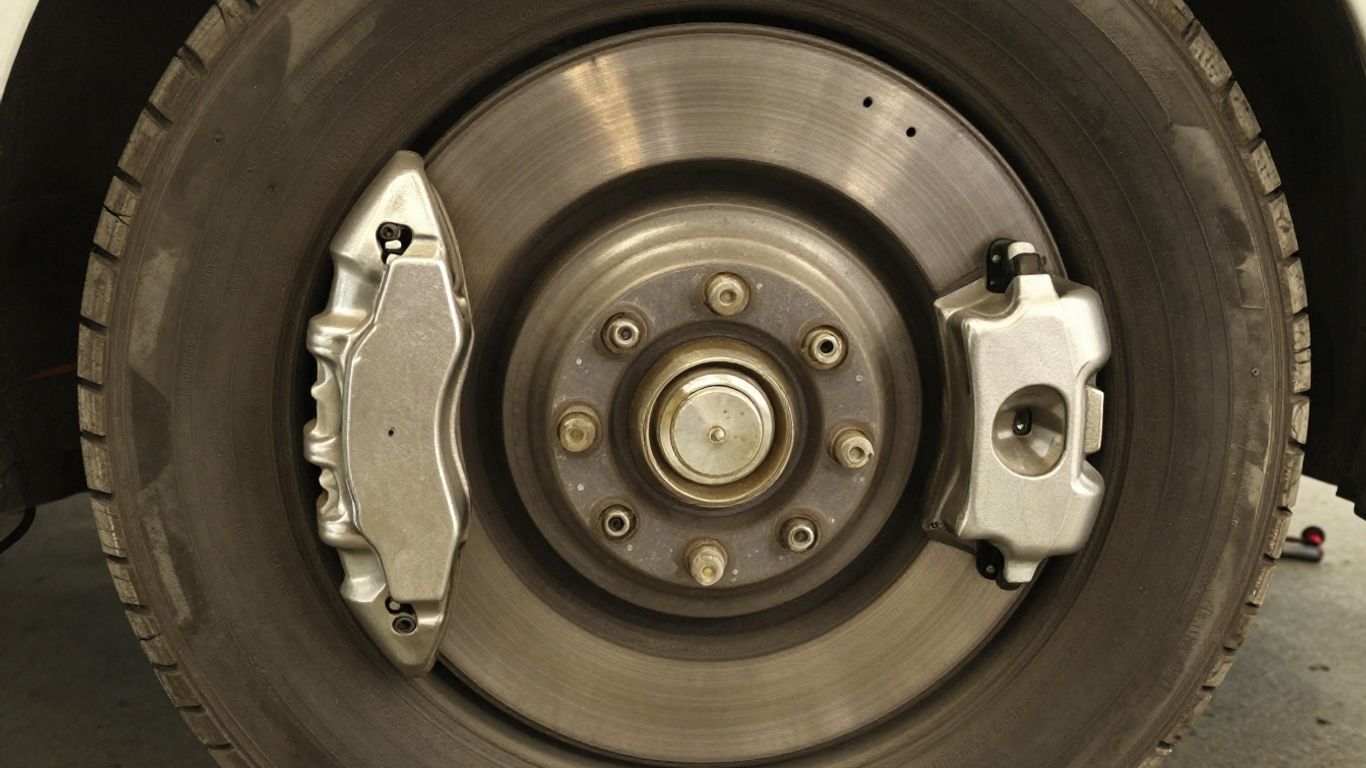
Pad compounds are formulated for different balances of bite, noise, dust, durability, and temperature range. A pad that feels sharp in one situation may produce more noise or dust, while a quieter compound may have a different pedal response. The specification should suit the vehicle’s normal load and driving conditions.
Do not compare stopping performance from brand names alone. Check the stated application, testing or approval information, and whether the pad is intended for normal road use, towing, heavy loads, or occasional track work. Consistent friction matters most when conditions change.
Heat resistance and noise control
Repeated braking converts motion into heat. Ventilated discs, suitable pad compounds, clean contact points, and correct bedding all help control temperature, but no component can overcome continuous abuse or an overloaded vehicle. Noise can result from pad material, surface condition, missing shims, or caliper movement.
A quiet brake is not automatically a good brake, and a small amount of noise does not identify one specific fault. Listen for changes, inspect the assembly, and treat grinding, severe judder, or a burning smell as reasons to stop and investigate.
Corrosion protection and expected service life
Brake discs are exposed to water, salt, dirt, and long periods of disuse. Surface rust on an unused disc can be normal, but deep pitting, flaking, or corrosion at the friction edge can shorten service life. Caliper bodies, pad carriers, springs, and backing plates also need attention in harsh climates.
Service life depends on traffic, terrain, load, driving style, and the condition of the rest of the system. A part advertised with an impressive mileage claim should still be judged against its specification and warranty rather than treated as a guarantee.
When performance upgrades are worthwhile
Upgrades may make sense for frequent towing, mountain driving, motorsport use, or a vehicle that has been modified substantially. They are less useful when the existing system is simply worn, contaminated, poorly adjusted, or fitted with unsuitable tires. Correct maintenance should come before a more aggressive component.
Consider the complete system, including disc size, caliper clearance, pad compound, brake fluid, tires, and suspension. An upgrade that does not fit the wheel or work with the rest of the system can create expense without improving safe control.
Installing and maintaining Ssangyong brake parts
Brake work demands clean surfaces, correct torque, and a safe working method. If you lack suitable stands, tools, or experience, use a qualified technician rather than improvising beside the road. A fitting error can affect stopping distance even when the new parts appear correct.
Essential checks before installation
Before removing anything, compare the new components with the old ones and verify the axle position. Check the disc dimensions, pad shape, sensor arrangement, mounting holes, and included hardware. Inspect the hub face for rust or debris because a disc that sits unevenly can produce runout and vibration.
Use the service instructions for torque values and piston retraction. Do not allow a caliper to hang from its hose, and keep grease, oil, and cleaning residue away from friction surfaces. After assembly, confirm that the wheel turns as expected and that the pedal becomes firm before moving the vehicle.
Proper bedding-in procedures for new pads and discs
Bedding allows the pad and disc surfaces to develop an even contact layer. The exact procedure varies by component maker, so follow the supplied instructions first. Generally, it involves a series of moderate stops with cooling time between them, while avoiding harsh emergency braking immediately after installation.
After the procedure, allow the brakes to cool and check for unusual vibration, noise, or pulling. Bedding is not a cure for a contaminated pad, a seized caliper, or a disc that is already distorted; those issues need correction at their source.
Inspecting brake fluid, hoses, and related components
Fresh friction parts cannot compensate for degraded fluid or a damaged hose. Check the fluid level and condition, look for wetness around unions and calipers, and inspect flexible hoses for cracking, swelling, or rubbing. Pipes, the master cylinder, wheel cylinders, ABS wiring, and wheel bearings should also be considered during a brake inspection.
Brake fluid absorbs moisture over time, so replacement should follow the vehicle’s maintenance schedule or a technician’s assessment. Use only the specified fluid and keep the reservoir and bleed equipment clean during service.
Recommended inspection intervals and maintenance habits
Inspect brakes at routine service visits and whenever a wheel is removed, but do not wait for a scheduled interval if symptoms appear. Drivers who tow, carry heavy loads, travel in steep areas, or drive in salted conditions may need more frequent checks. Keeping a record of pad thickness, disc measurements, and dates makes changes easier to spot.
A few simple habits help preserve the system:
- Keep wheel and brake areas clear of heavy mud and road salt.
- Avoid resting a foot on the brake pedal during long descents.
- Use the correct parking-brake procedure and do not ignore excess travel.
- Investigate new noises, smells, warning lamps, or changes in pedal feel promptly.
These habits reduce avoidable wear, but they do not eliminate the need for inspection. Brake maintenance is preventive only when measurements and condition checks are part of it.
Buying Ssangyong brake parts with confidence
A good purchase balances fitment, quality, price, and after-sales support. Online listings can be useful, but a low price is not meaningful if the box contains one side only, the reference is incomplete, or the seller cannot explain compatibility. Save the listing and the vehicle details until the installation has been completed successfully.
Comparing prices without sacrificing safety
Compare the full package rather than the headline price. Include delivery, fitting hardware, sensors, taxes, and the cost of returning a wrong item. A pair of discs or an axle set of pads may look more expensive than a single component, yet the set may be the appropriate comparison.
Where several prices are close, choose the listing with clearer dimensions, application data, warranty terms, and seller contact information. The cheapest part is rarely the cheapest outcome when it causes a delay or requires duplicated labor.
Verifying seller reputation and warranty coverage
Read recent reviews for evidence about accurate fitment, packaging, delivery, and how problems were handled. A warranty is more useful when its duration, exclusions, claim process, and proof-of-purchase requirements are visible before checkout. Keep invoices and photographs of unopened packaging until the part has been checked.
Online research often involves unrelated guides and catalogs, so distinguish the page’s subject from the part listing itself. For example, SEO strategies, Home Team Luxury Rentals, breast implant options, Chalfont Garage Doors, and motor home ownership costs are separate informational topics, not evidence about brake compatibility.
Checking delivery, returns, and installation support
Confirm dispatch timing before booking a mechanic. Ask whether returns are accepted for unopened or incorrectly supplied parts, who pays return shipping, and whether electrical items have different conditions. If the seller offers technical help, provide the full vehicle identification and part reference rather than a vague model name.
A return policy cannot make an unsafe part acceptable, but it can reduce the risk of being stranded with an unusable order. Inspect every component on arrival and report visible damage before installation.
Avoiding counterfeit or incorrectly listed parts
Suspiciously low prices, blurred photographs, missing manufacturer information, and inconsistent part numbers should prompt caution. Packaging alone is not proof of authenticity, particularly when the listing combines several brands or uses generic stock images. Check the seller’s details and compare the reference with a trusted catalog.
Never install a part simply because it arrived in a sealed box. Match dimensions, mounting points, and included hardware before fitting, and contact the seller if anything differs from the published description. That small pause is safer than discovering the mismatch after the original part has been discarded.
Conclusion
The right Ssangyong brake parts are the ones that match the vehicle precisely, suit its use, and are installed with care. Verify the specification, assess the complete braking system, and maintain it according to condition rather than appearance alone. A careful buying process and a disciplined inspection routine support dependable braking for the miles ahead.
Frequently Asked Questions
How often should brake parts be inspected?
Inspect them during routine servicing and whenever symptoms such as noise, pulling, vibration, warning lamps, or altered pedal feel appear. Heavy loads, towing, steep roads, and harsh weather may justify more frequent checks.
Should brake pads and discs be replaced together?
Not always. If the discs remain above their minimum thickness and have a suitable surface, pads alone may be appropriate. Discs with deep scoring, cracking, severe corrosion, or excessive wear should be replaced as well.
Can front and rear brake pads be interchanged?
No. Front and rear assemblies usually use different pad shapes, dimensions, and friction requirements. Always confirm the axle position and the exact part reference before ordering.
What causes brake vibration after new parts are fitted?
Possible causes include uneven hub surfaces, disc runout, incorrect wheel tightening, suspension wear, or uneven bedding. A technician should inspect the complete assembly rather than assuming the disc alone is defective.
Is brake noise after installation normal?
A brief change in sound can occur while new surfaces bed in, but grinding, severe squealing, scraping, or a burning smell should not be dismissed. Stop using the vehicle if braking performance also changes.
How can I tell whether a brake part will fit?
Use the vehicle identification number together with model year, engine, trim, axle position, dimensions, and the original part number. Visual similarity is useful as a check, not as the primary proof of compatibility.
Can I install brake parts myself?
Basic replacement may be possible for an experienced home mechanic with the correct tools and service information. Anyone uncertain about safe lifting, torque settings, hydraulic bleeding, or electronic procedures should use a qualified technician.