
Key Takeaways
Correct steering repair starts with diagnosis, not guesswork. Identify the failed component, match the replacement precisely, and finish the job with a safety check and alignment.
- Steering input travels through several linked components before reaching the road wheels.
- Play, noise, leaks, and heavy steering can point to different faults.
- Model year, engine, drivetrain, and VIN details help prevent ordering errors.
- Quality parts should have sound construction, accurate dimensions, and clear warranty terms.
- Professional inspection and post-repair alignment are worthwhile whenever steering geometry changes.
Understanding the Ssangyong steering system
A vehicle’s steering system turns movement at the wheel into controlled movement at the front tires. It must transmit driver input while also allowing the suspension to move over uneven surfaces. Because these jobs overlap, a fault that feels like a steering problem may sometimes begin in a suspension joint or mounting point. Understanding the chain makes diagnosis much less speculative.
How the steering system transfers driver input
The steering wheel is fixed to a column and shaft, which carry rotational movement toward the steering mechanism. Gears or a steering gearbox then convert that rotation into sideways movement at the linkage. Tie rods pass this movement to the steering knuckles, turning the wheel hubs and tires.
A useful general reference on the subject is this explanation of automotive steering systems, which also describes how a steering wheel, column, and rack-and-pinion mechanism work together. The driver should feel a direct response, without a noticeable dead zone between turning the wheel and changing direction.
The role of the steering rack and gearbox
A rack-and-pinion assembly uses a small gear, called the pinion, to move a toothed rack from side to side. Other vehicles use a steering gearbox, which performs the same broad task through a different arrangement of gears and linkage. Either system can develop internal wear, seal problems, or mounting looseness, so the housing alone does not identify the failed part.
The steering rack is also a structural reference for the tie rods. If its mounts shift, the driver may notice wandering even when the rack’s internal gears remain serviceable. That is why a careful inspection checks both the mechanism and the points that hold it to the vehicle.
Tie rods, ball joints, and steering knuckles explained
Inner and outer tie rod ends connect the rack or gearbox to the steering knuckle. Ball joints allow controlled movement between suspension arms and the knuckle while maintaining a pivot for steering. The knuckle itself carries the hub and provides the connection through which steering and suspension forces meet.
Wear in any of these joints can produce looseness, uneven tire wear, or a knock over bumps. A mechanic checks for movement under load rather than replacing every nearby component simply because one joint feels worn.
Hydraulic and electric power steering differences
Hydraulic assistance uses a pump, fluid, hoses, and a control valve to reduce the effort needed at the steering wheel. Electric assistance uses an electric motor and control electronics, so it does not depend on a belt-driven hydraulic pump or the same fluid circuit. Some vehicles combine hydraulic and electronic elements.
The distinction matters during diagnosis. A low-fluid condition, leaking hose, or weak pump suggests a hydraulic issue, while an electric system may require inspection of wiring, sensors, or stored fault information. The steering feel should be assessed alongside the vehicle’s actual system design.
How steering components work with the suspension
Steering and suspension share several pivots and mounting points, but they do not perform identical jobs. Springs and dampers manage vertical movement; control arms guide that movement; steering links change wheel direction. Bushings allow limited movement while reducing vibration and harshness.
This interaction is why a worn control arm bushing can mimic a steering fault. The best diagnosis considers wheel bearings, ball joints, control arms, tire condition, and alignment together, rather than isolating the steering wheel from the rest of the front end.
Common Ssangyong steering parts and their functions
The phrase ssangyong steering parts covers more than a rack or tie rod. A complete system can include the driver’s control points, mechanical links, assistance equipment, seals, boots, and mounting hardware. Parts that look similar may differ in thread, length, connector, or mounting pattern. Use the vehicle details before treating a visual resemblance as proof of compatibility.
Steering racks and rack-and-pinion assemblies
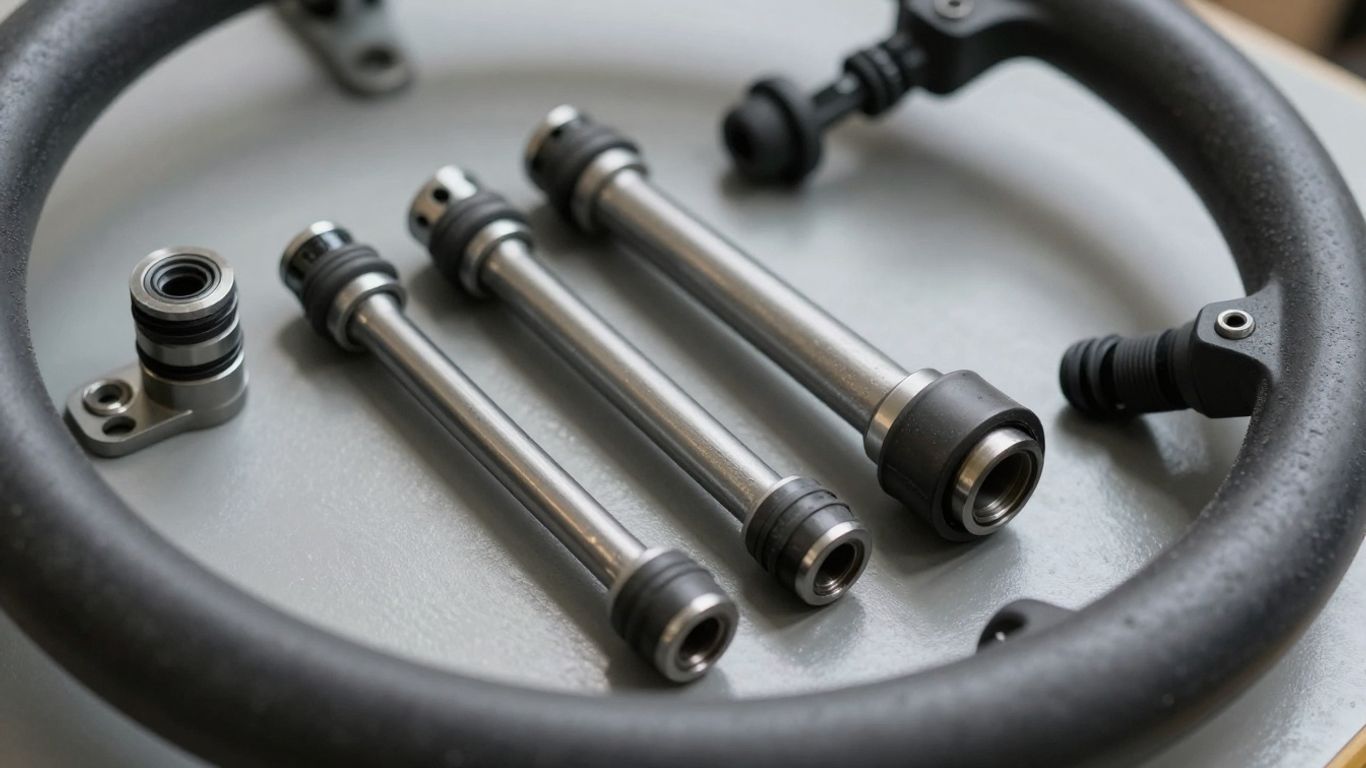
The rack-and-pinion assembly changes pinion rotation into lateral rack movement. Its inner joints, seals, housing, and mounting points all affect steering precision. A replacement rack may be supplied as a complete assembly or as a narrower repair component, so confirm what is included before ordering.
For a Rexton-specific reference, Rexton steering system parts can help when comparing categories such as steering racks, shafts, pumps, dust covers, and gaskets. That kind of catalog view is useful, but the vehicle identification and technical specification still decide whether a part is suitable.
Inner and outer tie rod ends
The inner tie rod connects to the rack, while the outer tie rod end attaches to the steering knuckle. Together they provide the adjustable link that sets toe and transfers lateral movement. Their joints need to pivot smoothly without excessive radial or axial play.
A damaged dust boot can allow water and grit into a joint even before obvious looseness appears. Replacing a boot early may sometimes preserve a serviceable joint, but a joint that already has play generally calls for replacement rather than cleaning.
Steering columns, shafts, and universal joints
The column supports the steering wheel and may incorporate collapsible safety features, switches, and bearings. Intermediate shafts and universal joints carry the steering motion through changes in angle between the cabin and engine bay. Binding or looseness in these parts can feel very different from wear at the rack.
Inspect the shaft for rough spots, abnormal movement, and damaged joints. Do not apply lubricant casually around components that have specific service requirements, particularly where the column includes safety-related assemblies.
Power steering pumps, hoses, and reservoirs
Hydraulic systems depend on a pump to circulate fluid, hoses to carry it, and a reservoir to hold and feed the circuit. A pump can become noisy or weak, while a hose may leak at a crimp, fitting, or aged section. The reservoir cap and fluid level also matter because aerated fluid can make assistance inconsistent.
The surrounding system should be cleaned before a new pump is fitted. Otherwise, old debris or contaminated fluid may damage the replacement and make it difficult to tell whether the original fault was actually corrected.
Bushings, boots, seals, and mounting hardware
Small protective and mounting pieces often determine how long a larger steering component lasts. Boots keep contaminants away from joints, seals retain fluid, bushings control movement, and brackets keep the rack or gearbox positioned correctly. Missing washers or stretched fasteners can create symptoms that resemble internal wear.
A broad parts catalog covering suspension and steering components is useful for seeing how control arms, ball joints, racks, pumps, tie rods, and bushings relate to one another. Use it as a starting point, then verify the exact application and placement.
Signs that Ssangyong steering parts need replacement
Steering symptoms are clues, not automatic proof of a failed component. The same complaint can come from tire pressure, alignment, a wheel bearing, suspension wear, or the steering mechanism itself. Record when the symptom occurs—at parking speeds, over bumps, under braking, or on a straight road. That pattern helps narrow the inspection.
Excessive play or looseness in the steering wheel
A loose steering wheel may indicate wear in tie rod ends, a rack, gearbox, column joint, or mounting hardware. Have an assistant move the wheel slightly while another person observes the linkage, but keep hands and clothing clear of moving parts. Movement should be traced to its source rather than judged only from the driver’s seat.
A small amount of normal compliance is not the same as a visible joint shift. If the wheel must be turned several degrees before the tires react, or if the vehicle feels delayed in response, arrange an inspection promptly.
Pulling, wandering, or poor straight-line stability
Pulling can follow an alignment change, unequal tire pressure, a dragging brake, or a worn steering or suspension joint. Wandering may also occur when a rack mount, control arm bushing, or tie rod allows the wheel angle to change under load. Test on a safe, level road and avoid confusing road crown with a mechanical fault.
If the vehicle needs constant correction, inspect tire wear and alignment before ordering parts. A component replacement made without correcting the underlying geometry can leave the original complaint unchanged.
Knocking, clunking, and squealing noises
A knock when crossing a bump often points toward a joint, bushing, mount, or loose fastener. A squeal that changes with steering effort may be associated with hydraulic assistance, a belt, or a pump, though a tire rubbing against a liner can sound similar. Note whether the noise occurs while stationary, moving slowly, or passing over rough ground.
Sound location can be deceptive inside the cabin. A road test followed by an underside inspection is more reliable than replacing the loudest-looking part.
Heavy steering or inconsistent power assistance
Heavy steering may result from low hydraulic pressure, a slipping belt, incorrect fluid, tire problems, or an electric-assistance fault. If assistance comes and goes, pay attention to warning lights and whether the change follows engine speed, temperature, or repeated parking maneuvers.
Do not keep driving if steering effort suddenly becomes extreme. Assistance failures can leave manual steering available, but the vehicle may become difficult to control in tight spaces or emergency maneuvers.
Fluid leaks and damaged protective boots
Fluid beneath the front of the vehicle should be identified before it is blamed on the steering system. Check its color, smell, and location, then inspect pump connections, hoses, rack seals, and the reservoir. A split boot, meanwhile, is a visible warning that a joint may have been exposed to contamination.
The following quick inspection sequence keeps the diagnosis orderly:
- Check tire pressure and visible tire damage.
- Look for fluid traces around hoses, the pump, and rack.
- Inspect tie rod and ball-joint boots for splits.
- Observe linkage movement while the steering wheel is gently moved.
After these checks, a qualified technician can decide whether the fault is external, hydraulic, electrical, or internal to the steering assembly. That distinction can save the cost of an unnecessary complete rack or pump.
How to identify the correct replacement parts
Ordering the right replacement is a research task as much as a mechanical one. Catalog names can be broad, while one vehicle line may contain several steering designs. The safest approach combines the vehicle record, the old part, and the supplier’s fitment information. Never rely on the word “front” or on a photograph alone.
Matching parts to the exact Ssangyong model
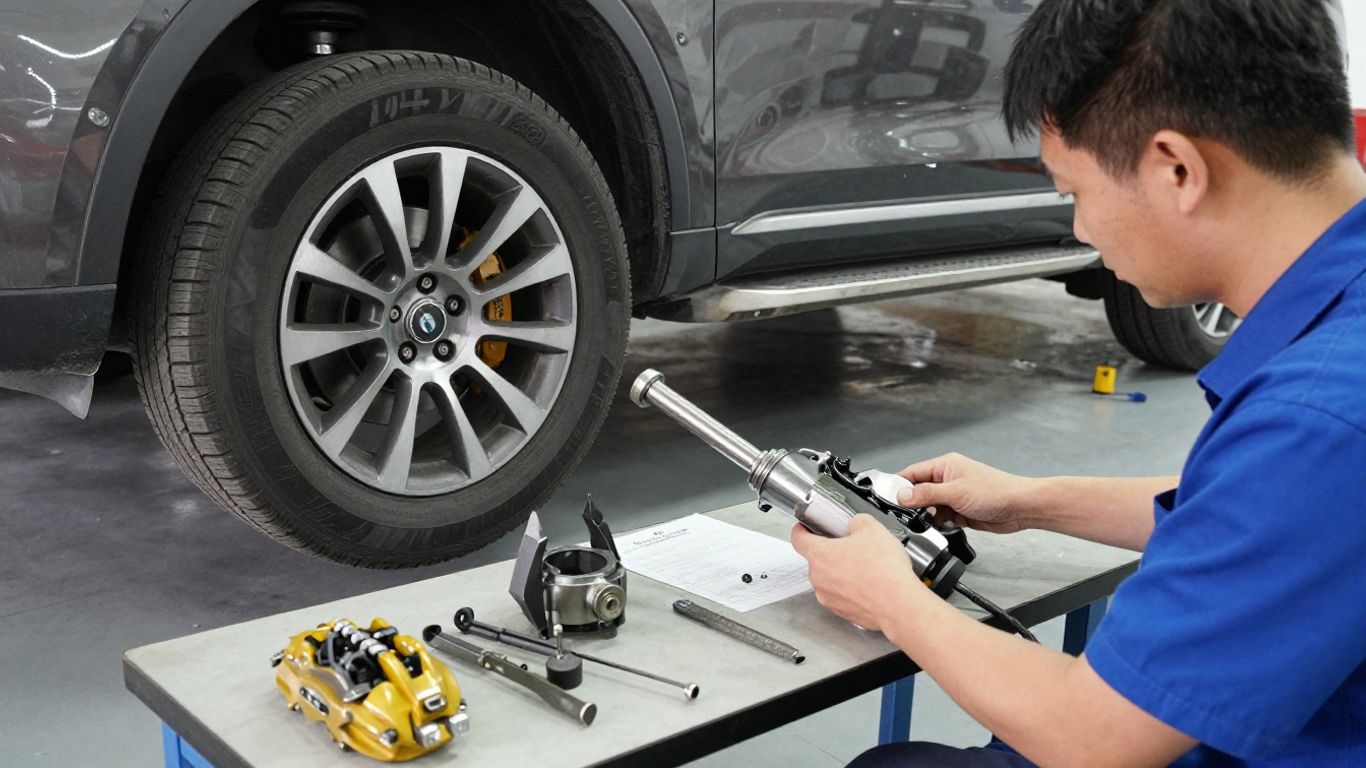
Start with the precise model and body style, then identify the steering component needed. Model names can span multiple generations and equipment levels, and left-hand-drive and right-hand-drive applications may differ. A rack, tie rod, or pump that fits one version may not fit another.
A catalog of genuine Ssangyong spare parts illustrates why model coverage matters: listings can span Rexton, Stavic, Rodius, Kyron, Actyon Sports, Korando C, Tivoli XLV, Musso, and other lines. Treat the catalog as a lookup aid, not as a substitute for checking the individual vehicle.
Checking the model year, engine, and drivetrain
Record the model year, engine designation, transmission, and drivetrain layout before searching. Steering assistance hardware and brackets can change with an engine installation or four-wheel-drive configuration. Production transitions may also create two possible parts within the same named model.
Keep the registration record or service history nearby. If the vehicle has already received a replacement rack or pump, the part currently fitted may not match the original specification, so both the vehicle and the component should be checked.
Using the vehicle identification number
The VIN is usually the strongest starting point for a fitment check because it identifies the vehicle’s production identity. Give the full VIN to a parts counter or manufacturer catalog when available. Ask the seller to confirm the application in writing if the component is safety-critical or expensive.
VIN matching does not remove the need to compare connectors, fittings, and dimensions. It reduces uncertainty, but it cannot correct a catalog error or a misidentified vehicle record.
Comparing original equipment and aftermarket specifications
Original equipment parts are made to the vehicle maker’s specified application, while aftermarket parts vary by manufacturer and design. Compare the complete specification: joint type, thread, length, mounting holes, hydraulic ports, electrical connectors, and any supplied hardware.
Quality SSANGYONG parts online may be a useful additional catalog reference when researching availability. Regardless of source, compare the part number and application details rather than choosing solely by price.
Confirming dimensions, fittings, and compatibility
Before installation, compare the new component with the removed one. Check overall length, thread direction, port position, spline count, connector shape, bracket location, and sealing surfaces. For tie rods, verify whether the listed length includes the inner joint or only the adjustable outer section.
This final comparison catches many avoidable errors. If a fitting needs force, a connector does not lock, or a mounting hole is slightly offset, stop and resolve the discrepancy instead of modifying a steering component.
Choosing quality Ssangyong steering parts
Quality is not just a label on a box. Steering components must tolerate repeated loads, weather, vibration, and contamination while maintaining accurate movement. The best choice balances correct fitment, construction, traceability, and support. A cheap part that needs early replacement is rarely economical once labor and alignment are included.
When original equipment parts are worth considering
Original equipment is especially attractive when the steering design is unusual, electronic assistance is involved, or the vehicle has limited aftermarket coverage. It can also simplify fitment where several revisions look nearly identical. The higher price should be weighed against reduced uncertainty and easier warranty handling.
That does not make every original part necessary. For common service items, a well-established aftermarket alternative may meet the required specification at a lower cost.
Evaluating reputable aftermarket manufacturers
Look for manufacturers with stable catalogs, clear application data, and a history of supplying steering or suspension components. A trustworthy listing identifies the exact vehicle range and explains whether hardware, boots, seals, or adjustment pieces are included.
Independent fitment coverage can be helpful when checking options, but the final choice should remain tied to the vehicle’s part number and measured requirements. Avoid listings that use one generic image for several unrelated applications.
Checking materials, seals, and construction quality
Examine the finish, threads, casting or forging quality, joint movement, boot material, and sealing surfaces. A new joint should move smoothly without roughness or a loose spot. A rack or pump should arrive clean, protected, and complete, with ports capped where appropriate.
For hydraulic parts, seals and port fittings deserve particular attention. For linkage parts, the boot and retaining method are just as important as the metal body because contamination often begins at that protective boundary.
Reviewing warranties, certifications, and return policies
Read the warranty conditions before purchase. Confirm whether coverage requires professional installation, alignment documentation, or use of specified fluid. A sensible return policy is valuable when fitment cannot be confirmed until the old part is removed.
Keep the invoice, packaging, and part number. Clear records make it easier to resolve a wrong application or an early failure without relying on memory.
Avoiding counterfeit or poorly matched components
Counterfeit packaging, missing markings, inconsistent finish, and unusually low prices deserve caution. Buy through a traceable seller and compare the part number against the manufacturer’s information. Do not accept a substitute merely because it can be made to bolt on.
The steering system is not a place for improvised drilling, spacers, welded repairs, or mixed hardware. Correct fitment comes first, because the part must work through the full range of steering and suspension movement.
Replacing and maintaining steering components safely
Steering repairs affect vehicle control, so preparation matters more than speed. Some jobs are straightforward for an experienced home mechanic, while others require special tools, hydraulic bleeding equipment, scan procedures, or a post-repair alignment. If the fault is unclear, diagnosis is the first service to pay for.
When professional installation is recommended
Use a professional when the steering rack, column, gearbox, electric-assistance unit, or hydraulic pump requires removal of complex surrounding equipment. Professional help is also sensible when the vehicle has an airbag-equipped column, severe corrosion, damaged mounting points, or an electronic steering fault.
A qualified shop can inspect the complete front end and confirm the repair before returning the vehicle to service. That is particularly valuable when the original symptom involved sudden loss of control or major looseness.
Essential tools and preparation for replacement work
Safe work begins with a level surface, secure wheel chocks, correctly rated stands, and a service manual for torque and removal procedures. Use the right ball-joint separator, torque wrench, line tools, and fluid-handling equipment rather than forcing parts apart. Photograph routing and mark adjustable positions before disassembly.
Keep fasteners organized and protect open hydraulic lines from dirt. Never work beneath a vehicle supported only by a jack, and do not rotate a steering wheel unnecessarily while a column or rack is disconnected.
Why wheel alignment is required after repairs
Removing a tie rod, rack, steering knuckle, or related suspension part can alter toe or other wheel angles. Even if the old adjustment is marked and approximately restored, the final geometry may not be correct. Misalignment can cause wandering, an off-center steering wheel, and rapid or uneven tire wear.
Arrange a four-wheel alignment when the repair affects steering linkage or suspension geometry. The technician should also confirm that the steering wheel is centered and that the vehicle tracks normally afterward.
Inspecting related suspension and steering components
Replacing one worn part can expose play in another. Inspect wheel bearings, ball joints, control arm bushings, rack mounts, tie rods, boots, brake hoses, and tires while the vehicle is raised. Pay attention to anything that could have caused the original component to wear prematurely.
A broader steering and suspension parts range can help organize that inspection, but the actual decision should come from measured play, visible damage, and the manufacturer’s service limits. Do not replace healthy parts simply to create a larger repair order.
Maintenance practices that extend steering part life
Routine care is simple: maintain tire pressure, address fluid leaks quickly, keep protective boots intact, and have unusual noises checked early. Avoid holding the steering at full lock for longer than necessary in hydraulic systems, since that can increase load and noise. Wash corrosive road salt from exposed components where practical.
After repairs, test the vehicle at low speed before entering traffic. Recheck for leaks, loose fasteners, warning lights, and abnormal tire behavior after the first drive. A short follow-up inspection can catch a problem while it is still easy to correct.
Conclusion
Choosing and replacing steering components is safest when symptoms are traced to a specific fault, fitment is verified from vehicle records and measurements, and the finished repair is followed by alignment and testing. Careful parts research may take a little longer, but it protects handling, tires, and the people inside the vehicle.
Frequently Asked Questions
What are the most common steering components that wear out?
Tie rod ends, ball joints, rack mounts, steering boots, bushings, and hydraulic hoses commonly need attention, although wear depends on road conditions, mileage, maintenance, and vehicle design.
Can a bad alignment feel like a steering problem?
Yes. Incorrect toe, uneven tire pressure, tire wear, or a damaged suspension component can cause pulling, wandering, or an off-center wheel without a failed steering rack.
How can I tell whether a tie rod end is worn?
A technician can check for looseness while the wheel is unloaded or supported in the correct way. Visible joint movement, a damaged boot, uneven tire wear, or a knocking sound may support the diagnosis.
Should both tie rod ends be replaced together?
Not always. Replacement depends on the condition of each joint, the manufacturer’s guidance, and the vehicle’s service history. Both sides should be inspected, even when only one is replaced.
Is power steering fluid safe to use interchangeably?
No. Use only the fluid specified for the vehicle and steering system. Mixing incompatible fluids can damage seals, alter operation, and complicate diagnosis.
Why is the steering wheel off-center after a repair?
The repair may have changed toe or another alignment angle, or the steering assembly may not have been centered during installation. An alignment check should identify and correct the cause.
When should I stop driving because of a steering fault?
Stop driving if steering becomes suddenly loose, extremely heavy, difficult to control, or accompanied by a major fluid leak, severe clunk, warning light, or visible separation in a steering joint.