
Key Takeaways
A reliable fuel system depends on correct matching, careful diagnosis, and clean installation. These principles help narrow down faults before parts are ordered or replaced.
- Identify the exact vehicle, engine, fuel type, and part number before buying.
- Check delivery, pressure, electrical signals, seals, and contamination together.
- Treat hard starting, smoke, leaks, and hesitation as diagnostic clues.
- Use safe procedures when opening petrol or diesel fuel systems.
- Replace filters on schedule and seek professional help when testing becomes complex.
Understanding the SsangYong fuel system
The fuel system stores fuel, moves it under controlled conditions, and delivers a measured quantity to the engine. Its components work alongside the engine computer, air intake, and ignition or combustion systems. A fault in one area can look similar to a problem elsewhere, so diagnosis should follow the fuel path rather than rely on symptoms alone. Understanding that path makes it easier to choose suitable SsangYong fuel system parts.
How fuel moves from the tank to the engine
Fuel begins in the tank, where a pump or suction system sends it toward the engine. It passes through filtration, travels along lines or rails, and reaches the injectors at a controlled pressure. The injectors then meter fuel into the intake or combustion chamber, depending on the engine design. Return lines, regulators, and sensors help keep delivery stable as demand changes.
Key components and their functions
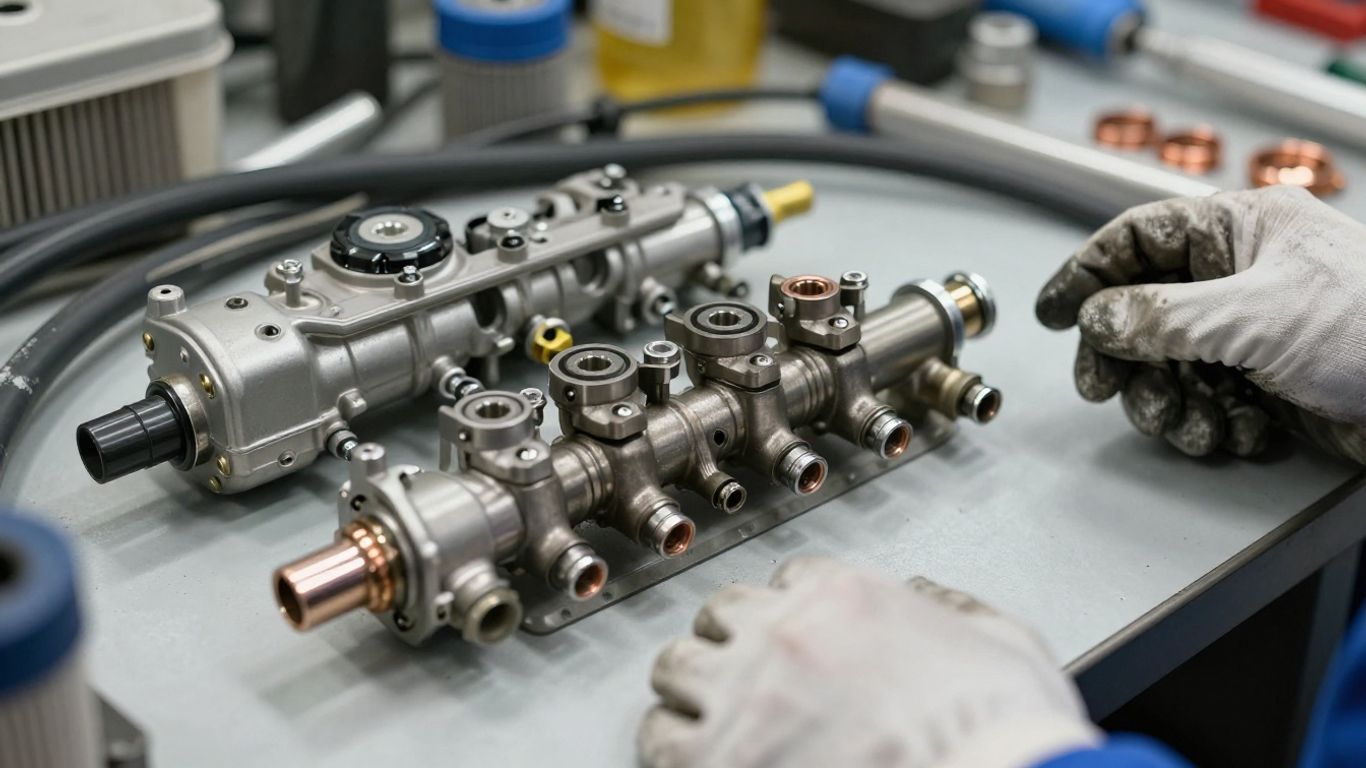
The pump provides movement, while the filter removes particles and, on many diesel systems, helps separate water. Injectors control the amount and timing of fuel entering the engine. Rails distribute pressurized fuel, regulators manage pressure, and sensors report conditions such as pressure or temperature to the control system. Seals, hoses, electrical connectors, and tank fittings are less visible, but they are just as necessary for a leak-free installation.
Differences between petrol and diesel systems
Petrol systems generally rely on fuel delivery followed by ignition from spark plugs. Diesel systems use much higher injection pressures and depend on compression ignition, making filtration, priming, and injector condition especially significant. A diesel fault may involve air in the system, water contamination, a pressure-control component, or an injector return problem. Petrol faults can also involve pressure loss, vapor concerns, or electrical control issues, so parts should never be selected from fuel type alone.
Why compatible parts matter for performance and safety
A component can look correct and still have the wrong pressure range, connector, flow rate, dimensions, or sealing arrangement. Exact compatibility protects reliability because the replacement must work with the vehicle’s control strategy and surrounding hardware. Incorrect parts may create poor running, leaks, warning lights, or repeated failures. Check the vehicle identification number, engine code, production details, and original part number before making a final decision.
Common SsangYong fuel system parts
The phrase SsangYong fuel system parts covers more than pumps and injectors. Filters, rails, sensors, hoses, seals, and tank hardware all influence how consistently fuel reaches the engine. The correct choice depends on the vehicle’s engine and fuel system generation, not simply the badge or body style.
Fuel pumps and sending units
A fuel pump supplies fuel from the tank or supports pressure within the delivery system. The sending unit typically carries the fuel-level sensor and may be integrated with the pump assembly. Before replacing either item, confirm whether the vehicle uses an in-tank module, a separate pump, or an additional high-pressure pump. Noise, low delivery, intermittent starting, and inaccurate fuel readings can point to different parts of the assembly.
Fuel injectors and injector seals
Injectors must deliver the correct quantity at the required pressure and timing. Their seals prevent combustion gases or fuel from escaping at the mounting point, but the exact seal design varies by system. Replacement work should include inspection of the injector seat, retaining hardware, electrical connector, and any required coding or calibration procedure. A new injector will not solve a damaged seat or contaminated rail.
Fuel filters and water separators
Filters protect pumps and injectors from rust, dust, and other particles. Diesel systems may also use a water separator, since water can damage precision components and affect combustion. Filter housings, drain points, and seals deserve attention during service. The Ssangyong diesel fuel system parts range is one example of why injectors, pumps, valves, sensors, rails, and fuel lines should be considered as connected parts of a system rather than isolated purchases.
Fuel rails, pressure regulators, and sensors
The rail stores and distributes pressurized fuel, while regulators and control valves help maintain the required pressure. Sensors provide feedback that allows the control module to adjust delivery or identify an abnormal condition. A pressure code does not automatically prove that the sensor is bad; restricted filters, wiring faults, pump wear, or a leaking injector can produce a similar reading.
Fuel lines, hoses, and tank components
Lines and hoses must tolerate the fuel, temperature, vibration, and pressure found in their location. Tank components can include a pickup, seals, fittings, rollover or ventilation hardware, and a pump mounting flange. Look for swelling, cracking, chafing, dampness, and loose clips. A fuel pump assembly listing can help illustrate why the exact part number and assembly description matter when comparing a tank-mounted replacement.
Signs of fuel system problems
Fuel faults rarely announce themselves in only one way. Starting behavior, acceleration, exhaust appearance, fuel smell, and dashboard warnings each provide part of the picture. Record when the symptom occurs—cold start, hot restart, heavy load, or steady cruising—because that context can separate a delivery problem from an unrelated engine issue.
Hard starting and extended cranking
Long cranking can result from low pressure, a restricted filter, a failing pump, leaking injectors, or air entering a diesel fuel circuit. If the vehicle starts normally after sitting but struggles after a short stop, heat and pressure retention may deserve attention. Avoid repeatedly replacing parts based on this symptom alone; first establish whether pressure builds and remains within the expected range.
Loss of power, hesitation, and rough running
A vehicle that hesitates under load may not receive enough fuel when demand rises. Restricted filtration, weak delivery, pressure-control faults, injector imbalance, and poor electrical connections are possible causes. Rough running at idle can also come from air leaks, ignition faults, or engine-management problems. Compare the symptom with live data and test results instead of treating every hesitation as an injector failure.
Poor fuel economy and excessive smoke
Changes in fuel economy may follow inaccurate sensor readings, leaking injectors, poor atomization, low tire pressure, or a separate air-management issue. Smoke color and timing can provide useful clues, though they are not a diagnosis by themselves. Persistent black smoke often deserves an air-and-fuel assessment, while unusual white or blue smoke may point beyond the fuel system.
Fuel odors, leaks, and visible contamination
A fuel odor should be treated seriously, especially near the tank, engine bay, or exhaust system. Inspect only when the vehicle is safely parked, cool enough to handle, and away from ignition sources. Damp fittings, stained surfaces, cracked hoses, or fuel in the filter bowl require prompt attention. Water or sediment in drained fuel also suggests that the tank and supply path may need broader inspection.
Warning lights and diagnostic trouble codes
A warning light can narrow the search, but a trouble code usually identifies a monitored condition rather than a failed part with certainty. Save the code, freeze-frame data, and any related codes before clearing them. Note whether the light returns immediately or only under particular driving conditions. This record gives a technician a more useful starting point than a replaced component with no test history.
How to diagnose fuel system faults
Diagnosis works best as a sequence of checks, beginning with basic condition and moving toward measured tests. Confirm the complaint, inspect for obvious leaks, and verify that the vehicle has suitable fuel. Then test delivery, pressure, electrical control, and injector behavior in an order that avoids unnecessary disassembly.
Checking fuel pressure and delivery
Use the correct gauge, adapter, and testing procedure for the system. Measure pressure during key-on operation, cranking, idle, and load conditions when the service information calls for it. A pressure reading that is acceptable at idle may still fall during acceleration. Delivery volume, pressure retention after shutdown, and filter restriction can reveal different faults.
Testing injectors and electrical connections
Injector testing may involve resistance checks, circuit testing, balance measurements, leak-off comparison, or specialist bench equipment. Inspect connectors for corrosion, loose terminals, damaged insulation, and poor grounds before condemning an injector. On common-rail diesel systems, high-pressure testing requires appropriate equipment and training. The diesel injector testing services described by a specialist supplier show why bench testing can be useful when basic vehicle checks do not isolate the cause.
Inspecting filters, lines, and seals
Physical inspection is simple but often overlooked. Check the filter’s age and installation direction, inspect hose ends for splits, and look for wetness around unions and injector bases. A pinched return line or poorly seated seal can alter delivery just as surely as a worn pump. Replace questionable sealing washers and clips rather than forcing old hardware to serve again.
Using scan tools to identify sensor issues
A scan tool can show pressure readings, commanded values, temperature data, rail pressure, and fault history, depending on vehicle coverage. Compare commanded and actual values rather than viewing one number in isolation. Wiggle testing, voltage checks, and a wiring diagram may be needed when a sensor signal is intermittent. Clear codes only after recording them and completing the repair.
Distinguishing fuel faults from ignition or air problems
A no-start or rough-running complaint may originate in spark, compression, timing, throttle control, intake leaks, or exhaust restriction. On a petrol engine, verify spark and basic air supply alongside fuel pressure. On a diesel, consider glow systems, compression, crank position signals, and air entry into the supply circuit. A structured process prevents the fuel system from becoming a catch-all explanation.
A useful video can show the general sequence for pressure testing, filter inspection, and safe component removal, but it cannot replace vehicle-specific service information. Procedures and connector locations vary, so use the video as orientation rather than authority.
How to choose the right SsangYong fuel system parts
Buying the right component is partly a technical task and partly a record-keeping task. Gather the vehicle details before searching, then compare the old part with the proposed replacement. A reputable seller should be able to explain fitment, specifications, and return conditions without relying on guesswork.
Matching parts to the exact model and engine
Start with the model, model year, engine displacement, fuel type, engine code, transmission where relevant, and production date. VIN-based lookup is often more reliable than a broad model search. Two vehicles with the same exterior name may use different pumps, injectors, connectors, or pressure systems. If the old component has a label, photograph it before removal.
Comparing genuine, aftermarket, and refurbished components
Genuine parts are designed for the original application, while aftermarket parts vary by manufacturer and specification. Refurbished components may be suitable when testing, rebuilding, and warranty terms are clear. Compare construction, calibration, included seals, and traceability rather than judging only by price. A lower purchase cost is not helpful if installation must be repeated.
Verifying part numbers and technical specifications
Check the full part number, revision or suffix, connector arrangement, pressure rating, flow requirement, dimensions, and supplied accessories. Some listings show a family of interchangeable-looking items but exclude the exact application details. Use the manufacturer’s catalog or a supplier’s fitment confirmation when available. Keep the original part until the replacement has been checked against it.
Assessing quality, warranties, and supplier support
A useful supplier provides clear fitment information, realistic delivery details, and a process for handling a defective or incorrect component. Ask whether injectors are tested, whether pumps are calibrated, and whether seals or installation kits are included. The answer should be specific to the part, not a general promise. This is also where unrelated online services—such as Karma Hill Photography, Class IV MLS laser therapy, or Google SEO guidance—illustrate a broader purchasing lesson: evaluate the exact service or product scope rather than assuming every listing offers the same thing.
Avoiding compatibility problems with low-cost parts
Very cheap parts can omit calibration data, use unsuitable materials, or have inconsistent electrical and dimensional tolerances. That does not make every aftermarket part unsuitable, but it does make verification more important. Be cautious when a listing lacks a part number, engine application, technical data, or warranty. A correct, documented component is usually safer than an inexpensive item chosen from a photograph alone.
Replacing and installing fuel system components
Fuel-system work combines mechanical accuracy with fire and contamination safety. Work in a well-ventilated area, keep ignition sources away, and use clean tools and containers. Before opening the system, read the vehicle-specific procedure and identify whether it involves ordinary supply pressure or high-pressure injection equipment.
Preparing the vehicle and relieving fuel pressure
Park securely, switch off the engine, and allow hot components to cool. Disconnect the battery only when the service procedure permits it, then relieve pressure using the prescribed method and capture any released fuel safely. Wear eye protection and suitable gloves. Never loosen a high-pressure diesel line while the engine is running or immediately after operation.
Replacing filters, pumps, and injectors safely
Clean the surrounding area before removing a filter, pump module, or injector. Cover open lines and ports so dirt cannot enter, and compare the replacement before installation. Follow the specified tightening sequence and torque, using new seals where required. Do not lubricate or reuse seals unless the service information explicitly allows it.
Handling diesel fuel system priming
After diesel filter or supply-side work, air may prevent immediate starting. Use the vehicle’s hand primer, electric priming function, or approved procedure rather than prolonged cranking. Check for leaks while priming and stop if the primer never firms up or fuel appears where it should not. High-pressure systems should be bled and commissioned according to the manufacturer’s instructions.
Checking seals, connections, and hose routing
A hose that is connected but rubbing against a bracket can fail later. Confirm every quick connector has locked, every clamp is correctly positioned, and every seal is seated without twisting. Route lines away from heat, moving belts, sharp edges, and suspension movement. Recheck the fuel-level sender and tank wiring before securing the access cover.
Testing the system after installation
Inspect the work area, cycle the ignition or prime the system as directed, and look for leaks before starting. Once running, confirm stable idle, normal response, and the absence of warning lights. Recheck connections after a short road test and scan for stored or pending codes. If the original symptom remains, return to testing rather than installing another unverified part.
Maintaining SsangYong fuel system parts
Routine maintenance reduces the chance that a small contamination or sealing problem becomes an expensive repair. Keep service records with filter part numbers, dates, mileage, and any observed contamination. These details help reveal patterns and make future diagnosis faster.
Following the recommended filter replacement schedule
Use the interval specified for the vehicle and adjust it when operating conditions are severe, such as dusty roads, frequent short trips, or uncertain fuel quality. A filter that appears clean externally may still be restricted internally. During replacement, inspect the old filter and its housing for water, rust, or unusual particles. Any abnormal finding should prompt a wider check.
Preventing water and debris contamination
Keep the filler area clean before opening the cap and use clean containers when handling fuel. Do not leave a tank or disconnected line open longer than necessary. Diesel owners should drain water separators only according to the service procedure and dispose of contaminated fuel responsibly. Repeated contamination may require tank cleaning rather than repeated filter replacement.
Using suitable fuel and approved additives
Use fuel that meets the vehicle’s specification and avoid unapproved mixtures. Additives are not universal cures; some may harm seals, sensors, or after-treatment equipment if used incorrectly. Read the product directions and vehicle guidance before adding anything. If fuel quality is suspect, sampling and inspection are more useful than masking the symptom.
Protecting the tank, lines, and connectors
Avoid allowing the tank to remain nearly empty for long periods when the design relies on fuel for pump cooling. Inspect exposed lines after off-road driving or winter conditions, and keep electrical connectors dry and secure. Corrosion around the tank or chassis can weaken both brackets and fuel lines. Early repair is simpler than dealing with a leak after a line has failed.
Recognizing when professional servicing is necessary
Professional help is appropriate for high-pressure diesel testing, injector coding, pump calibration, tank contamination, persistent leaks, and faults that return after basic checks. It is also sensible when access requires lowering the tank or when the fuel system must be opened near hot or enclosed components. A technician can combine pressure tests, scan data, wiring checks, and bench testing instead of guessing.
Conclusion
Choosing and caring for SsangYong fuel system parts is a process of matching, measuring, installing, and checking. Start with accurate vehicle information, use symptoms to guide testing, and treat contamination or leaks as system-level concerns. Careful work and timely professional support can prevent a small delivery fault from becoming wider engine damage.
Frequently Asked Questions
What are the main parts of a fuel system?
The main parts usually include the tank, pump, filter, lines, rails, pressure-control components, injectors, sensors, seals, and electrical connections. The exact arrangement depends on the engine and fuel type.
Why does a vehicle crank for a long time before starting?
Possible causes include low fuel pressure, a restricted filter, air entering the system, a leaking injector, weak electrical supply, or a non-fuel fault. Pressure and related systems should be tested before replacing parts.
Can a dirty fuel filter cause loss of power?
Yes. A restricted filter can limit delivery when the engine needs more fuel, causing hesitation or reduced power. Similar symptoms can also come from air, ignition, exhaust, or sensor problems.
How can fuel contamination be identified?
Contamination may appear as water, sediment, rust, cloudiness, or unusual color in a filter housing or fuel sample. Safe inspection and proper disposal are needed, and repeated contamination may require tank cleaning.
Should fuel injectors be replaced or cleaned?
The choice depends on test results, wear, contamination, and the injector’s construction. Specialist testing can show whether cleaning is appropriate or whether replacement is more reliable.
Is it safe to replace fuel system parts at home?
Some low-pressure maintenance tasks may be suitable for a capable owner using the correct procedure. High-pressure diesel work, significant leaks, tank removal, and injector calibration should be left to a qualified technician.
How often should a fuel filter be changed?
Follow the vehicle’s service schedule and consider shorter intervals in severe conditions or when fuel quality is uncertain. The old filter should be inspected for water and debris during replacement.