

Key Takeaways
Choosing the right oil filter is mainly a matter of accurate identification, careful installation, and consistent servicing.
- Match the filter to the exact model, engine, year, and part number.
- Check thread size, gasket design, dimensions, and housing compatibility.
- Compare genuine and reputable aftermarket options by construction quality.
- Replace related seals, washers, and damaged mounting parts when needed.
- Record each service and inspect for leaks after installation.
Understanding Ssangyong oil filter parts and their role
An oil filter is a small service part with a large responsibility. It removes suspended contaminants from engine oil before that oil circulates through moving components. Understanding the filter and its surrounding parts makes it easier to choose a suitable replacement and spot installation problems early.
What an oil filter does for the engine
Engine oil picks up fine debris, combustion residue, and wear particles as it moves around the engine. The filter traps much of this material while allowing oil to continue through the lubrication system. A suitable filter therefore supports clean oil circulation, although it cannot compensate for overdue oil changes or an engine with an underlying mechanical fault.
Key components inside and around the filter
A spin-on filter usually includes a threaded center, a sealing gasket, filter media, an outer shell, and internal valves. Cartridge-style systems use a replaceable filter element inside a reusable housing, often with a cap and O-ring. The exact arrangement varies, so the replacement must match the vehicle’s original design rather than simply looking similar.
How filtration affects engine protection
Filtration quality depends on the media, the amount of media available, the seal around the filter, and the filter’s ability to maintain oil flow. A filter that fits correctly but has a damaged gasket can still leak, while a well-made filter with the wrong thread cannot be installed safely. Correct fitment protects the whole service by keeping the filter sealed and allowing oil to reach the engine as intended.
Signs that filter parts may be worn or incorrect
Oil around the filter, a damaged gasket, a distorted housing cap, or difficulty removing a filter can all point to a service issue. A warning light, unusual engine noise, or an unexplained drop in oil level should be treated seriously, though these symptoms can have several causes. Inspect the filter area first, then seek qualified diagnosis if the problem remains.
Identifying the correct filter for your vehicle
The model name alone is rarely enough to identify an oil filter. Different engines, production years, and regional specifications can use different parts, and some catalogues list broad vehicle coverage that still requires vehicle-level confirmation. Gather the registration details or VIN, then compare the old part and catalogue information before ordering.
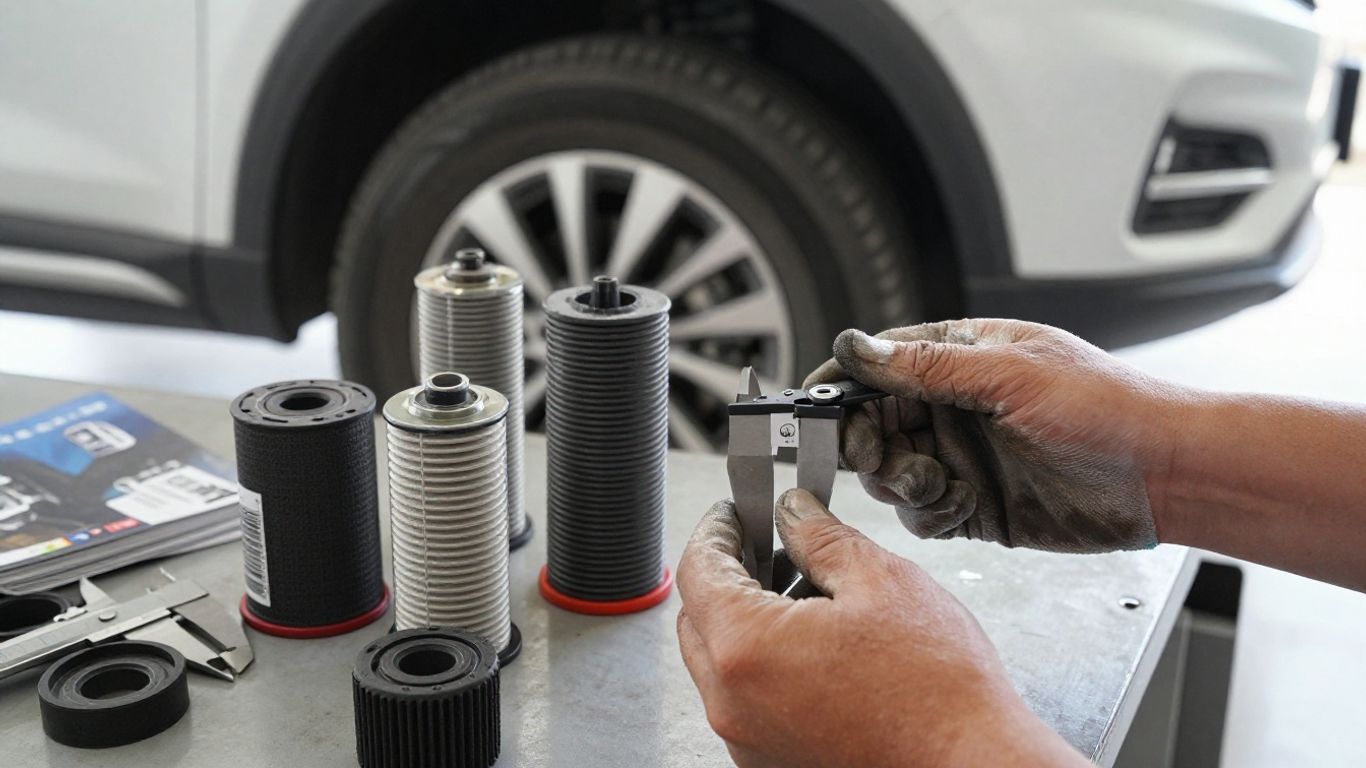
Matching parts to the Ssangyong model
Start with the exact model and body variant, then confirm the engine fitted to that vehicle. A filter listed for a Musso, Rexton, Korando, or another model may cover only certain engine applications. A vehicle fitment list can narrow the search, but it should be checked against the year, engine code, and existing part number where possible.
Checking the engine type and production year
Production changes can affect filter dimensions and mounting arrangements even when the model name remains the same. Note whether the engine is petrol or diesel, record its displacement and engine code if available, and check the build year rather than relying only on the date of first registration. This information is especially useful when a model spans several generations.
Using OEM and aftermarket part numbers
Write down every number printed on the old filter, its box, or the service record. Cross-referencing an original equipment number with a replacement number is useful, but a number should never be accepted without checking the vehicle application. For one example of a broad catalogue listing, the SSANGYONG 1621803009 filter still requires the buyer to confirm specific vehicle fitment before purchase.
Confirming thread size, gasket design, and dimensions
Before installation, compare the replacement’s thread, outside diameter, height, gasket position, and gasket diameter with the old part. Cartridge elements should also be checked for end-cap shape and any included seals. These details matter because a filter that screws on loosely, bottoms out early, or uses the wrong gasket can leak or fail to seal.
A simple comparison table helps keep the final check practical. It is not a substitute for a vehicle-specific catalogue, but it highlights the details that should agree.
| Check | What to compare | Why it matters |
|---|---|---|
| Part number | Original and replacement references | Reduces ordering errors |
| Mounting | Thread or cartridge housing design | Confirms physical compatibility |
| Seal | Gasket shape, position, and diameter | Prevents oil leakage |
| Size | Height, diameter, and end-cap form | Helps avoid clearance problems |
After the comparison, resolve any mismatch before opening the oil or fitting the filter. A short delay is preferable to forcing a part that only appears close enough.
Comparing genuine, aftermarket, and replacement options
A genuine filter is made for a specified vehicle application, while an aftermarket filter may serve the same application under another supplier’s reference. Replacement quality can vary, so price alone is not a useful measure. The sensible comparison is between verified fitment, construction, sealing quality, filtration media, and the supplier’s ability to provide clear part information.
Benefits of genuine Ssangyong filter parts
A genuine part can be a straightforward choice when its number and application are confirmed. It is typically selected for the original mounting arrangement and service requirements associated with the vehicle. Even so, the box and part number should be checked on arrival, since the label alone does not remove the need for fitment verification.
When a reputable aftermarket filter is suitable
A reputable aftermarket filter can be appropriate when its catalogue clearly identifies the engine application and its dimensions match the original. Look for a supplier that provides traceable part numbers, sensible technical details, and a returns process for incorrect fitment. Broader sourcing directories, such as this oil filter supplier guide, can be useful for research, but the final choice still needs vehicle-specific checking.
Evaluating filtration media and construction quality
Look at the filter’s shell, folded media, end caps, gasket, and valve arrangement where product information or the physical part allows. Clean construction, an even gasket, and undamaged threads are basic checks. A filter that is marketed with vague compatibility but lacks dimensions or a clear application reference deserves extra caution.
Avoiding counterfeit or poorly specified components
Suspiciously low prices, inconsistent packaging, blurred markings, missing part references, or a gasket that does not resemble the original are warning signs. Buy through a supplier with a clear business identity and keep the invoice with the service record. If authenticity or fitment is uncertain, do not install the part merely because it fits the box or appears close in size.
Choosing related oil filter parts and supplies
The filter is only one part of a successful oil service. Housings, caps, seals, drain plugs, washers, oil, and collection equipment all affect the result. Replacing a small sealing component at the right time can prevent a repeat leak and save the trouble of dismantling the service area again.
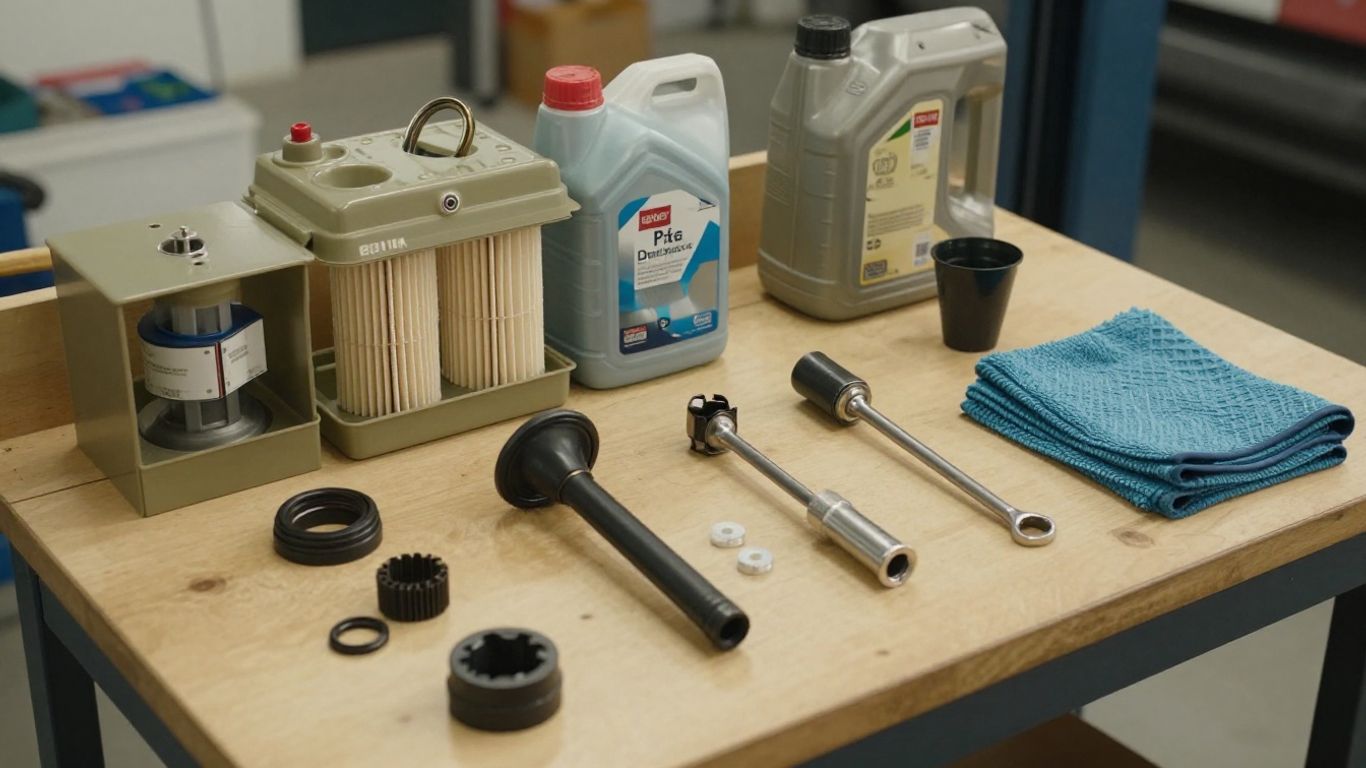
Filter housings, caps, and mounting components
Inspect the housing or mounting face for cracks, damaged threads, cross-threading, and old gasket material. Cartridge systems deserve particular attention because a cap can be overtightened or its sealing groove can become damaged. If a mounting component is faulty, fitting a new filter alone will not restore a reliable seal.
Seals, O-rings, and replacement gaskets
Use the seal supplied for the specific filter or housing and compare it with the old one before fitting. Remove the previous O-ring from its groove rather than placing a new ring over it. Lightly coating a suitable new gasket with clean engine oil can help it seat evenly, but the service instructions and torque guidance should take priority.
Drain plugs and crush washers
A drain plug washer is designed to seal when compressed and may not reseal reliably after repeated use. Check the plug threads and sealing face while the oil is draining. If the washer is flattened, damaged, or specified as a single-use item, replace it rather than tightening the plug excessively.
Selecting the correct engine oil and service materials
The oil grade and specification should come from the owner’s manual or a trusted service reference for the engine. Also prepare a drain pan with enough capacity, gloves, rags, a filter wrench if needed, and a safe way to raise and support the vehicle. For buyers who need broader genuine parts from Korea, catalogue details should still be matched to the individual vehicle before ordering.
Replacing the oil filter safely and correctly
An oil change is routine, but it involves hot fluid, a supported vehicle, and components that can be damaged by force. Work on a level surface, follow the vehicle’s safety instructions, and allow hot parts to cool enough for safe handling. Keep the new filter, replacement seal, oil, and drain equipment close before beginning.
Preparing the vehicle and required tools
Park securely, apply the parking brake, and use axle stands where raising the vehicle is necessary; never rely on a jack alone. Gather the correct socket, filter tool, drain pan, funnel, gloves, and torque wrench if available. Confirm the new filter and oil specification before draining anything, especially if the vehicle has been waiting for a special-order part.
Removing the old filter without damaging fittings
Place the drain pan beneath the drain point and filter area, then remove the old filter with the correct tool. If it is tight, apply steady pressure rather than striking the housing or twisting nearby fittings. Check that the old gasket has not remained stuck to the mounting face, as two stacked gaskets can cause an immediate leak.
Installing the new filter and sealing components
Clean the mounting face, lubricate the new gasket with clean oil where appropriate, and start the filter by hand. It should turn smoothly for several rotations; resistance at the first thread is a reason to stop and inspect alignment. Tighten to the vehicle or filter maker’s stated method, then install the drain plug with its correct washer and refill with the specified oil.
Checking for leaks after the oil change
Start the engine briefly and watch the filter, housing, and drain plug while the vehicle remains safely positioned. Switch the engine off, wait for the oil to settle, and check the level on the recommended surface. A small leak should not be dismissed: shut down, identify the source, and correct the seal or tightening problem before driving.
A clear visual walkthrough can be helpful when the housing layout differs from the one on your vehicle.
Use any video as a general reference only, since tightening methods and access points vary between engines. The owner’s manual and the filter instructions remain the better authority for the specific service.
Maintaining oil filter performance over time
A good filter works as part of a wider maintenance routine. Replacement timing, oil quality, driving conditions, and installation all influence how well the lubrication system performs. Keeping a simple record turns future parts matching into a much easier task.
Recommended replacement intervals
Follow the service interval specified for the vehicle and engine, including any distance or time limit. The filter is normally replaced with the engine oil rather than washed or reused. If the vehicle has an unusual service history, establish a clear baseline with fresh oil and a correctly matched filter.
Driving conditions that require more frequent servicing
Frequent short trips, heavy towing, dusty roads, long idling periods, and repeated stop-start driving can place more stress on oil and filtration. Where the manufacturer provides a severe-use schedule, follow that schedule instead of the normal interval. When no clear guidance is available, ask a qualified technician to assess the vehicle’s actual use.
Symptoms of restricted or faulty filtration
Possible warning signs include an oil-pressure warning, persistent leakage, unusual engine noise, or an oil level that falls unexpectedly. These symptoms do not prove that the filter is at fault, and continuing to drive with an oil-pressure warning can cause serious damage. Stop safely and arrange diagnosis rather than fitting multiple filters without finding the cause.
Keeping service records and spare parts organized
Record the date, odometer reading, oil specification, filter number, and any replaced seal or washer. Store unopened parts in a dry place and keep them with their labels, not loose in a mixed box. A short service list makes it easier to reorder the right item and gives a technician useful context if a problem develops.
Conclusion
Choosing Ssangyong oil filter parts becomes much simpler when the vehicle details, part numbers, dimensions, sealing components, and service interval are checked together. Take time to verify fitment, install the filter without forcing it, and inspect for leaks before driving away. That careful routine supports dependable maintenance without turning a straightforward oil change into an avoidable repair.
Frequently Asked Questions
How often should an oil filter be replaced?
Replace it at the engine oil service interval specified for the vehicle, or sooner when severe driving conditions call for more frequent maintenance.
Can any oil filter with the same diameter be used?
No. Thread size, gasket design, height, internal valves, and the vehicle application also need to match.
Should the old filter gasket be removed before fitting a new one?
Yes. Leaving the old gasket in place can create a double seal that leaks when the engine runs.
Is a genuine filter always better than an aftermarket filter?
A genuine filter is a direct choice for its documented application, while a reputable aftermarket filter may also be suitable when its fitment and construction are clearly verified.
What should be changed with an oil filter?
The engine oil is normally changed at the same time. Inspect the drain plug washer, housing seals, and other related components, replacing them when specified or damaged.
Why is oil leaking around a new filter?
Common causes include a trapped old gasket, a damaged seal, incorrect tightening, cross-threading, or a filter that is not the correct application.
Can a vehicle be driven with an oil-pressure warning light on?
Stop as soon as it is safe and switch off the engine. The warning can indicate a serious lubrication problem that needs diagnosis before further driving.