

Key Takeaways
Choosing the right brake pads is less about the cheapest box and more about fit, specification, and the condition of the surrounding brake hardware.
- Match the pads to the exact model, year, engine, trim, and axle.
- Use the VIN and OEM part number to reduce fitment errors.
- Compare material, noise, dust, stopping feel, and expected service life.
- Replace pads before friction material reaches a dangerously low level.
- Inspect discs, calipers, hardware, and brake fluid during the same job.
Understand how SsangYong brake pads work
SsangYong brake pads convert the caliper’s clamping force into friction against a rotating brake disc. That friction slows the wheel, while heat is carried away through the disc, pad, caliper, and surrounding airflow. The system works as a group, so a new set of pads cannot compensate for a damaged disc or sticking caliper. Understanding that relationship makes choosing and maintaining ssangyong brake pads much less guesswork.
The role of brake pads in the braking system
When you press the brake pedal, hydraulic pressure moves the caliper piston and pushes the pad against the disc. The friction material is designed to wear gradually while producing predictable stopping force across a range of temperatures. Pad wear is normal, but contamination, overheating, or poor contact can change how evenly that wear occurs.
A good inspection looks beyond the visible outer pad. The inner pad may be thinner if the piston or slider is not moving freely, and the friction surface should remain firmly bonded to its backing plate. Any loose, cracked, or oil-soaked pad needs prompt attention rather than continued use.
How front and rear brake pads differ
Front brakes generally handle more of the vehicle’s weight transfer during a stop, so their pads and discs are often larger. Rear brakes still matter for stability and may use different pad shapes, wear sensors, calipers, and electronic parking-brake arrangements. Never assume that a front pad specification can be transferred to the rear axle.
The replacement procedure can also differ. Some rear calipers require a piston wind-back tool, while others need an electronic service mode before the piston is retracted. Check the vehicle-specific instructions before removing anything.
Pad materials and their performance characteristics
Ceramic, semi-metallic, and low-metallic compounds each balance friction, heat tolerance, dust, noise, and pedal feel differently. The best choice depends on the vehicle’s weight, normal driving, climate, towing demands, and the characteristics specified for the braking system.
Material names alone do not tell the whole story. A pad with a quiet, clean-running compound may suit city driving, while a vehicle used for heavy loads may need a specification with stronger heat performance. Fitment and certification should come before attractive claims on the packaging.
Warning signs that pads are wearing out
A high-pitched squeal, scraping sound, longer pedal response, or a brake warning light can indicate that inspection is due. Visible grooves, a dark glazed surface, or a pad that appears much thinner than its partner are also reasons to stop and check the axle. Do not wait for grinding: by then, the disc may already be damaged.
A change in braking feel deserves attention even when the pads look acceptable. Pulling, vibration, or a pulsing pedal can involve other components, but they should not be dismissed as ordinary pad noise.
Identify the correct brake pads for your vehicle
Brake-pad fitment is specific, and similar-looking vehicles can use different components. Model name and year provide a starting point, not a complete identification. Before ordering, gather the vehicle details and compare them with the seller’s catalogue or a qualified parts adviser.
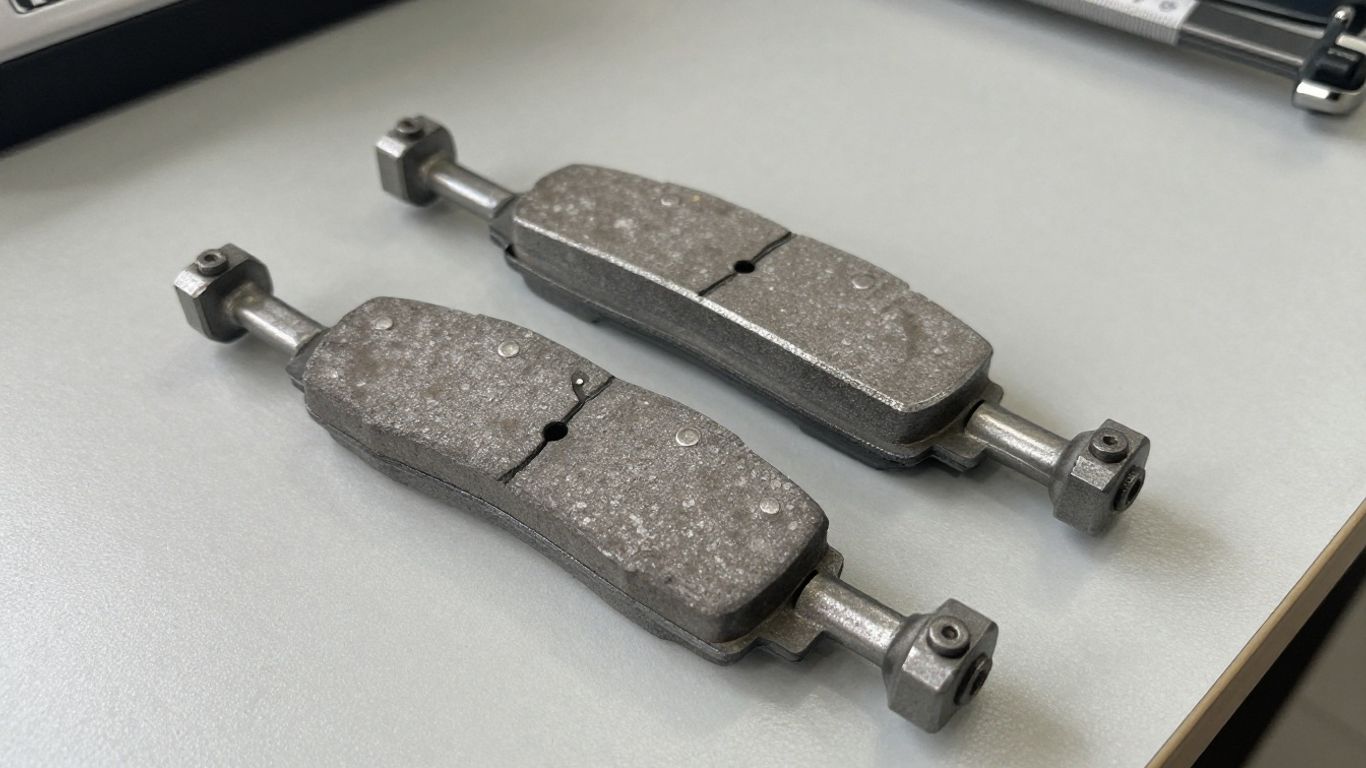
The safest approach is to verify the part from more than one source. A photo can help, but it should support—not replace—the VIN, part number, and dimensional checks.
Matching pads to the SsangYong model and year
Start with the exact model designation, production year, body style, and axle position. A Musso, Korando, or Rexton may have several brake configurations across different years, markets, and equipment levels. Even within one generation, a change in engine or axle package can alter the pad shape.
For a Musso application, a FEMO and SAFELINE brake pad set listing can be a useful catalogue reference, but the vehicle details still need to match the listed application. Treat catalogue coverage as a way to narrow the search, not as permission to ignore the car’s identification data.
Checking engine, trim, and axle specifications
Engine size, trim level, wheel size, and drivetrain can affect the brake hardware fitted at the factory. Confirm whether the vehicle has standard or upgraded brakes and whether you are ordering front or rear pads. If the vehicle has been modified, measure the existing hardware and consult a specialist before buying.
Write the details down before searching. This simple step prevents a common mistake: selecting a familiar model name while overlooking the engine or axle variant that actually determines the part.
Using VIN and OEM part numbers
The VIN is usually the most reliable starting point for a parts counter or workshop because it identifies the individual vehicle. An OEM part number from the old pad, packaging, or service record adds another useful cross-check. Numbers should be compared character by character, including suffixes and revision codes.
If the VIN and an online listing disagree, pause the order and resolve the difference. A small catalogue error is cheaper to fix before installation than after the wheels are off and the vehicle is unavailable.
Confirming pad shape, dimensions, and sensor compatibility
Compare the pad’s length, height, thickness, locating tabs, backing plate, and wear-sensor arrangement. Also check whether the replacement includes shims, clips, or other hardware required by the caliper. A pad can look close enough in a photograph yet fail to seat correctly in its carrier.
Use the following checks as a final fitment routine:
- Confirm the front or rear axle and the left/right application where relevant.
- Compare the old pad’s shape and dimensions with the new part.
- Check for a wear sensor, sensor slot, or electronic parking-brake requirement.
- Verify that the box contains the required shims and retaining hardware.
After these checks, dry-fit the part before applying lubricant or closing the caliper. It should move correctly in the carrier without force, binding, or excessive play.
Compare brake pad types and brands
There is no single pad material that is ideal for every driver. A quiet commuter, a heavily loaded ute, and a vehicle used on steep roads place different demands on the friction material. Compare the specification with the vehicle’s normal use rather than choosing on colour, marketing language, or price alone.
The product name matters less than documented fitment and a clear specification. If a listing does not state the application, axle, or relevant standard, ask for clarification before purchase.
Ceramic, semi-metallic, and low-metallic pads
Ceramic pads are often selected for clean running and quiet operation, while semi-metallic compounds can provide a firm friction response and useful heat tolerance. Low-metallic formulations sit between different priorities, depending on their exact recipe. These are broad tendencies, not guarantees for every product.
Temperature range, friction behaviour, noise-control features, and certification should all be considered. A pad that feels excellent during a short test drive may not suit repeated heavy braking or towing if its heat performance is not appropriate.
OEM pads versus aftermarket alternatives
OEM-equivalent and aftermarket pads can both be suitable when they are correctly specified and made for the application. Compare the stated dimensions, friction specification, certification, included hardware, and warranty terms. The cheapest option is not necessarily economical if it creates noise, uneven wear, or an early second repair.
A ceramic brake kit listing may combine compatible replacement pads and rotors for selected Musso or Rexton applications from 2018 onward. Confirm the exact model and year before treating a listed kit as suitable for a particular vehicle.
Balancing braking power, noise, dust, and lifespan
Every pad involves trade-offs. A harder or more aggressive compound may offer a confident response but create more dust or disc wear, while a quieter compound may feel different at the pedal. Driving pattern matters just as much as the material: frequent short trips, hills, towing, and stop-start traffic all change the balance.
A practical comparison can be kept simple:
| Priority | What to compare | Why it matters |
|---|---|---|
| Stopping feel | Friction specification and pedal response | Helps the pad suit the vehicle and driver |
| Noise | Shims, chamfers, and compound design | Can reduce unwanted squeal when correctly installed |
| Dust | Compound characteristics and wheel exposure | Affects cleaning frequency and appearance |
| Service life | Heat use, load, and wear pattern | Gives a more realistic expectation than mileage alone |
Use this table to frame questions for a supplier, then check the actual technical information for the selected part. No material category should be treated as a universal promise of quietness or long life.
When premium brake pads are worth the cost
A higher-priced pad can make sense when it provides a documented fit, better hardware, suitable heat performance, or a certification required for the application. It may also be worthwhile when access is difficult and replacing an inferior set would mean paying for labour twice. Price alone, however, does not prove quality.
For a specified high-performance rear application, SDT S50 pads are listed for selected SsangYong Korando, Musso, and Rexton vehicles with features including noise-reduction plates and ECE R90 compliance. Those claims apply to the listed product and application, so verify that the vehicle matches before choosing it.
Know when SsangYong brake pads need replacement
Brake pads do not have one universal replacement mileage. Their life depends on traffic, load, terrain, driving habits, pad compound, and the condition of the caliper and disc. A visual inspection at service intervals is more useful than waiting for a fixed odometer number.
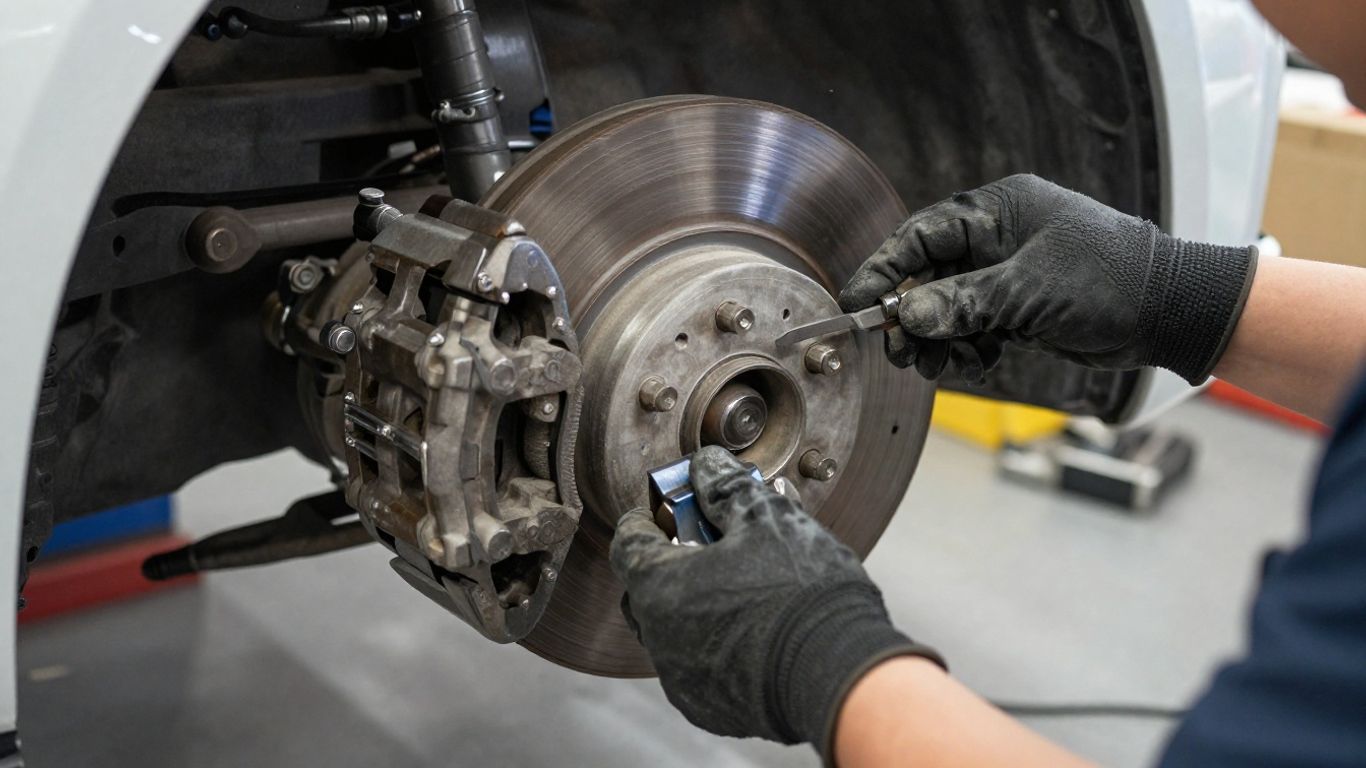
If braking feels different or a warning appears, arrange an inspection promptly. Continuing to drive can turn a pad replacement into a larger brake repair.
Minimum pad thickness and inspection guidelines
Use the manufacturer’s service limit for the exact vehicle rather than relying on a generic thickness number. Measure the friction material at several points, comparing the inner and outer pads on both sides of the axle. If the material is near the limit, replace the pads as an axle set according to the service guidance.
The inspection should include the pad backing plate, wear indicator, contact edges, and any signs of heat damage. A quick glance through the wheel may miss the thinner inner pad, so remove the wheel when a proper assessment is needed.
Symptoms of uneven wear or damaged pads
Uneven thickness across one axle often points to restricted slider movement, a sticking piston, damaged hardware, or incorrect seating. Cracks, chunks missing from the friction material, deep scoring, and contamination are not normal wear patterns. Squealing alone can have several causes, but grinding or metal contact calls for immediate attention.
Do not replace only the visibly worst pad. The whole axle should be assessed, and the underlying cause should be corrected so the replacement set does not suffer the same problem.
How driving conditions affect pad life
Urban traffic creates frequent brake applications, while steep roads and towing add heat and load. Short journeys can also leave less opportunity for the brakes to cool, and muddy or dusty conditions may affect the caliper hardware. Smooth anticipation and leaving more space ahead can reduce unnecessary applications.
Mileage is therefore only a rough reference. Two vehicles with the same odometer reading may have very different remaining pad thickness because their working conditions have been different.
Why brake discs and calipers should be inspected too
Pads rely on a flat, serviceable disc and a caliper that releases correctly. Excessive disc scoring, a pronounced lip, cracks, heat spots, or thickness below specification can compromise the new pads. Caliper sliders, piston seals, abutment clips, and brake hoses also deserve inspection.
For a selected Musso application, Brembo parts listings include brake pads and discs, with product information also describing Greenance brake fluid for compatible systems. Verify the exact application and fluid requirements rather than mixing parts based only on brand recognition.
Replace SsangYong brake pads safely
Brake work involves heavy components and a safety-critical system. If you do not have secure lifting equipment, the correct tools, or the service information, use a qualified technician. Never rely on a jack alone while working beneath or beside the vehicle.
The procedure varies by axle and caliper design. Read the instructions first, photograph the original hardware, and keep the parts from each side organised until the installation is complete.
Tools and preparation for the job
Prepare axle stands, a suitable jack, wheel chocks, basic hand tools, a torque wrench, brake cleaner, a piston tool, and protective gloves and eye protection. A wire brush can clean carrier contact points, but do not use compressed air to blow brake dust into the air. Keep friction surfaces free of grease and oil.
Before lifting the vehicle, loosen wheel nuts slightly on level ground and confirm that the replacement pads match. Check the parking brake arrangement, especially at the rear, because some systems require a specific release or service procedure.
Key steps in removing and installing the pads
Secure the vehicle, remove the wheel, and inspect the assembly before opening the caliper. Remove the retaining hardware as directed, support the caliper without hanging it from the hose, and note the position of shims and wear sensors. Retract the piston using the correct method, clean the carrier, and install the new pads in their original orientation.
Tighten fasteners to the vehicle’s specified torque and make sure the pad can move correctly in the carrier. Refit the wheel and torque the wheel nuts in the prescribed sequence. Do not drive away until the pedal has been pumped until firm.
Caliper, piston, and hardware checks
Slider pins should move smoothly and have the correct lubricant; rubber boots should be intact. The piston should retract without abnormal force, and the pad contact points should not be corroded enough to restrict movement. Replace damaged clips, shims, springs, or boots rather than reusing questionable hardware.
A careful check here prevents many repeat complaints. If one pad was dramatically thinner than its partner, find the reason before closing the job.
Bedding in new pads after installation
New pads need a controlled bedding-in period so their friction surfaces mate with the discs. Follow the pad or vehicle maker’s instructions, using several moderate stops with cooling time between them where conditions allow. Avoid repeated emergency-style braking or holding the pedal firmly after a very hot stop.
After bedding, confirm that the pedal remains firm and that the vehicle stops straight. If there is smoke, severe vibration, a burning smell, or a warning light, stop safely and arrange an inspection rather than continuing the procedure.
Maintain braking performance after installation
Good installation is only the beginning of brake maintenance. Clean contact points, correct wheel torque, and regular inspections help the pads wear evenly. The driver’s habits matter too: anticipating traffic and avoiding unnecessary hard stops reduces heat and wear.
Keep the invoice, part number, and installation date with the vehicle records. Those details make the next inspection easier and help identify changes over time.
How to prevent premature pad wear
Use gentle, progressive braking where traffic allows, avoid resting your foot on the pedal, and investigate any smell or pull after a drive. Do not overload the vehicle beyond its limits, and use the correct brake fluid and service procedure. If the car tows or carries heavy loads, shorten inspection intervals rather than waiting for a standard service date.
Uneven wear is usually a clue, not bad luck. Addressing the caliper, hardware, disc, or driving condition behind it protects the next set.
When to rotate tires and inspect brakes
Tire rotation should follow the vehicle’s maintenance schedule and tyre pattern, while brake inspections can be combined with wheel removal. This is a useful opportunity to check pad thickness, disc condition, caliper movement, tyre wear, and wheel-nut torque together.
A rear brake service booking page may help owners compare service options for a listed Musso rear pad and rotor job. Confirm what the quote includes and ask the provider to explain any additional work found during inspection.
Diagnosing squealing, vibration, and pulling
Squealing may result from pad material, shims, contamination, or incorrect contact. Vibration under braking can point to disc runout, uneven deposits, or suspension issues, while pulling may involve a caliper, tyre, alignment, or hydraulic fault. Each symptom needs a physical check rather than a parts swap based on sound alone.
Record when the symptom occurs: cold or hot, light or heavy braking, and straight-line or downhill driving. That information helps a technician reproduce the issue more efficiently.
Setting a practical brake inspection schedule
Inspect the brakes at routine servicing, before long trips, and whenever the vehicle’s load or driving environment changes significantly. Check sooner if a warning light appears, the pedal feels different, or a new noise persists. Vehicles used in hills, heavy traffic, towing, or dusty conditions benefit from more frequent checks.
A simple record of thickness measurements and observed symptoms gives you a useful trend. It is more dependable than guessing from mileage alone.
Conclusion
Choosing and maintaining the right brake pads means confirming fitment, comparing realistic performance priorities, inspecting the complete brake assembly, and treating unusual symptoms seriously. With the correct parts and a careful installation, routine inspections can keep braking predictable and help prevent small wear issues from becoming larger repairs.
Frequently Asked Questions
How often should brake pads be replaced?
There is no fixed interval for every vehicle. Inspect pad thickness and condition regularly, then replace them when they reach the specified limit or show damage, contamination, or unsafe wear.
Should brake pads be replaced in pairs?
Pads should normally be replaced on both sides of the same axle. Replacing only one side can create uneven braking and different friction characteristics across the axle.
Can I replace brake pads without changing the discs?
Sometimes, if the discs remain within specification and have no damaging grooves, cracks, or severe heat marks. The discs should always be inspected before fitting new pads.
Why do new brake pads squeal?
Squeal can come from pad material, vibration, contaminated surfaces, missing hardware, or incorrect bedding. Persistent or severe noise should be inspected rather than ignored.
How can I tell whether pads are worn?
Look for reduced friction-material thickness, a warning indicator, squealing, grinding, or a changed pedal feel. A proper measurement is more reliable than judging through the wheel opening.
Do front and rear brake pads use the same parts?
Usually not. Front and rear axles can use different pad shapes, materials, sensors, calipers, and installation procedures, so each axle must be identified separately.
Is bedding in new pads necessary?
Yes. A controlled bedding process helps the pads and discs mate consistently. Follow the relevant instructions and avoid harsh repeated braking immediately after installation.