

Key Takeaways
Choosing the right filter starts with the vehicle, not the price or a familiar-looking photograph.
- Confirm the Ssangyong model, year, generation, engine, and engine code.
- Separate the engine air filter from the cabin air filter.
- Cross-check part numbers, dimensions, shape, and regional fitment.
- Inspect sealing edges and housing compatibility before installation.
- Compare delivery, returns, warranty, and total purchase cost.
Identify the correct Ssangyong model and engine
A filter that fits one Ssangyong variant may not fit another built in the same period. Model names can span several generations, engines, and markets, so the vehicle details need to be established before browsing parts. This is the first step toward buying reliable ssangyong air filter parts rather than relying on a generic listing.
Match the model year and generation
Start with the registration details and confirm the model year, body style, and generation. A Rexton, Kyron, Korando, Musso, or Tivoli may have more than one filter application across its production run. Facelifts and engine revisions can also change the housing or element shape, even when the exterior looks nearly identical.
Confirm the engine type and displacement
Record whether the engine is petrol or diesel, then note its displacement. A 2.0-litre diesel and a 2.0-litre petrol engine may use entirely different filter elements. Do not assume that a listing covering several models covers every engine within those models.
Check engine codes and transmission details
The engine code is often more useful than the model name alone. It can distinguish applications that share a badge but use different intake housings. Transmission details are not always decisive for an air filter, but they can help confirm the exact vehicle variant when a catalogue separates automatic and manual applications.
Use the vehicle identification number when needed
When catalogue results conflict, provide the vehicle identification number to a parts specialist or compare it with the manufacturer’s parts information. A VIN check is especially sensible for imported vehicles, late-year changes, and cars assembled for a different regional market. It is usually faster than returning an incorrectly ordered filter.
Understand the main types of Ssangyong air filters
The word “air filter” can refer to two different service parts. The engine filter protects the intake system, while the cabin filter cleans air entering the passenger compartment. Once that distinction is clear, material, construction, and supplier claims become easier to assess.
Compare engine air filters and cabin air filters
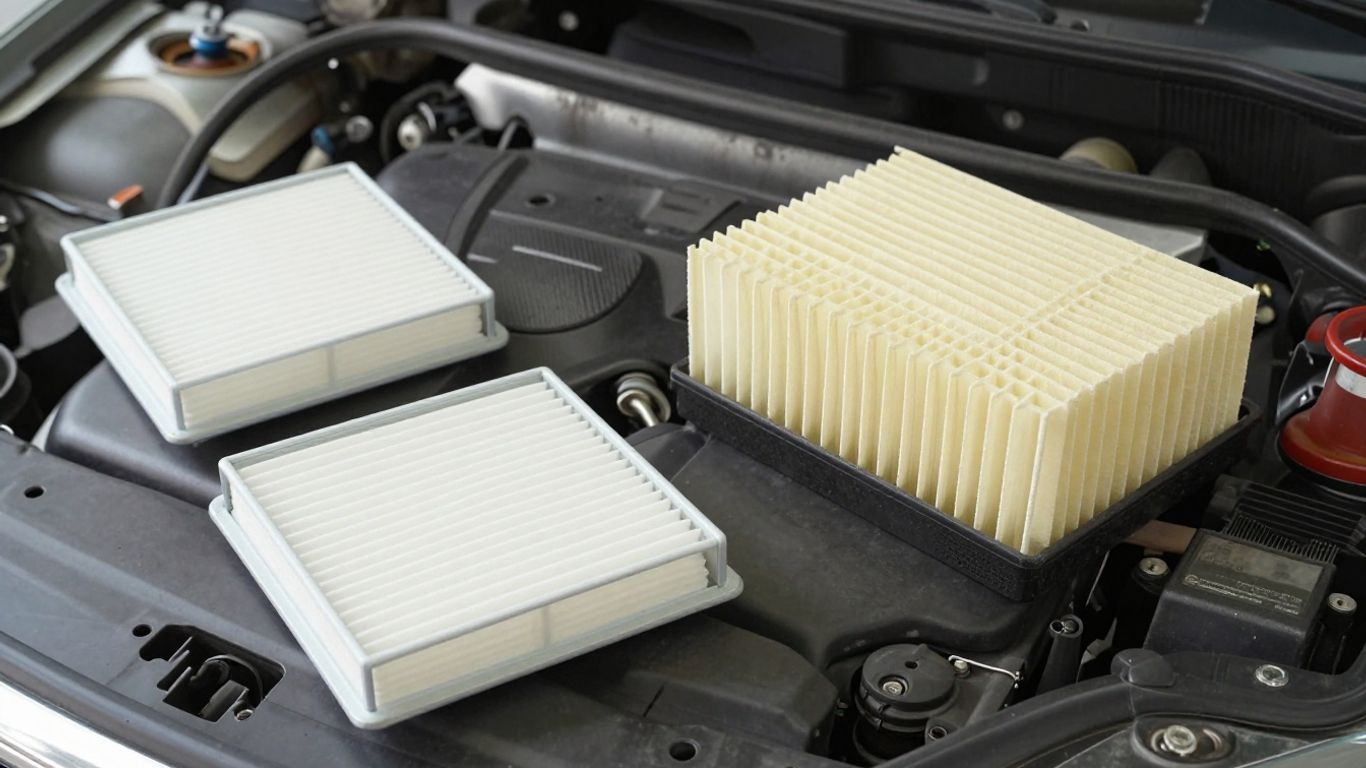
An engine air filter sits in the intake path before the engine and must seal correctly inside its housing. A cabin filter is located in the ventilation system and may include a pleated element designed for dust and other airborne debris. They are not interchangeable, even if both are described casually as air filters.
Choose between genuine, OEM, and aftermarket parts
A genuine part is sold through the vehicle maker’s channel, while an OEM part is made to the relevant original-equipment specification by an identified supplier. Aftermarket parts vary by manufacturer and should be judged by documented fitment, construction, and warranty terms. For a useful cross-reference starting point, the 23190-08403 air filter listing provides manufacturer and supplier numbers for selected applications, but its vehicle coverage still needs to be checked against your car.
Evaluate standard, performance, and washable filters
A standard replacement is generally the simplest choice for routine servicing. Performance or washable designs may have different maintenance requirements and may not be suitable for every housing or driving pattern. Treat claims about improved output carefully unless the product information explains the construction and the exact application.
Consider filter materials and construction
Look at the pleated media, frame, support structure, and sealing gasket. Paper and synthetic materials are common, but material alone does not prove suitability. A listing for a fiber dry air filter, such as the Rexton 320 air filter, still needs to be matched to the precise model, engine, and housing before purchase.
Verify air filter part numbers and fitment
Fitment information should be treated as a set of checks rather than a single catalogue promise. Part numbers, dimensions, shape, and vehicle details should point to the same result. Fitment beats familiarity when two filters look almost identical.
Read the part number on the existing filter
Remove the old element only when it is safe and practical, then photograph or record every visible number. Some filters carry a manufacturer number, a vehicle-maker number, or both. Dust and fading can make characters difficult to read, so compare the marking with the housing and the vehicle documentation rather than guessing at one digit.
Cross-reference manufacturer and supplier numbers
Supplier catalogues often list several equivalent or replacement references. Treat these as leads to verify, not as permission to ignore the application data. A number that appears in a search result can cover several vehicles, while the same vehicle may have different references by engine or production date.
Compare filter dimensions and shape
Measure length, width, height, and any stepped or rounded corners if the part number remains uncertain. Pay attention to locating tabs, airflow direction, and the position of the seal. The following comparison is useful when narrowing a catalogue result:
| Check | What to compare | Why it matters |
|---|---|---|
| Length and width | Overall external dimensions | Prevents a loose or oversized fit |
| Height | Element depth inside the housing | Ensures the cover can close correctly |
| Shape | Corners, tabs, and folds | Confirms the element locates properly |
| Seal | Gasket profile and contact surface | Reduces the risk of unfiltered air bypass |
Dimensions cannot replace a vehicle-specific fitment check, but they can expose an obvious mismatch before the order is placed. If the shape differs substantially from the old filter, pause and verify the application.
Watch for regional and model-specific differences
Imported Ssangyong vehicles can have catalogue differences tied to market, engine calibration, or production period. A listing that includes several countries or body styles may be accurate for only some combinations. Check the seller’s fitment chart and ask for confirmation when the vehicle’s origin is unclear.
Assess air filter quality and performance
A suitable filter should fit securely and provide an appropriate balance of filtration and airflow for the engine. Product photographs can help, but they rarely show the full quality of the media or seal. Focus on evidence that can be checked: construction, application data, packaging, and the seller’s terms.
Look at filtration efficiency and airflow
Manufacturers may publish filtration or airflow information, but the figures are meaningful only when the test basis and application are clear. Avoid assuming that the most restrictive-looking element is automatically better. The filter must capture contamination without creating an unsuitable restriction for the intake system.
Check sealing edges and housing compatibility
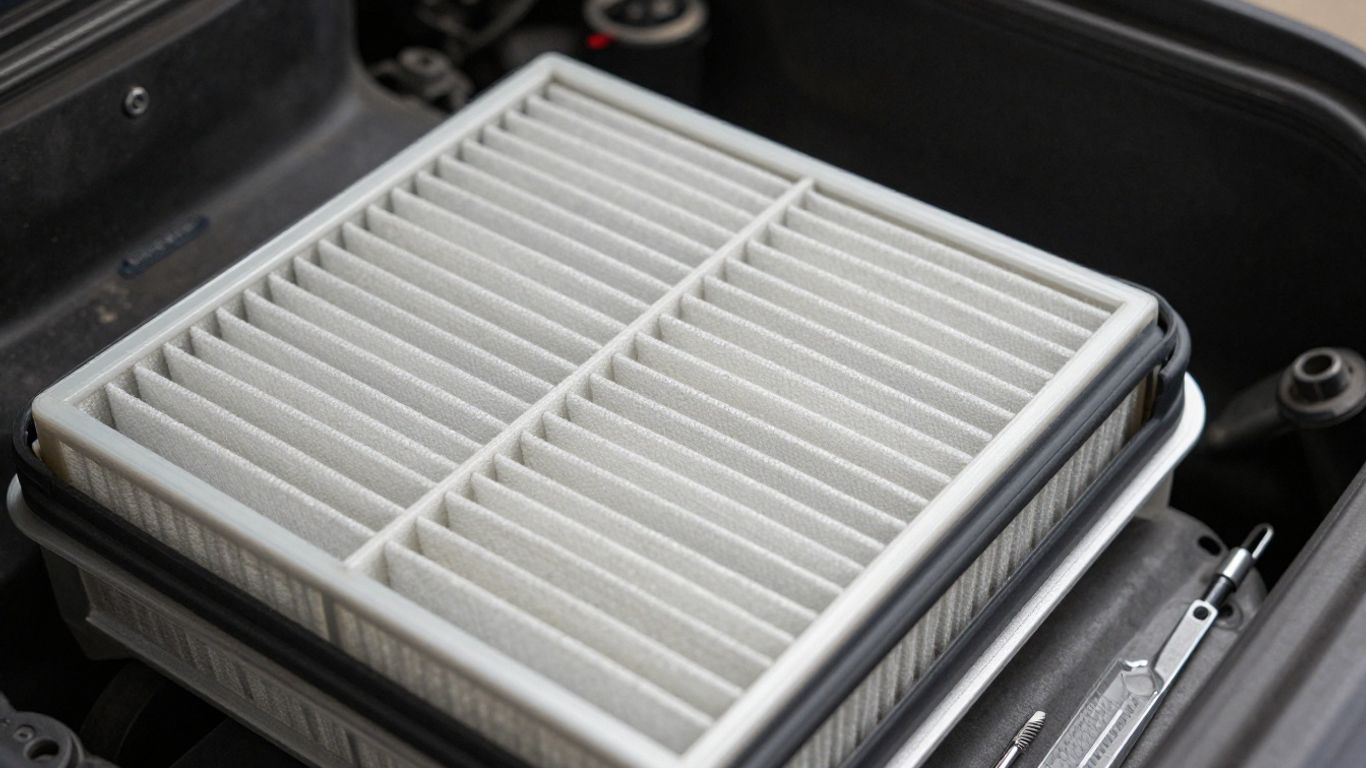
The gasket should be continuous, even, and firm enough to make contact around the housing. A filter with a distorted edge or poorly bonded frame can allow air to bypass the media. Compare the replacement with the old element before fitting, especially around corners and locating features.
Consider driving conditions and service intervals
Dusty roads, construction areas, gravel routes, and frequent short trips can load a filter more quickly than clean highway driving. Follow the vehicle’s service guidance, but inspect the element sooner when conditions are harsh. A visual inspection should not involve damaging or aggressively cleaning a disposable paper element.
Recognize signs of a poor-quality filter
Warning signs include uneven pleats, loose media, a brittle frame, missing gaskets, unclear labelling, and packaging that does not match the listing. A very low price is not proof of poor quality, but it deserves closer scrutiny when the seller gives little technical information. Keep the invoice and product details until the fit has been confirmed.
Find and buy compatible Ssangyong air filter parts
Buying online can make comparison quick, but a long list of compatible vehicles is not the same as confirmed fitment. The strongest listing combines a clear part number with engine and model information. It should also explain what happens if the supplied part does not match.
Compare specialist suppliers and online marketplaces
Specialist parts suppliers may offer more useful catalogue support, while marketplaces can provide a broader choice and faster price comparison. Look at the quality of the technical information before comparing prices. A supplier serving customers nationwide can be helpful when local stock varies, provided delivery and returns are clearly stated.
Review product descriptions and fitment charts
Read the complete description rather than relying on the title. Confirm the filter type, reference numbers, dimensions where available, and the exact vehicle application. Do not treat a broad list of model names as confirmation for every engine and year.
Check authenticity, returns, and warranties
Check whether the part is described as genuine, OEM, or aftermarket and whether the seller identifies the manufacturer. Review the return window, conditions for electrical or opened parts where relevant, and any warranty limitations. Keep the original packaging until the filter has been compared with the old one.
Calculate total cost beyond the listed price
The displayed price may not include delivery, taxes, urgent shipping, or return postage. Compare the complete cost and the inconvenience of waiting for an incorrect part. Before ordering, run through this short sequence:
- Match the model year and engine.
- Compare the catalogue number and dimensions.
- Confirm stock, delivery, and return conditions.
- Save the listing and order reference.
This takes only a few minutes and creates a record if the application needs to be queried. It also helps separate a genuinely affordable part from one that becomes expensive after shipping or an avoidable return.
Replace and maintain the air filter correctly
Replacement is usually straightforward, but cleanliness and correct seating matter more than speed. Work with the engine switched off and allow hot components to cool. If access is awkward or the housing is damaged, a qualified technician is the safer choice.
Prepare the vehicle and access the filter housing
Park securely, open the bonnet, and identify the air filter housing before removing clips or screws. Note the intake duct position and keep loose fasteners away from the engine bay. Take a quick photograph before opening the housing if the cover orientation is not obvious.
Inspect the housing, seals, and intake duct
Remove loose dirt from around the housing so it cannot fall into the intake. Inspect for cracks, warped cover edges, damaged clips, and debris in the duct. The new filter cannot compensate for a housing that does not close or seal correctly.
Install the replacement filter without gaps
Compare the old and new elements, then place the replacement in the same orientation. Make sure every corner sits in its locating channel and that the gasket is not folded or pinched. Refit the cover evenly so the fasteners secure it without forcing the housing.
After installation, check that the cover is fully closed and the intake duct remains connected. Do not start the engine until tools, packaging, and loose material have been removed from the work area.
Set a practical inspection and replacement schedule
Record the date and odometer reading, then follow the vehicle’s recommended interval as a baseline. Inspect sooner after dusty trips or when the filter appears heavily loaded. Replacement timing should reflect both the service schedule and the conditions in which the vehicle is actually driven.
Conclusion
The safest way to choose ssangyong air filter parts is to work from the vehicle identification details, confirm the engine application, and then verify the part number, dimensions, seal, and supplier terms. A careful comparison before ordering is usually simpler and cheaper than correcting a filter that does not fit.
Frequently Asked Questions
Is the engine air filter the same as the cabin air filter?
No. The engine filter protects the engine intake, while the cabin filter serves the ventilation system. They have different locations, shapes, and applications.
Can one filter fit every model year?
Not necessarily. Model generations, engines, production changes, and regional specifications can alter the required element, even when the vehicle name stays the same.
How can I confirm an air filter’s fitment?
Compare the model year, engine, engine code, part number, dimensions, and housing shape. Use the VIN or ask the supplier when catalogue information conflicts.
Is a genuine filter always the best choice?
A genuine filter is one option, but a correctly specified aftermarket or OEM part may also be suitable. Review construction, fitment evidence, warranty, and supplier reputation rather than judging by label alone.
Should I clean and reuse a disposable paper filter?
Usually not. Blowing out or washing a disposable element can damage the media or seal. Replace it according to the service guidance and inspect it earlier in dusty conditions.
What indicates that a replacement filter is poor quality?
Uneven pleats, loose material, damaged seals, unclear part identification, and a frame that does not match the housing are warning signs. Do not install a filter that cannot seat securely.
What information should I keep after buying a filter?
Keep the product description, part number, invoice, vehicle details, and delivery record. These make future servicing easier and support a return or fitment query if necessary.