

Key Takeaways
Choosing electrical parts carefully starts with accurate vehicle identification and a clear diagnosis, not with the cheapest listing. A methodical check can prevent repeat failures, coding problems, and wasted installation time.
- Confirm the VIN, engine, production year, and original part number.
- Test the vehicle before assuming a component has failed.
- Compare genuine, aftermarket, and used parts on more than price.
- Check connectors, ratings, fitment, warranty terms, and returns.
- Protect the battery, wiring, and control modules during installation.
Understanding Ssangyong electrical parts and vehicle systems
Electrical parts connect the vehicle’s basic power supply with its starting, charging, lighting, safety, and comfort systems. A fault in one circuit can look like a problem somewhere else, which is why the broader system matters. The term ssangyong electrical parts may cover everything from a battery cable to a sensor or electronic control unit.
How the charging and starting systems work together
The battery supplies power for the initial start, while the starter motor turns the engine. Once the engine is running, the alternator replenishes the battery and supports electrical demand. A weak battery, poor ground, worn starter, or charging fault can therefore produce similar symptoms, such as slow cranking or repeated clicking.
A basic inspection should consider the battery terminals, ground connections, belt condition, and charging voltage before a starter or alternator is ordered. Replacing the visible symptom without checking the circuit can leave the original fault in place.
The role of sensors, modules, and control units
Sensors measure conditions such as temperature, speed, position, or pressure and send information to control units. Modules then use that information to manage particular vehicle functions. A warning light or irregular behavior does not automatically prove that the sensor itself is defective; wiring, a connector, power supply, or software-related issue may be involved.
The safest approach is to combine the symptom with test results and any stored diagnostic information. That avoids treating every electronic complaint as a simple plug-and-play replacement.
Common differences between model years and trim levels
Parts can vary between production periods, engines, body styles, and equipment levels. Two vehicles with the same model name may use different connectors, lighting assemblies, control modules, or wiring arrangements. Optional equipment can also change the required part, even when the outside appearance is similar.
Before comparing prices, record the complete vehicle details and photograph the existing component and its connector. A catalogue of SsangYong electrical parts can help with broad category research, but fitment still needs to be confirmed against the specific vehicle.
Identifying the right replacement part
Correct identification is the foundation of a successful electrical repair. A photograph alone can be useful, but it rarely proves compatibility. Use the vehicle records, the old part, and the seller’s fitment information together.
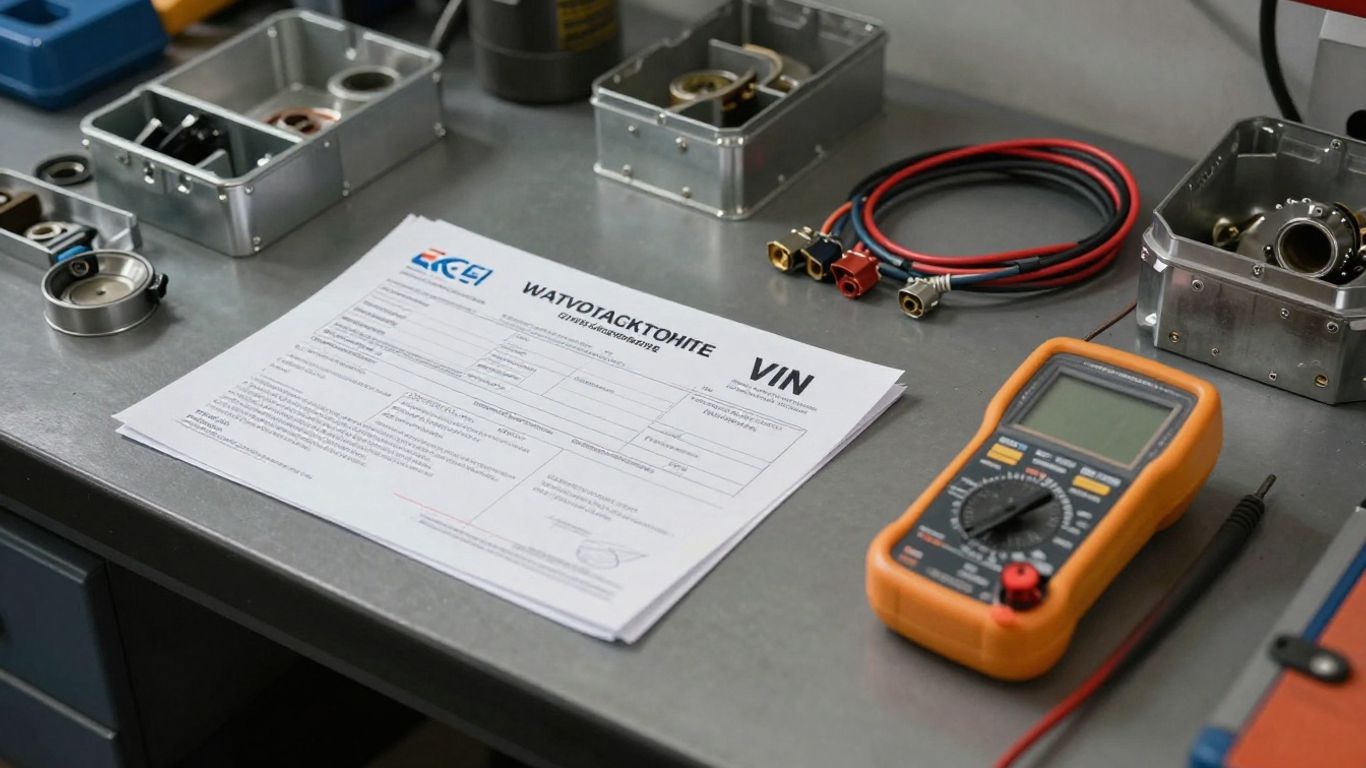
Using the VIN, engine code, and production year
The VIN is usually the strongest starting point because it identifies the vehicle configuration more precisely than a model name alone. Add the engine code, transmission information where relevant, production date, and trim level. These details can distinguish parts that look alike but use different software, connectors, or mounting points.
When contacting a supplier, send the full identification details rather than asking only for a model-based recommendation. Keep a record of the response so the fitment advice is clear if the part later needs to be returned.
Matching OEM numbers, superseded numbers, and aftermarket references
The number printed or moulded on the original part may be an OEM number, a supplier reference, or a production code. A manufacturer may replace an older number with a superseded number, while an aftermarket brand may use its own catalogue reference. These references should be cross-checked rather than treated as automatically interchangeable.
Ask whether the listed number is an exact replacement, an approved supersession, or merely a cross-reference. This distinction is particularly useful for modules, sensors, and assemblies with internal programming.
Checking connectors, voltage ratings, and physical fit
Compare the number and shape of pins, locking tabs, wire positions, mounting holes, and housing dimensions. Also confirm the voltage and current requirements where those specifications apply. Physical similarity is not proof of electrical compatibility.
A close inspection can catch several common ordering mistakes before delivery. Compare these points with the seller’s written listing and the old part:
- Connector shape, pin count, and terminal arrangement.
- Mounting points, housing size, and cable length.
- Voltage, current, polarity, and fuse requirements.
- Included brackets, bulbs, sensors, or seals.
After that check, a listing becomes much easier to judge. If one detail remains uncertain, pause the order and request a fitment confirmation tied to the VIN.
Common electrical parts that need replacement
Some electrical components wear gradually, while others fail after heat, vibration, moisture, or a short circuit. The repair may involve a single part or a wider circuit. Understanding the category helps narrow the diagnosis without assuming the answer.
Batteries, alternators, and starter motors
Battery condition should be assessed through resting voltage, load performance, terminal condition, and age. An alternator may fail to charge correctly, while a starter may draw excessive current or turn slowly. Corroded terminals and weak grounds can imitate either problem.
For a vehicle-specific catalogue, Ssangyong Turismo listings illustrate why engine and year details belong in the search. A part described for a Turismo 2.2 Diesel 2016 should not be assumed suitable for every vehicle carrying the Turismo name.
Fuses, relays, wiring looms, and connectors
Fuses protect circuits from excessive current, but a blown fuse is often a result rather than the original cause. Relays can develop contact or coil faults, and wiring looms may suffer from abrasion, heat damage, broken strands, or water entry. Connectors can loosen or corrode without showing obvious external damage.
Inspect the circuit before fitting a larger fuse or repeatedly replacing the same one. A new fuse that fails immediately is a reason to stop and locate the short or overload, not to keep installing replacements.
Sensors, switches, lighting, and interior electronics
Sensors and switches are frequent suspects because they interact directly with vehicle controls and driver inputs. Lighting assemblies, window controls, instrument components, and cabin electronics can also fail because of a local ground, connector, fuse, or module issue. Check power and ground at the component before condemning it.
The right replacement may be a complete assembly, a serviceable bulb, a connector repair, or a wiring fix. That distinction can make the repair both cheaper and more reliable.
Diagnosing electrical faults before buying parts
A diagnosis should explain the symptom, not simply name a component. Start with what the driver sees and hears, then work toward the circuit. This order reduces unnecessary purchases and makes intermittent faults easier to document.
Reading warning lights and dashboard symptoms
Warning lights provide clues, but they are not always direct part-failure indicators. A charging light may point to a belt, alternator, wiring, or battery issue, while an engine warning light can relate to a sensor circuit or another system entirely. Note when the symptom appears, whether it changes with temperature, and whether other functions fail at the same time.
Write down slow cranking, flickering lights, dead accessories, unusual relay sounds, and any recent repair or water exposure. A good symptom record gives a technician more useful information than a general statement that the vehicle is “electrical.”
Testing voltage, continuity, and parasitic drain
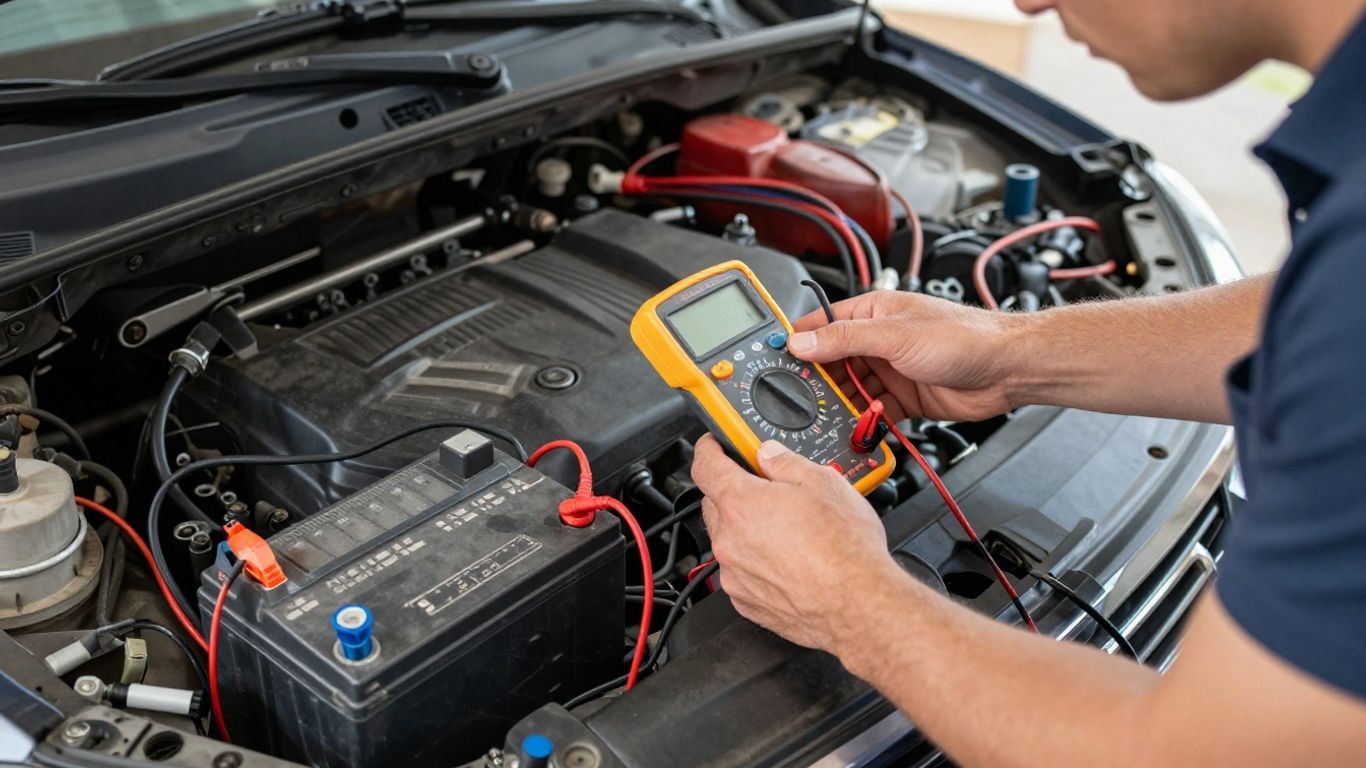
Use a suitable multimeter and follow the vehicle’s service procedure. Check battery voltage at rest and during cranking, charging voltage with the engine running, voltage drop across grounds, and continuity only when the circuit is safely isolated. For a parasitic-drain test, allow the vehicle to enter its normal sleep state and observe the correct meter setup.
Do not disconnect or reconnect circuits carelessly while a meter is configured for current measurement. If the test method is unfamiliar, professional assistance is safer than risking a blown meter fuse or damage to a control unit.
Using diagnostic scanners to identify fault codes
A diagnostic scanner can retrieve stored or pending codes and provide live data, but a code is not a parts order. Confirm the code with wiring checks, connector inspection, sensor readings, and the conditions in which it was recorded. Clear codes only after noting them and completing the necessary tests.
For example, a circuit code may identify an open, short, or implausible signal rather than a failed sensor. The scan result narrows the investigation; it does not replace it.
Choosing between genuine, aftermarket, and used parts
The best source depends on the component, the vehicle’s condition, the consequences of failure, and the evidence available from the supplier. Price matters, but so do programming requirements, warranty support, and the cost of doing the job twice. Treat each option as a risk decision rather than a simple ranking.
When genuine Ssangyong parts are worth the premium
A genuine part may be worth considering when exact fit, software compatibility, safety relevance, or long-term support is especially important. This is often more significant for control modules and specialized assemblies than for simple service items. Confirm whether the replacement needs coding, calibration, or additional hardware before ordering.
Genuine does not remove the need for diagnosis. It only changes the source and specification of the component being considered.
Evaluating aftermarket brands and warranty coverage
Aftermarket parts can be practical when the manufacturer, reference number, specifications, and quality controls are clear. Review the warranty period, exclusions, proof-of-purchase rules, and whether labor costs are covered. A low price is less attractive if a failure creates repeat diagnostic and installation charges.
A supplier’s catalogue may include Rexton electrical parts, but a broad model catalogue is not the same as confirmation for a particular engine or trim. Ask for the exact application in writing.
Assessing used electrical modules and salvage components
Used parts can work well when the original component is durable and the donor vehicle is closely matched. Modules deserve extra caution because they may retain vehicle-specific coding, have unknown water exposure, or be difficult to test outside the car. Ask for the donor details, part number, condition, test method, and return terms.
Avoid buying a used module solely because its casing looks clean. Internal corrosion and previous programming may not be visible until installation.
Buying Ssangyong electrical parts online or locally
Online shopping offers a wide selection, while a local supplier may provide faster clarification and easier returns. In either case, the quality of the listing matters more than the number of search results. Compare the information supplied, not just the headline price.
Comparing supplier listings, stock details, and delivery times
Look for a clear part number, application range, condition, photographs, stock status, dispatch location, and estimated delivery date. A listing for Ssangyong Actyon electrical components may cover several categories, so read the individual product description rather than relying on the model heading.
A useful comparison records whether the item is physically in stock, special order, refurbished, or supplied from another warehouse. This can matter when a vehicle is off the road.
Verifying returns, warranties, and part-condition claims
Before paying, check the return window, restocking charges, testing requirements, warranty exclusions, and who pays shipping for a defective item. For used or refurbished electronics, ask how the part was tested and whether the warranty covers intermittent faults.
Keep the invoice, correspondence, packaging, and photographs of the received part. These records help if the number, condition, or fitment differs from the listing.
Avoiding counterfeit parts and incompatible listings
Be cautious when a listing uses generic photographs, vague numbering, unusual packaging, or claims that one part fits an implausibly wide range of vehicles. Compare the seller’s details with reliable references and ask questions before ordering. The same discipline used when reviewing unrelated SEO services, a Forza Horizon drift guide, a local locksmith guide, a blood pressure tracking sheet, or an electrician SEO guide still applies: check what is actually being offered rather than trusting a polished title.
Those unrelated examples also show why mixed search results need careful reading. Keep automotive research focused on verified fitment, clear condition, and accountable support.
Installing and maintaining electrical components safely
Electrical work can affect airbags, control modules, charging circuits, and other sensitive equipment. Read the vehicle’s service information and use insulated tools where appropriate. If the repair involves high-current wiring, safety systems, or uncertain diagnosis, use a qualified technician.
Disconnecting the battery and protecting sensitive electronics
Switch off the ignition, remove the key or keep it away from the vehicle where required, and follow the specified battery-disconnection sequence. Wait the recommended period before working near systems that may retain power. Never probe connectors with unsuitable tools or bridge terminals to test a circuit.
Protect removed connectors from dirt and moisture, and prevent tools from contacting positive terminals and body metal simultaneously. Reconnect the battery only after checking that wiring, grounds, covers, and fuses are correctly installed.
Programming, coding, or calibrating replacement modules
Some replacement modules may require programming, coding, relearning, or calibration after installation. The exact procedure depends on the vehicle and component. Confirm this requirement before buying, because a part can be electrically sound yet unusable until the correct setup is completed.
Record original settings and fault codes when possible. After installation, follow the service procedure, verify communication with the module, and test the related functions rather than assuming the job is complete when the warning light disappears.
Preventing corrosion, water damage, and recurring electrical faults
Find and correct the reason for a failure, especially when moisture or a blown fuse is involved. Clean terminals with the correct method, repair damaged insulation, secure looms away from heat and sharp edges, and make sure seals and drain paths are intact. Do not coat every connector indiscriminately, since some products can interfere with contact surfaces.
A final inspection should include battery terminals, grounds, harness routing, fuse-box covers, and areas exposed to water. Preventive care is often less costly than replacing the same electrical part again.
Conclusion
The most dependable way to source and replace an electrical component is to identify the vehicle precisely, test the circuit, compare the part references, and confirm the seller’s support before purchase. Careful installation and attention to grounds, connectors, moisture, and programming can turn a frustrating fault into a durable repair.
Frequently Asked Questions
How do I know which electrical part my vehicle needs?
Start with the VIN, engine code, production year, trim, original part number, and confirmed test results. A model name alone may not distinguish all compatible versions.
Can a blown fuse be replaced immediately?
Replace it only with the specified rating after checking why it failed. If the replacement blows again, stop and investigate a short, overload, or damaged component.
Are aftermarket electrical parts safe to use?
They can be suitable when the manufacturer, specifications, references, fitment, and warranty are clear. Quality varies, so compare evidence rather than choosing solely by price.
Is a used control module a good option?
It may be viable if the donor vehicle and part number match and the module has been tested. Confirm whether coding, programming, or calibration will be required.
What should I check before ordering online?
Check the exact part number, vehicle application, connector and mounting details, stock status, delivery estimate, condition, warranty, and return policy.
Why can a new part fail soon after installation?
The original circuit fault may still be present. Poor grounds, water entry, incorrect voltage, damaged wiring, improper installation, or missing programming can all cause repeat failure.
When should an electrical repair be handled by a professional?
Seek qualified help for high-current circuits, airbags, charging faults, module programming, suspected shorts, or any diagnosis that requires equipment or procedures you do not have.