
Key Takeaways
A drivetrain diagnosis should begin with the vehicle’s exact configuration and the symptoms it is showing. Careful parts matching, skilled installation, and regular fluid checks usually prevent small faults from becoming expensive repairs.
- Identify the drivetrain layout before ordering parts.
- Use the VIN and original equipment numbers to confirm fitment.
- Treat noises, leaks, shuddering, and warning lights as diagnostic clues.
- Replace related seals, mounts, or fasteners when inspection shows wear.
- Follow the correct fluid and service requirements for the vehicle.
Understanding Ssangyong drivetrain parts
The drivetrain is the collection of mechanical and hydraulic components that transfers engine power to the road. It includes more than the transmission: shafts, differentials, axles, joints, mounts, and fluids all affect how smoothly the vehicle moves. Understanding that chain makes parts selection and fault diagnosis much less guesswork.
What the drivetrain includes
A typical drivetrain begins at the engine’s crankshaft and continues through the clutch or torque converter, transmission, final drive, differential, axles, and wheel hubs. Four-wheel-drive vehicles add a transfer case and additional shafts. Each component has a specific job, but wear in one area can place extra load on the others.
The surrounding hardware matters too. Bearings support rotating parts, seals retain lubricant, and mounts control movement between the powertrain and chassis. A replacement component should therefore be considered as part of an assembly rather than as an isolated metal part.
How power moves from the engine to the wheels
The engine produces rotation, while the transmission changes the available speed and torque. The final drive then directs that power toward the axles, where differential gears allow the wheels to turn at different speeds during a corner. CV joints accommodate suspension movement and steering angle without interrupting power delivery.
A fault can interrupt this flow in several ways. A slipping clutch may prevent torque from reaching the gearbox input shaft, while a damaged universal joint can introduce play and vibration farther down the line. Reading the symptom in relation to the power path helps narrow the search.
Differences between 2WD, 4WD, and AWD systems
In a 2WD layout, the engine drives either the front or rear axle. A 4WD system generally uses a transfer case to distribute power between axles, often with selectable operating ranges. AWD systems vary considerably, but they commonly manage torque between axles automatically or continuously.
These differences affect part numbers, fluid requirements, and diagnostic methods. A transfer case, front differential, or additional propeller shaft may be absent from a two-wheel-drive vehicle, so a visually similar component is not necessarily interchangeable.
Common Ssangyong models and drivetrain configurations
Model names alone are not enough to establish fitment. A vehicle may be offered with different engines, transmissions, axle ratios, body styles, or drive layouts depending on its market and production year. Confirming the build information is more reliable than relying on a broad model description.
A market overview such as this Ssangyong gearbox report can provide general context about gearbox demand, but it should not replace the vehicle’s VIN-based parts check. The same principle applies when browsing a broad catalogue of Ssangyong 4×4 parts: filter by the exact application before comparing prices or brands.
Identifying worn or damaged drivetrain components
Drivetrain problems rarely announce themselves with one perfect symptom. A delayed engagement may come from a transmission issue, but it can also be related to fluid condition, a mount, or an electrical control fault. Start with when the symptom occurs, whether the vehicle is hot or cold, and whether it changes under load.
Symptoms of transmission and gearbox problems
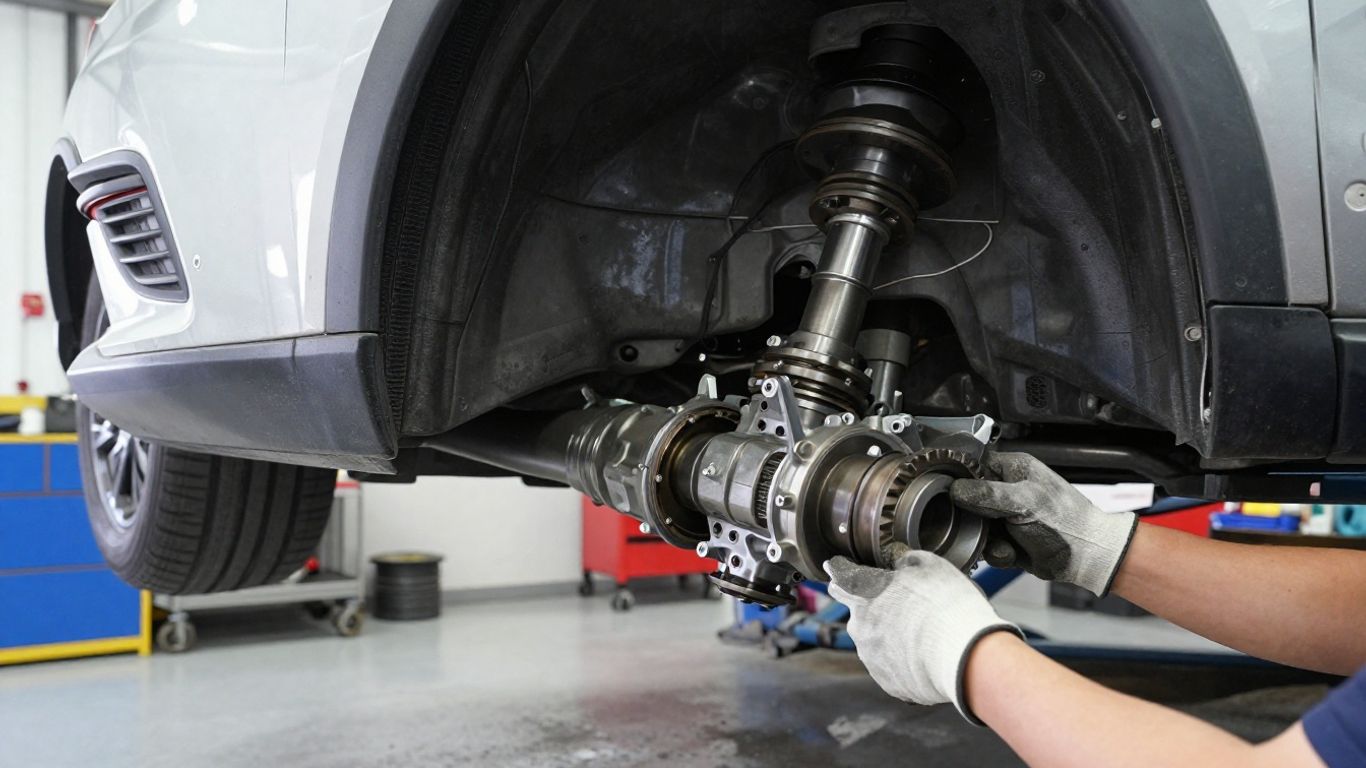
Slipping, harsh shifts, delayed engagement, and difficulty selecting a gear are common reasons to inspect a transmission or gearbox. Manual vehicles may show clutch slip, clutch drag, or grinding during engagement. Automatic vehicles may display flare between gears, shuddering, or an unusual delay when selecting drive or reverse.
Do not assume that a complete transmission is needed immediately. Fluid level, linkage adjustment, a sensor, a mount, or a software-related fault can create similar sensations. A scan and a mechanical inspection should come before ordering a major assembly.
Signs of driveshaft, CV joint, and differential wear
A clicking sound during a tight turn often points toward a CV joint, while a clunk during acceleration and deceleration may indicate play in a joint, shaft, or differential. A steady hum that changes with road speed can be associated with bearings or differential gears, although tire and wheel-bearing noise can sound similar.
Look for split CV boots, thrown grease, rust around universal joints, and excessive movement at shaft connections. The location and timing of the noise matter more than its volume, so a technician may need to road-test the vehicle under controlled conditions.
Unusual noises, vibrations, and fluid leaks
Vibration under acceleration can originate from a driveshaft, a worn support bearing, an out-of-balance component, or a damaged mount. Vibration that rises with engine speed while the vehicle is stationary suggests a different diagnostic path. Fluid color and location can also help separate transmission, transfer-case, and differential concerns.
A small leak should not be dismissed simply because the vehicle still drives. Lubricant loss can quickly damage gears and bearings, and contamination can affect friction materials or hydraulic controls. Early diagnosis protects expensive parts and usually gives the owner more repair choices.
When a warning light requires immediate attention
A drivetrain or transmission warning light deserves prompt attention, especially when it appears with reduced power, severe shifting, overheating, burning odor, or an inability to select a gear. Continuing to drive may turn a manageable electrical or fluid issue into internal mechanical damage.
Record the warning message, driving conditions, and any accompanying noise before switching the vehicle off. If the vehicle is stuck in one gear, leaking heavily, or behaving unpredictably, arrange recovery rather than testing it in traffic.
Choosing the right replacement parts
Correct replacement starts with identification, not with the cheapest listing. The same body and model name can cover multiple drivetrain configurations, and small differences in connectors, ratios, splines, or mounting points can prevent installation. Gather the vehicle details and failed-part information before contacting a supplier.
Matching parts to the exact model and year
Record the model, production year, engine, transmission type, drive layout, body style, and market specification. If the vehicle has been modified or imported, note those details as well. A part listed for a familiar model may still be wrong because the donor vehicle used a different axle ratio or gearbox family.
Photographs are useful for comparing housings, plugs, brackets, and shaft lengths, but they are supporting evidence rather than proof of compatibility. The application data should take priority.
Using VIN and OEM numbers for accurate fitment
The VIN is the strongest starting point for identifying the vehicle’s build specification. Original equipment numbers from the damaged part, service documentation, or a verified catalogue can then narrow the search. Check superseded numbers carefully, since a revised number may replace an older one without looking identical.
Ask whether the quoted number refers to a complete assembly or only an internal component. Clarify whether sensors, seals, brackets, gaskets, and fluid are included, because omissions can change the real cost of the repair.
Comparing genuine, aftermarket, and refurbished components
A genuine component is supplied through the vehicle maker’s parts system, while an aftermarket part is produced by another manufacturer. Refurbished units vary widely: some are professionally rebuilt and tested, while others are simply used parts cleaned for resale. Warranty terms, test documentation, and return conditions deserve as much attention as the headline price.
The right choice depends on the component, the vehicle’s use, and the availability of technical support. For a high-load four-wheel-drive application, construction quality and rebuild evidence may matter more than a small initial saving.
Checking compatibility for manual and automatic transmissions
Manual and automatic transmissions use different input arrangements, control systems, mounts, and fluid requirements. Even within one transmission type, ratios and bellhousing patterns may differ. Confirm the gearbox code and clutch or torque-converter specification rather than relying on the word “replacement.”
Before purchase, compare the original unit’s identification plate with the supplier’s application notes. If the listing is unclear, request written confirmation and keep that record with the order.
Key Ssangyong drivetrain components explained
Knowing the names and roles of the main parts makes inspection reports easier to understand. It also helps distinguish a repairable peripheral fault from damage inside a major assembly. The components below are connected, but they do not fail in the same way or require the same tools.
Gearboxes, transmissions, and transfer cases
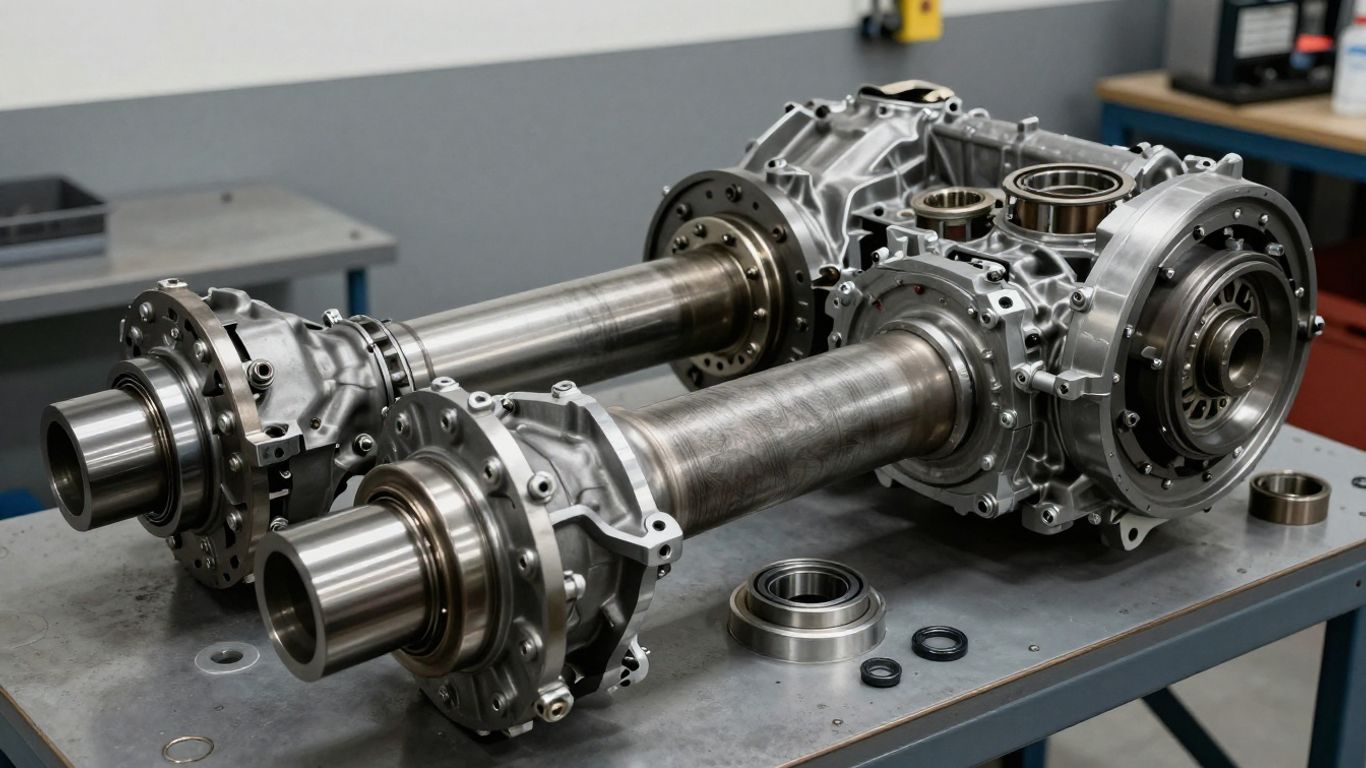
“Gearbox” and “transmission” are often used interchangeably, although usage varies by region and vehicle design. The transmission provides selectable ratios, while a transfer case, where fitted, distributes drive to additional axles and may provide high- and low-range operation.
Internal wear can affect gears, bearings, synchronizers, clutches, valve bodies, or hydraulic passages. External leaks, damaged mounts, and faulty sensors can mimic internal failure, so the assembly should be tested before replacement.
Driveshafts, propeller shafts, and universal joints
A driveshaft, also called a propeller shaft in many applications, carries rotation between separated drivetrain units. Universal joints allow changes in angle, while slip sections accommodate movement as the suspension and chassis respond to the road. Support bearings may be used on longer shafts.
Wear often appears as play, rust, grease loss, or a vibration that worsens under acceleration. Marking shaft positions before disassembly can help preserve balance, and replacement should include careful attention to flange bolts and joint orientation.
Differentials, axles, and CV joints
The differential divides torque while allowing the driven wheels to rotate at different speeds in a turn. Axle shafts carry that torque outward, and CV joints handle the changing angles created by steering and suspension travel. Front and rear assemblies may use different housings, ratios, and lubricant specifications.
A torn boot can allow contamination into a CV joint long before the joint becomes noisy. Differential damage may instead present as a whine, rumble, or metal particles in the lubricant. Inspection findings should determine whether a boot, joint, shaft, or complete unit is appropriate.
Mounts, seals, bearings, and related hardware
Mounts hold the powertrain in position while controlling normal movement. Seals keep lubricants inside rotating assemblies, and bearings support shafts and gears with minimal friction. Fasteners, circlips, gaskets, and dust shields can be just as important to a durable repair.
Replacing a major part while leaving a collapsed mount or leaking seal can lead to repeat work. Related hardware should be inspected during removal, particularly where access is difficult and labor is a significant part of the repair cost.
Replacing and repairing drivetrain parts
A successful repair is a process rather than a single installation step. The fault must be confirmed, the replacement checked, and the surrounding system inspected before everything is reassembled. Good preparation reduces the chance of damaging a new part or overlooking the original cause.
Diagnosing the underlying fault before replacement
Begin with a road test, visual inspection, fluid check, and diagnostic scan where appropriate. Compare the symptom with engine speed, road speed, gear selection, steering angle, and throttle position. These observations can separate a transmission concern from a shaft, axle, wheel, or engine issue.
A repair estimate should explain the evidence behind the proposed replacement. If the diagnosis is uncertain, a second inspection is often cheaper than installing an expensive assembly that does not address the fault.
Tools and preparation for drivetrain work
Drivetrain work may require a lift, transmission jack, torque wrench, pullers, alignment tools, scan equipment, drain containers, and manufacturer-specific fixtures. Safe support is essential because transmissions, transfer cases, and differentials are heavy and awkward to handle.
A practical preparation sequence keeps the work controlled:
- Photograph connectors, brackets, and shaft positions before removal.
- Label wiring, hoses, and fasteners as they are disconnected.
- Verify the replacement part and supplied hardware before dismantling.
- Use the specified torque values and keep mating surfaces clean.
This simple sequence prevents avoidable errors during reassembly. It also creates a useful record if a connector, shim, or bracket later needs to be checked.
Repairs best handled by a qualified technician
Transmission rebuilding, differential setup, transfer-case repair, and driveshaft balancing require specialist knowledge and measuring equipment. Incorrect bearing preload, backlash, seal installation, or fastener torque can cause rapid failure even when the vehicle initially feels normal.
A qualified technician can also distinguish mechanical wear from electronic control faults and confirm whether calibration is required. General research habits help here: whether reviewing a technical SEO audit, an AI singing vocals guide, a cochlear implant surgeon, a self-help book, or a winter group activity venue, the useful question is always whether the source actually matches the decision being made. For drivetrain work, that means relying on vehicle-specific service information and measured findings.
Calibration, fluid replacement, and post-repair testing
After installation, refill the correct lubricant, bleed or prime systems where required, and complete any prescribed adaptation or calibration procedure. Clear diagnostic codes only after recording them, then confirm that they do not return. Check for leaks with the vehicle safely supported before the road test.
A final test should cover engagement, shifting, acceleration, deceleration, turning, and braking-coast conditions where relevant. Recheck fluid level and fasteners after the test, because a repair is not complete until the system remains dry, quiet, and correctly supported.
Maintaining Ssangyong drivetrain parts
Maintenance is mostly about using the right fluids, spotting changes early, and following the vehicle’s service information. It cannot prevent every failure, but it can limit contamination, heat damage, and neglected wear. A short inspection during routine servicing may reveal a damaged boot or seepage before it becomes a breakdown.
Choosing the correct transmission and differential fluids
Use the fluid grade and specification required for the particular transmission, transfer case, and differential. “Gear oil” and “automatic transmission fluid” are not interchangeable descriptions, and a fluid that seems close may alter friction behavior or protection. Check the service manual and the component identification before filling.
Use clean equipment and avoid mixing products unless the manufacturer specifically permits it. The correct level matters as much as the correct fluid: underfilling reduces protection, while overfilling can cause aeration or leakage.
Recommended inspection points and service intervals
Service intervals vary with model, transmission, mileage, and operating conditions, so the owner’s manual should be the primary reference. At each inspection, look beneath the vehicle and around the drivetrain rather than checking only the engine bay.
Pay particular attention to:
- Transmission, transfer-case, and differential housings for dampness.
- CV boots, universal joints, and shaft support bearings.
- Mounts, brackets, underbody shields, and exposed wiring.
- Fluid color, smell, level, and visible metallic debris.
These checks are most useful when recorded over time. A new seep, change in fluid condition, or gradually increasing vibration is easier to interpret when compared with earlier observations.
Preventing overheating, contamination, and premature wear
Keep cooling systems in good condition where the transmission uses an oil cooler, and do not ignore a rising temperature or burning smell. Water, dirt, and incorrect seal installation can contaminate lubricants. Clean fill equipment and properly fitted breathers help protect the assemblies.
Avoid pressure-washing directly at seals, electrical connectors, and breathers. If a leak is found, repair its source rather than repeatedly topping up the fluid. Clean fluid and correct levels are basic protections, but they are often the ones that make the largest difference.
How driving conditions affect drivetrain life
Towing, steep terrain, deep mud, frequent short trips, and heavy traffic place different demands on drivetrain components. Repeated shock loads can stress joints and shafts, while heat from sustained load can accelerate fluid breakdown. Water crossings create additional risk if breathers or seals are compromised.
Use the correct drive mode for the surface and avoid forcing a vehicle through conditions beyond its clearance and traction. After demanding use, inspect for packed mud, leaks, boot damage, and new noises before returning to normal driving.
Conclusion
Choosing, repairing, and maintaining drivetrain components becomes more manageable when every decision is tied to the vehicle’s exact specification and the evidence from a proper diagnosis. Confirm the part number, inspect related hardware, use the correct fluids, and seek specialist help when internal repairs or calibration are involved.
Frequently Asked Questions
What does a drivetrain include?
A drivetrain commonly includes the clutch or torque converter, transmission, differential, axles, driveshafts, joints, mounts, and related seals and bearings. Four-wheel-drive layouts may also include a transfer case and additional shafts.
How can I tell if a transmission is failing?
Common clues include slipping, delayed engagement, harsh or inconsistent shifts, grinding, shuddering, unusual noises, fluid leaks, and warning lights. These symptoms can have several causes, so testing is needed before replacement.
Are drivetrain noises always serious?
Not always, but a new or worsening noise should be investigated. Clicking on turns, clunking during load changes, humming with road speed, and vibration under acceleration can each point toward different components.
Can I use any gear oil in a differential?
No. Differentials require a specified viscosity and performance rating, and some limited-slip designs need an additional friction modifier. Always follow the vehicle and component manufacturer’s fluid specification.
Should I replace a complete transmission or repair it?
The choice depends on the confirmed fault, internal damage, parts availability, labor cost, and warranty. A qualified inspection can determine whether an external repair, rebuild, replacement assembly, or adjustment is appropriate.
Why is the VIN useful when ordering parts?
The VIN identifies the vehicle’s build specification and can distinguish between engines, transmissions, drive layouts, production changes, and market versions that share the same model name.
How often should drivetrain components be inspected?
Inspect them according to the service schedule, and sooner after towing, off-road driving, water exposure, overheating, or a collision. Any new leak, vibration, shifting change, or warning light justifies an earlier check.