
Key Takeaways
Choosing the right SsangYong differential parts starts with identification, not price. The axle position, ratio, spline count, options, and vehicle history all matter.
- Confirm the vehicle identification number, axle code, gear ratio, and drivetrain layout before ordering.
- Diagnose noise, leaks, backlash, and gear wear before deciding which components to replace.
- Compare complete assemblies with individual rebuild parts, including bearings, seals, gears, and carriers.
- Use suppliers that can verify fitment and explain warranty, return, testing, and delivery terms.
- Set preload and backlash precisely, then use the correct oil and follow a careful break-in routine.
Understanding SsangYong differentials and drivetrain compatibility
A differential is more than a housing filled with gears. It transfers torque while allowing wheels on the same axle to turn at different speeds, which is essential when a vehicle corners. With SsangYong differential parts, compatibility depends on the complete drivetrain combination rather than the vehicle badge alone.
The safest approach is to identify the axle and its original specification first. A part that appears identical in a photograph can still have a different ratio, spline arrangement, brake configuration, or mounting pattern.
What a differential does in the drivetrain
The differential receives rotational force through the driveshaft and sends it to the axle shafts. Its gears let the outside wheel travel farther than the inside wheel during a turn without forcing both tires to rotate at exactly the same speed. The housing, carrier, bearings, seals, and shafts work together, so wear in one area can affect the entire assembly.
A healthy unit operates quietly with the correct lubricant and maintains a controlled amount of backlash. Excessive play or damaged teeth can send shock loads through the driveshaft and transmission. That is why a small hum should not automatically be dismissed as a tire issue.
Front, rear, and center differential differences
Front and rear differentials are usually built around the axle they drive, while a center differential or transfer-case differential manages torque between front and rear axles on certain all-wheel-drive systems. Their housings, gear sets, bearings, and mounting arrangements are not interchangeable simply because they serve similar purposes.
The front unit may also share space with steering and suspension components, creating different clearance and flange requirements. Rear assemblies can vary with disc or drum brakes, anti-lock braking equipment, limited-slip options, and axle-shaft design. Always establish which location the replacement serves before comparing prices.
How model year and engine affect compatibility
Model-year changes can alter the ring-gear size, carrier, axle housing, or flange design. Engine output and transmission choice may also be paired with a different final-drive ratio. Even a small production-date change can divide a parts catalog into separate applications.
For example, an axle listing may distinguish manual and automatic transmissions, two-wheel drive and four-wheel drive, or different brake and ABS combinations. Treat those details as identification data, not optional catalog notes. When information is incomplete, a clear photograph of the axle tag and a measurement of the flange can prevent an expensive mismatch.
Common SsangYong models and differential configurations
Korando, Musso, Rexton, Actyon, and Actyon Sports can appear in several drivetrain and axle configurations across their production histories. The same model name does not guarantee the same ratio or housing. A replacement search should therefore begin with the year, engine, transmission, drive layout, and axle code.
A specialist catalog may help narrow the search, but the final check should be made against the vehicle itself. The Korando differential case listing, for instance, illustrates why an application described by model, year, and engine is more useful than a generic search for a differential.
Identifying the SsangYong differential parts you need
Before ordering, decide whether the repair requires one internal component, a group of wear items, or a complete axle assembly. A damaged seal may leave the gears untouched, while a broken tooth can make the carrier and pinion unsuitable for reuse. Taking the assembly apart without recording measurements can also remove useful clues.
Clean the housing and photograph every connection before disassembly. Count splines, note flange dimensions, inspect the axle tag, and record the ratio if it is stamped or marked. These details make a parts request much more precise.
Ring and pinion gears
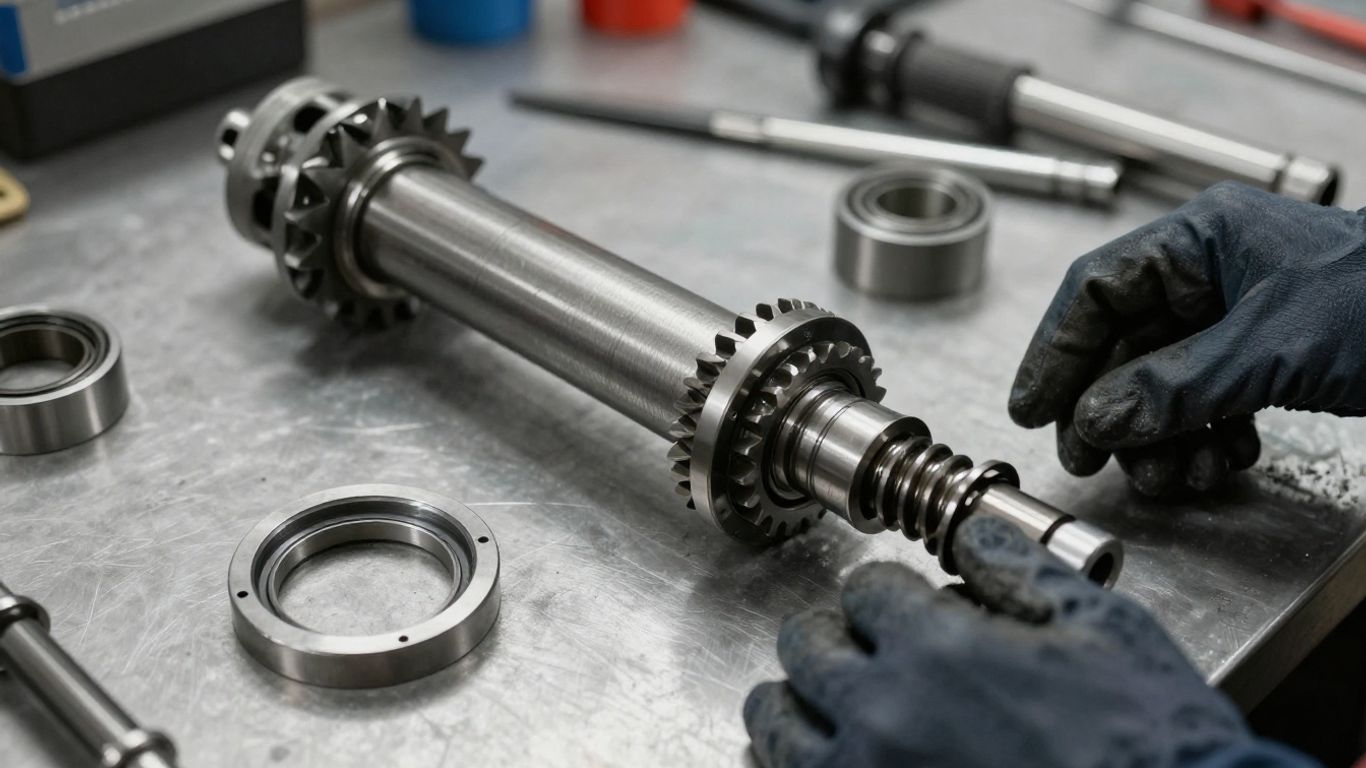
The ring gear is bolted to the differential carrier and meshes with the pinion gear, which is driven by the propeller shaft. They are a matched set and should normally be replaced together. Mixing an old ring gear with an unrelated pinion can create incorrect tooth contact and rapid failure.
Look for pitting, scoring, chipped teeth, blue discoloration, and an unusual contact pattern. Ratio markings must agree with the vehicle specification. If the teeth are worn but the housing is sound, a matched gear set may make a rebuild more sensible than replacing the entire axle.
Differential carriers and side gears
The carrier supports the ring gear and contains the spider gears and side gears that distribute torque between the axle shafts. Carrier dimensions, bearing journals, and side-gear splines all affect fitment. A carrier designed for one ratio family may not accept another ring gear even when the outer housing looks similar.
Inspect the cross pin, thrust washers, gear faces, and splines. Wear may show as looseness, grooves, or chipped edges. A complete carrier can save assembly time, but it still needs to match the axle housing and shaft specification.
Bearings, seals, and gaskets
Bearings support the rotating parts and keep gear alignment stable. Pinion seals, axle seals, cover gaskets, and breather components control lubricant loss and contamination. These parts are inexpensive compared with gears, yet a poor seal installation can ruin a freshly rebuilt unit.
Use the old part only as a temporary reference because a previous repair may have used the wrong item. Measure the seal bore and shaft surface, check bearing numbers, and replace damaged wear sleeves where applicable. The mating surfaces should be clean and free from burrs before assembly.
Axles, shafts, and flange components
Axle shafts transmit torque from the differential to the wheels. Their spline count, shaft length, bearing arrangement, flange pattern, and ABS provisions must match. Flanges and companion components can also differ between brake types or transmission options.
Do not assume that a shaft from the same model will fit every year. Compare the number of splines and the distance between mounting holes, then verify whether the shaft uses a separate or integrated bearing arrangement. Bent shafts should be measured rather than judged by eye.
Limited-slip and locking differential parts
A limited-slip differential uses additional clutch, gear, or friction components to manage wheel-speed differences under reduced traction. A locking differential may use a different carrier or engagement mechanism altogether. These options can require a specific lubricant and are not interchangeable with an open differential without checking the complete setup.
Confirm whether the vehicle actually has the option before buying replacement internals. The cover, axle tag, carrier design, and service documentation may provide evidence. Generic friction-modifier assumptions can be costly, so lubricant requirements should come from the applicable technical specification.
Diagnosing differential problems before buying parts
A symptom can point toward the differential, but it does not prove that the differential is the source. Tires, wheel bearings, universal joints, transfer cases, and driveshafts can produce similar sounds or vibrations. A short road test followed by an inspection on a lift usually gives a better starting point than ordering parts immediately.
Record when the noise occurs: under acceleration, on overrun, while cornering, at a particular speed, or only when cold. Check the oil level and condition before draining it. Metal flakes or a burnt smell can change the repair decision quickly.
Whining, humming, and grinding noises
A steady whine that changes with throttle position can indicate gear contact or pinion-bearing wear. A hum that follows road speed may come from a wheel bearing or tire, while grinding suggests more advanced damage or inadequate lubrication. Cornering noise can point toward side gears, carrier bearings, or another axle component.
Use controlled comparisons rather than guessing. Note whether the sound appears during acceleration or deceleration and whether it changes when the vehicle is lightly loaded. A mechanic can use a stethoscope or chassis ears, but the result still needs to be compared with gear-pattern and bearing checks.
Oil leaks and damaged seals
Leaks commonly occur at the pinion seal, axle seals, cover joint, drain plug, or breather. Oil thrown around the housing may make the original location difficult to see, so clean the unit and recheck it after a short drive. Low lubricant can turn a manageable seal repair into gear and bearing damage.
Inspect the pinion flange for a worn sealing surface and check the breather for blockage. A blocked breather can raise internal pressure and push oil past otherwise serviceable seals. Never refill by guesswork; use the specified level and lubricant.
Vibration, clunking, and drivetrain backlash
Vibration may originate in the driveshaft, joints, wheels, mounts, or differential. A clunk during take-up can reflect excessive backlash, worn splines, loose mounts, or play elsewhere in the drivetrain. Measuring rotational movement at the flange can help, but it should be interpreted alongside the condition of the gears.
Separate normal operating movement from damaging looseness. Check fasteners, universal joints, and transfer-case connections before condemning the axle. If the clunk is accompanied by metallic debris in the oil, internal inspection becomes much more urgent.
Checking gear wear and bearing damage
With the cover removed, inspect the tooth faces and the contact pattern. Look for pitting, scoring, chipped edges, uneven polishing, and discoloration. Rotate the assembly slowly while checking for roughness, noise, or movement at the bearings.
A dial indicator is useful for measuring backlash, while a press and suitable pullers are needed for many bearing jobs. Record measurements before removing shims or spacers. Those records can guide the rebuild even though final settings must be confirmed during reassembly.
When a differential rebuild is more practical than replacement
A rebuild is often worthwhile when the housing, carrier, shafts, and mounting points are sound but bearings or seals are worn. It can also preserve a correctly matched ratio or factory option. Replacement may be simpler when several major parts are damaged or a tested complete assembly is readily available.
Compare the total cost, not just the price of the core unit. Include setup labor, bearings, seals, fluids, transport, and the risk of an unknown used assembly. The differential parts catalog can help identify component categories, but the axle code and physical inspection remain decisive.
How to choose compatible replacement parts
Compatibility is a chain of details. The vehicle identification number narrows the application, but the axle code, production date, ratio, transmission, brake arrangement, and option package may narrow it further. A careful buyer checks those details before placing the order, not after the part arrives.
Keep the original component available until the replacement has been compared. Photographing both parts side by side can reveal differences in flange depth, connector position, bearing size, and cover shape. Fitment evidence matters more than a vague statement that a part is “for” a particular model.
Using the vehicle identification number and axle code
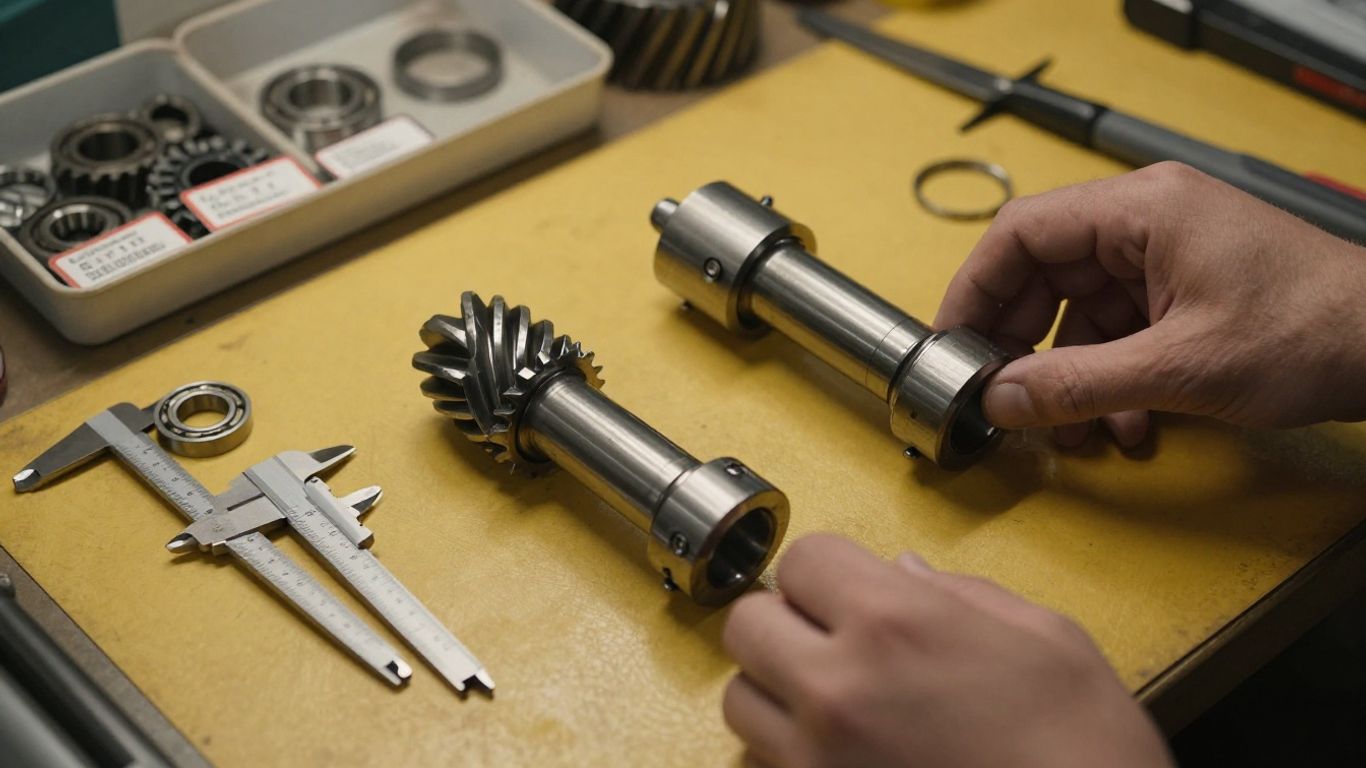
Give the supplier the full VIN, model year, engine, transmission, drive type, and axle code. If the code is missing, provide photographs of the housing tag, cover, flange, shafts, and brake ends. Production dates can matter when a manufacturer revised an axle during the same model run.
Ask the supplier to state the exact application they are matching. A written confirmation is useful if the part is expensive or difficult to return. Do not rely on a registration lookup alone when the vehicle may have received a replacement axle in the past.
Matching gear ratios and spline specifications
The front and rear final-drive ratios must be compatible in systems that mechanically link both axles. A mismatch can create driveline wind-up and damage. Confirm the ring-and-pinion ratio, carrier type, pinion spline, axle-shaft spline, and flange pattern.
Count splines directly when possible, since catalog descriptions can use different terminology. Also compare ring-gear diameter and tooth count. A ratio that looks close on paper is still wrong if the carrier or mounting dimensions do not match.
Comparing genuine, aftermarket, and used components
A new genuine component may offer the clearest application traceability, while an aftermarket part can provide a practical alternative when its specifications are documented. A used assembly may reduce cost, but its mileage, oil history, noise level, and testing method should be known. Price alone cannot show whether a used differential is a sound purchase.
For broader comparison, used SsangYong differentials can be reviewed alongside new and pre-owned listings. Treat marketplace descriptions as starting information and ask for the axle code, ratio, photographs, and return terms before committing.
Checking dimensions, materials, and manufacturer quality
Compare bearing seats, seal diameters, gear thickness, fastener locations, and shaft lengths. Ask whether gears are supplied as a matched set and whether bearings and seals meet the intended service specification. Packaging quality and traceable part numbers are small but useful signs of a controlled supply chain.
A component that fits physically may still be unsuitable if its material, heat treatment, or load rating is unclear. For severe towing or off-road use, discuss the operating conditions with the supplier rather than assuming a standard replacement covers every duty cycle.
Avoiding common fitment and compatibility mistakes
Most costly errors come from skipping one verification step. Common examples include ordering by model name alone, confusing front and rear ratios, overlooking ABS or brake differences, and reusing an incompatible carrier. Another mistake is buying a complete axle without confirming its mounting brackets and flange configuration.
Before paying, check these points:
- The axle position and final-drive ratio match the vehicle.
- The carrier, spline count, flange, and bearing arrangement agree.
- The brake, ABS, transmission, and drive-layout options are compatible.
- The supplier has stated the return process and supplied clear photographs.
This short check does not replace a parts catalog or workshop measurement, but it catches many avoidable ordering errors.
Sourcing SsangYong differential parts
Sourcing is a balance between availability, evidence, and support. A specialist supplier may identify a less common component, while a salvage yard may offer a complete axle at a lower initial cost. Either route can work when the part history and specification are clear.
Keep a written record of every inquiry. Include the vehicle details, requested part, measurements, photographs, and the supplier’s reply. That record makes comparisons easier and helps resolve a dispute if the delivered item differs from the description.
Specialist 4×4 and drivetrain suppliers
Specialist suppliers often understand axle codes, ratio families, rebuild kits, and complete assemblies better than general listings. Ask whether they can supply individual internals or only a complete unit. Their answer may affect whether a rebuild is practical.
A supplier’s delivery planning is also worth checking for uncommon parts. A general lead-time planning guide offers useful questions about delivery expectations, site preparation, and installation planning, even though the same considerations must be applied specifically to the vehicle repair.
Salvage yards and tested used assemblies
A used assembly should come with a known donor vehicle, identifiable ratio, and a description of how it was tested. Ask whether the unit was drained and inspected, whether the shafts turn smoothly, and whether there was noise before removal. Photos of the housing and tags are more useful than a generic stock image.
Allow for seals and fresh lubricant even when the assembly is described as tested. A used unit may have sat in storage, and its external condition does not reveal internal bearing life. Confirm that the mounting brackets and brake hardware match before arranging transport.
Online marketplaces and catalog searches
Online searches are helpful for finding rare stock, but search terms should include the model, year, axle position, ratio, and part number. Use multiple photographs and compare them with the original assembly. Be cautious with listings that merge several applications under one title.
The detailed Actyon Sports rear axle listings show how production dates, ratios, brake types, ABS, and transmission details can separate otherwise similar assemblies. That level of detail is the standard to seek when evaluating any catalog result.
Questions to ask a parts supplier
A good supplier should be comfortable answering specific technical questions. Ask for the exact part number, donor or production date, ratio, spline count, brake configuration, and whether the item is new, rebuilt, or used. Also ask what is included: housing, carrier, shafts, bearings, seals, cover, and mounting hardware.
If the repair involves off-road use, clarify the intended duty cycle rather than assuming every part is suitable. A guide to off-road protection parts is a reminder that vehicle use affects component choices, but differential compatibility still depends on the axle’s own specification.
Verifying warranties, returns, and delivery conditions
Read the warranty exclusions before buying. Some suppliers require professional installation, documented fluid use, or immediate reporting of damage. Return freight can be significant for a complete axle, so confirm who pays if the part is incorrect or damaged in transit.
Inspect the package before signing where possible and photograph any damage. Keep the invoice, part labels, and correspondence. These simple steps make a legitimate warranty claim far easier to support.
Rebuilding or replacing a SsangYong differential
A differential rebuild is a precision job, not just a bearing swap. The housing must be clean, the gear set must be matched, and preload and backlash must be measured repeatedly. Replacing the complete assembly can reduce setup work, but it does not remove the need to verify ratio, fitment, seals, and fluid.
Decide between the two routes after inspection. A rebuild preserves a known housing and configuration; a replacement may be preferable when the gears, carrier, or case are badly damaged. Either way, cleanliness and measurement determine the result.
Tools and workshop equipment required
Expect to need a stable workbench, torque wrenches, bearing pullers, a press, a dial indicator, marking compound, micrometers or calipers, and suitable drivers. Some jobs also require a housing spreader or specialized tools for side-bearing adjustment. Improvised tools can damage bearing seats and distort measurements.
Have the service data available before disassembly. Record shim positions, bearing locations, flange orientation, and measured backlash. Organizing parts on a clean tray is slower than dropping them into a box, but it prevents avoidable confusion.
Setting bearing preload and gear backlash
Bearing preload controls how tightly the rotating components are supported, while backlash is the controlled clearance between ring and pinion teeth. Both values must fall within the applicable specification. Too little preload can permit movement; too much creates heat and premature bearing failure.
Use marking compound to inspect the tooth contact pattern and adjust shims or nuts methodically. Recheck the measurement after tightening because the setting can shift. Never substitute a general “feel” test for the manufacturer’s dimensions.
Replacing seals, bearings, and gear sets
Press bearings onto clean, properly supported surfaces and protect seal lips during installation. Replace worn races with their matching bearings, and install a new ring-and-pinion set as a pair. Check the pinion flange and shaft for grooves that could damage a new seal.
Apply the specified sealant sparingly to clean cover surfaces and tighten fasteners in the correct sequence. Before closing the housing, remove every trace of abrasive debris and confirm that the carrier rotates smoothly. A careful final cleaning is part of the rebuild, not cosmetic work.
When professional installation is recommended
Professional installation is sensible when the workshop lacks a press, dial indicator, setup tools, or experience with hypoid gears. It is also advisable when the gear pattern is abnormal, the housing is damaged, or the vehicle is used for heavy towing. The cost of correcting a failed setup can exceed the original labor saving.
Ask the installer what measurements will be recorded and what parts are included in the estimate. A reputable workshop should explain whether the existing gears can be reused and what warranty applies to the completed unit.
Post-installation fluid checks and break-in procedures
Fill the housing with the specified lubricant to the correct level and inspect for leaks after the first drive. A rebuilt gear set usually benefits from controlled early use with cool-down periods rather than extended high-load operation. Follow the gear manufacturer’s break-in instructions where they are provided.
Recheck the fluid for contamination and listen for changes in noise during the early service period. A slight change in sound can be informative, while increasing whine, heat, or metal debris requires immediate investigation. Do not continue driving a unit that shows clear signs of distress.
Maintaining differential performance and service life
Good maintenance is mostly disciplined observation. Correct oil, clean breathers, sound seals, and timely inspections protect the gears from heat and contamination. Maintenance also gives the owner a chance to notice a small leak or new noise before it becomes an axle replacement.
Use the vehicle’s service information and actual operating conditions together. Frequent towing, deep water, heavy loads, and off-road driving can justify more frequent checks than ordinary road use. Avoid treating a fixed interval as a substitute for inspection.
Choosing the correct differential oil
Use the lubricant grade and additive specification intended for the differential. Limited-slip units may require a friction modifier or dedicated fluid, while an open unit may have different requirements. Mixing products without checking compatibility can alter clutch behavior or protection.
Confirm the fill quantity and level procedure as well. The correct oil cannot protect gears if the housing is underfilled, overfilled, or contaminated with water. If the vehicle has been through deep water, inspect and replace the fluid promptly.
Recommended inspection and service intervals
Inspect the housing, breather, seals, flange, and mounting points during routine servicing. Check the oil condition at the interval specified for the vehicle, then shorten it when the axle works hard or operates in harsh conditions. Look for metallic particles rather than relying only on fluid color.
The right interval depends on use, age, previous repairs, and exposure to water or dust. A vehicle that spends weekends on rough trails may need attention sooner than one used only for commuting. Record both the date and the reason for each service.
Protecting components during towing and off-road driving
Heavy towing raises temperature and load in the final drive. Use the correct tires, avoid sudden shock loads, and allow the drivetrain to cool after demanding work. Off-road, wheel spin followed by abrupt traction can damage gears and shafts even when the vehicle is moving slowly.
Protect breathers from water and mud, and inspect the axle after impacts or deep crossings. Underbody protection can reduce physical damage, but it cannot correct an incorrect ratio or worn bearing. Drive smoothly when traction changes suddenly.
Detecting early signs of future failure
Watch for a new whine, a rumble that follows road speed, oil around the pinion flange, a hot housing, or increasing take-up clunk. These signs may have several causes, but each deserves a check. Early diagnosis often means replacing a seal or bearing instead of a full gear set.
Pay attention to changes after towing, fluid service, or an axle repair. A new symptom that appears immediately after work should be investigated while the installation details are still fresh. Ignoring a gradual noise rarely makes the eventual repair smaller.
Keeping records of parts and drivetrain maintenance
Keep invoices, part numbers, ratios, photographs, fluid specifications, measurements, and installation dates together. Note whether the unit was rebuilt, replaced, or sourced used, along with the donor vehicle when known. These records are valuable when ordering future seals or explaining a configuration to a technician.
Clear records also protect resale value and reduce repeated detective work. When the time comes to buy more SsangYong differential parts, a documented history can turn an uncertain search into a straightforward match.
Conclusion
The best differential repair begins with identification and diagnosis, then moves to a measured choice between rebuilding and replacement. Verify the ratio, spline details, axle position, options, and supplier terms before ordering, and treat setup measurements and fluid selection as part of the repair rather than afterthoughts.
Frequently Asked Questions
What is the first detail to check when buying differential parts?
Start with the vehicle identification number and axle code, then confirm the axle position, final-drive ratio, transmission, and drive layout. Physical measurements and photographs provide a useful second check.
Can a used differential be a reliable replacement?
It can be, provided the ratio and configuration are verified and the assembly has a credible inspection history. Budget for fresh seals, lubricant, and an inspection before installation.
Should ring and pinion gears be replaced together?
Yes. They are matched mating components, and combining a new gear with an unrelated used gear can produce poor tooth contact and rapid wear.
What causes a differential to whine?
Common causes include worn gears, incorrect backlash, damaged bearings, low lubricant, or an unsuitable contact pattern. Tires, wheel bearings, and driveshaft components can create similar noises.
Is a differential rebuild difficult?
It requires precision tools, service specifications, and repeated measurements. Bearing preload, gear backlash, and tooth contact must be set correctly, so professional installation is sensible without the necessary equipment.
How often should differential oil be changed?
Use the vehicle’s service schedule as a starting point and shorten it for towing, off-road use, water exposure, or severe conditions. Inspect the oil for contamination and metal debris during servicing.
What should be done after installing a replacement differential?
Fill it with the correct lubricant, inspect for leaks, follow a controlled break-in routine, and recheck the fluid and operating noise. Stop driving if heat, debris, or increasing noise appears.