
Key Takeaways
Control arms help locate the wheels as the suspension moves, so worn joints or bushings can affect steering, tire wear, and ride stability. Careful fitment checks and correct installation matter as much as the part itself.
- Check symptoms alongside the condition of bushings, ball joints, and nearby components.
- Match a replacement to the vehicle’s year, generation, drivetrain, side, and part number.
- Compare complete assemblies with separate-component repairs before ordering.
- Follow safe lifting and service procedures, then arrange a wheel alignment.
- Keep an eye on alignment and tire wear after the repair.
What control arms do in a SsangYong suspension
A control arm is a suspension link between the wheel assembly and the vehicle’s chassis. It allows the wheel to move over uneven surfaces while helping keep it located in relation to the body. The exact arrangement varies by vehicle, so confirm the layout for the specific model before choosing parts.
How control arms connect the wheel to the chassis
The arm pivots at the chassis and connects to the wheel assembly at its outer end, commonly through a ball joint. As the suspension rises and falls, the arm follows an arc that helps guide wheel movement. That connection also has to withstand repeated road impacts, so looseness or damage can become noticeable in how the vehicle rides.
How bushings and ball joints support movement
Bushings sit at the arm’s pivot points, allowing controlled movement while reducing direct metal-to-metal contact. A ball joint allows the wheel assembly to change angle as the suspension moves and the steering turns. Worn connection points matter because they can affect both movement and the wheel’s position; a technician should inspect them rather than assume every knock comes from the arm itself.
Differences between upper and lower control arms
Some suspension designs use both upper and lower arms on each side, while others use a different arrangement. Where two arms are present, they occupy different positions and may have distinct shapes, joints, and fitment. Upper and lower parts are not interchangeable just because they serve a related purpose, so use the vehicle’s parts information to establish which one is required.
How control arms affect steering and tire contact
Control arms help maintain the wheel’s position as it moves, which contributes to steering response and tire contact with the road. If a joint or bushing has excess play, the wheel may not stay where the suspension geometry expects it to be. In practice, alignment readings and tire wear can offer useful clues, but neither is a substitute for inspecting the suspension.
Signs a control arm may need attention
A worn or damaged control arm can produce symptoms that overlap with problems elsewhere in the suspension or steering system. Listen for changes, notice how the vehicle behaves, and look for visible damage, but avoid diagnosing a part from one symptom alone. A prompt inspection is sensible if handling changes suddenly or a hard impact may have damaged the suspension.
Clunking or knocking over bumps
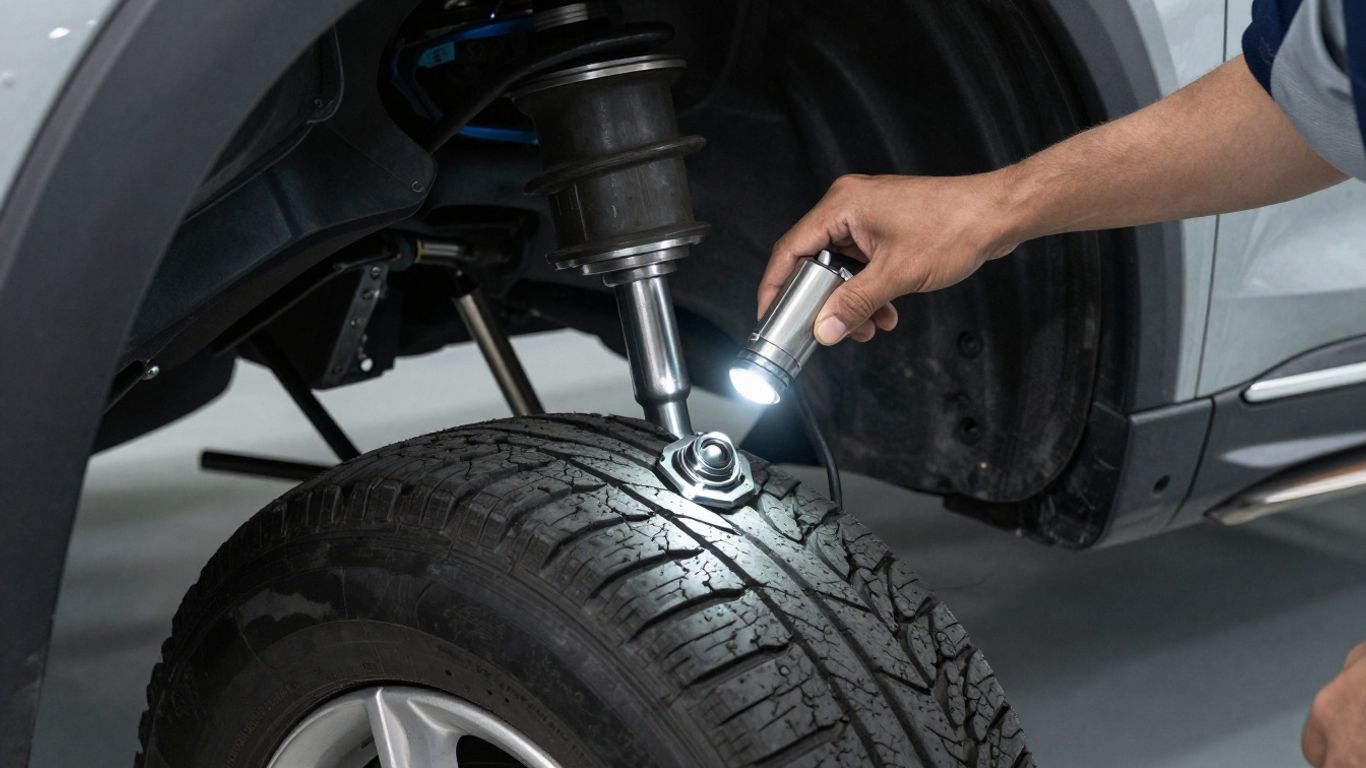
A clunk when crossing a bump may come from a worn bushing, a loose joint, or another suspension component. The sound’s location and timing can help guide an inspection, but they do not confirm the source by themselves. If the noise repeats, have the arm and its mounting points checked along with nearby parts.
Uneven tire wear and alignment changes
A control arm or its joints that no longer hold the wheel in its intended position may contribute to alignment changes. Uneven tire wear can have several causes, including inflation, alignment, and worn suspension components, so inspect the full picture. If wear appears on one edge or differs noticeably from side to side, have the tires and suspension assessed together.
Steering drift, vibration, or instability
A vehicle that drifts, feels unsettled, or vibrates may need attention, but these symptoms are not specific to a control arm. Tire condition, alignment, steering components, and other suspension parts can also be involved. A careful diagnosis helps avoid replacing a sound part while leaving the actual cause unaddressed.
Visible damage, corrosion, or worn joints
A bent arm, damaged bushing, loose joint, or heavy corrosion deserves closer inspection. If the vehicle has struck a pothole or other obstacle, check related suspension and steering parts as well. For a practical inspection, note the following before discussing the repair:
- Whether the noise happens over bumps, while steering, or in both situations.
- Which side seems affected, if the location is clear.
- Any recent impact, alignment work, or change in tire wear.
- Visible tears, unusual movement, or damage noticed during a professional inspection.
These observations give a repairer useful context without treating a symptom as a definitive diagnosis. Avoid putting yourself under a vehicle that is supported only by a jack.
How to identify the correct control arm
Fitment depends on more than the model name printed on the vehicle. Year, generation, drivetrain, suspension configuration, and side can all affect which part is correct. Confirm the details against reliable parts information before ordering, especially when listings cover several versions of a model.
Match the part to the SsangYong model and year
Start with the exact model and production year, then check that the listing describes the same position and suspension application. For example, a listing for a ZHAUPMCB control arm identifies Korando C200 and C300 applications and specifies OEM numbers; those details still need to be checked against the vehicle. Similarly, Teknorot control arms are described as replacement parts, with bushings included where applicable, so confirm the specific item’s contents and fitment.
Check the vehicle’s generation, trim, and drivetrain
A model name can span different generations and configurations, and a part offered for one version may not suit another. Compare the vehicle’s build information with the fitment details rather than relying on a broad name match. Precise terminology matters in technical work, as it does in Stephanie K. L. Lam’s translation work, where preserving meaning depends on careful attention to terms.
Confirm left-side or right-side fitment
Some arms are side-specific, while other listings may describe a part as suitable for either side. Check the seller’s wording and any diagram or part reference before choosing. Even listings for Tesla Model S accessories advise buyers to check model-year fit, a useful reminder that vehicle identification details matter across parts categories.
Compare OEM numbers and verify with the VIN
Compare the number on the existing part, if readable, with the replacement listing and the vehicle’s parts catalogue. Then use the VIN to confirm the application with a parts supplier or repair professional. Keep the model year, VIN confirmation, and candidate part numbers together; document version control offers a useful general approach to keeping records and changes organized.
| Fitment detail | What to compare | Why it helps |
|---|---|---|
| Model and year | Exact vehicle application | Avoids relying on a broad model label |
| Position | Front or rear; upper or lower | Distinguishes arms with different locations |
| Side | Left, right, or stated as either | Prevents ordering the wrong side |
| Part reference | OEM number and VIN fitment | Helps verify the specific application |
Use the table as a cross-check, not as a replacement for vehicle-specific parts data. If details conflict, pause and ask a supplier to verify the fit before ordering.
Control arm types and replacement options
Replacement choices range from a complete arm assembly to individual serviceable parts, depending on the design and condition of the original components. The right approach depends on what has worn, what the vehicle requires, and what is supplied with the replacement. Compare the actual contents and fitment rather than relying on a broad label such as “control arm kit.”
Complete assemblies versus separate components
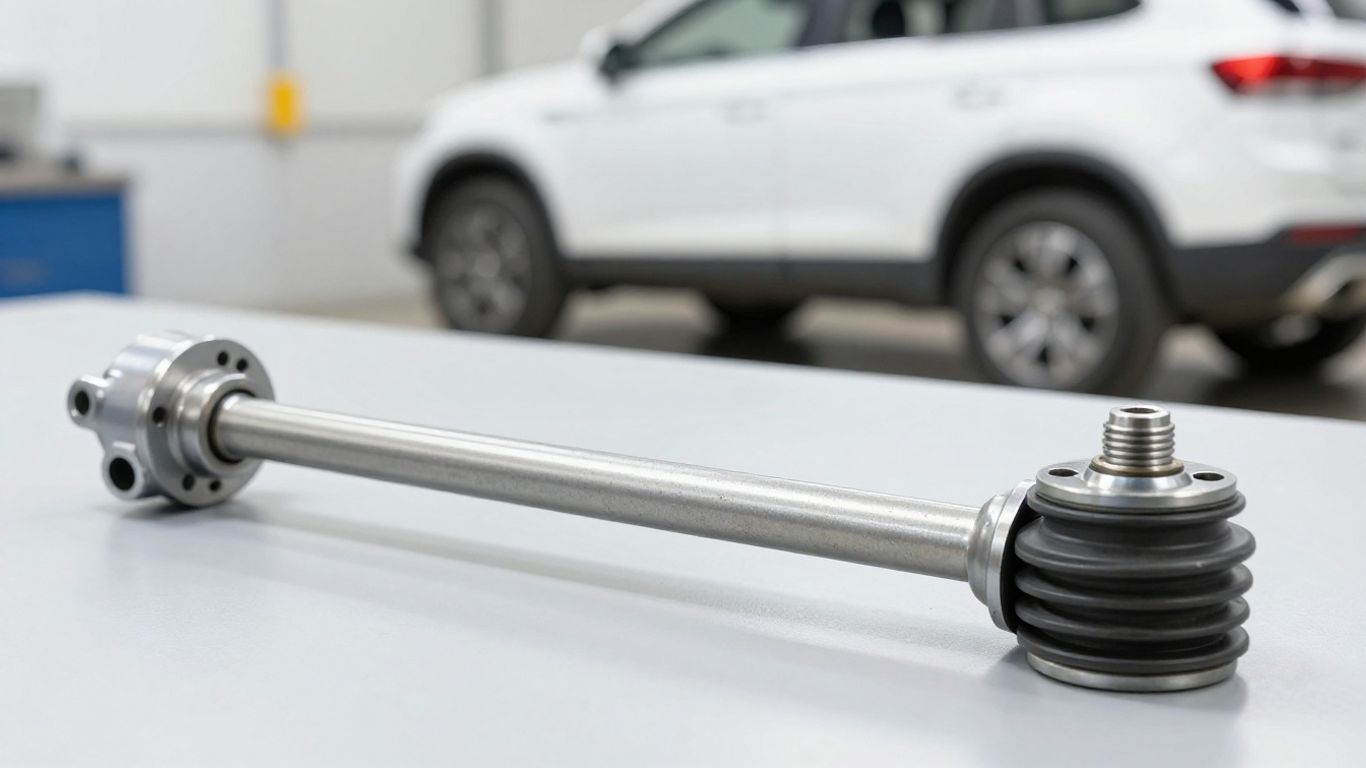
A complete assembly may include the arm and some attached components, while separate repairs may replace only a bushing or ball joint. Confirm what is included before comparing prices: two listings with similar names can contain different parts. If only one component is damaged, ask whether it can be replaced separately and whether the repair procedure calls for special tools.
OEM, aftermarket, and refurbished parts
Parts may be offered as original-equipment, aftermarket, or refurbished options. Check the supplier’s fitment information, condition description, warranty, and return terms for the specific item. For instance, PEAK upper control arms are described for KGM SsangYong Musso and Rexton applications with 2–3-inch lifts; that stated application is not a fitment claim for other vehicles or suspension setups.
Steel and aluminum construction considerations
Control arms can use different materials and construction methods, and material alone does not establish whether a part suits a vehicle. Follow the application details and the manufacturer’s specifications, including any instructions for modified suspension. Toyota’s Lean Manufacturing is a broader example of a production philosophy; for a control arm, evaluate the actual part information rather than inferring quality from a general manufacturing label.
When to replace bushings or ball joints separately
Separate replacement may be possible when the arm itself remains sound and the component is serviceable. However, the design and required tools vary, and labour or installation requirements can affect whether a component-only repair makes sense. Ask the repairer to check the arm, bushings, and ball joint together before deciding what to replace.
What to expect during control arm replacement
A sound repair begins with confirming the fault and checking the surrounding suspension, not simply swapping the first suspected part. The exact process depends on the vehicle’s design and service instructions. A qualified repairer can confirm the required parts, fasteners, and alignment steps for the specific application.
Inspect related suspension and steering components
The technician should examine the opposite side and nearby steering and suspension parts for wear, looseness, or impact damage. A worn control arm may not be the only issue, particularly after a hard road impact. Consider Simple Oahu Wedding’s terms and conditions as a reminder that service agreements can contain distinct responsibilities; for an automotive repair, read the actual workshop terms and parts warranty that apply.
Use safe lifting and support procedures
The vehicle must be lifted and supported using suitable equipment and approved support points. Suspension work can involve loaded components and should not be attempted beneath a vehicle held only by a jack. If you are not equipped and trained to do the work safely, leave the repair to a qualified professional.
Replace fasteners according to service specifications
Fasteners should be inspected and replaced where the service procedure requires it. Torque values and tightening sequences are vehicle-specific, so a generic figure is not a safe substitute for the correct service information. The repairer should follow the applicable specifications for the exact vehicle.
Tighten pivot bolts at the specified suspension position
Some pivot bolts need to be tightened with the suspension at a specified position to avoid preloading the bushings. The correct position and procedure depend on the vehicle, so follow its service instructions rather than assuming one method fits all. This detail can affect how the new bushings settle and perform.
Arrange a wheel alignment after installation
A control arm replacement can affect suspension geometry, making a wheel alignment an important follow-up. The alignment check also provides a chance to identify any remaining issue that could affect tire contact or steering. Follow the repairer’s recommendation on timing, and review the results before returning to normal driving if the vehicle still feels unstable.
How to choose and maintain replacement control arms
A suitable replacement should match the vehicle and the repair need, while making sense for your budget and expectations. Compare the part’s fitment evidence, construction details, warranty, and included components. After installation, simple checks of alignment and tire wear can help spot changes before they become more costly.
Balance price, materials, warranty, and reviews
A lower price is only useful if the part is correct and the warranty and return conditions are clear. Compare like with like: included joints, bushings, hardware, and stated fitment can change the value of an offer. Read reviews as one source of context, while giving greater weight to clear application information and support from the supplier.
Check included bushings, ball joints, and hardware
Product descriptions may use “assembly” or “kit” differently, so verify each included component before buying. Ask whether the ball joint, bushings, and mounting hardware are supplied or need to be ordered separately. Also confirm whether any components are preinstalled and whether the repair procedure calls for new fasteners.
Reinspect suspension components after replacement
After the repair, ask the technician to check the installation and nearby components for abnormal movement or noise. If a clunk or steering change remains, arrange a follow-up inspection instead of assuming that a new arm has resolved every issue. Keep the parts and service records for future reference.
Follow alignment and tire-wear checks over time
Pay attention to how the vehicle tracks and whether tire wear remains even. If steering feel changes or tire wear becomes uneven, have alignment and suspension condition checked rather than waiting for the next routine service. These observations cannot identify a failed part on their own, but they help flag a change that deserves attention.
Conclusion
Control arms help guide wheel movement, and worn joints, bushings, or a damaged arm can affect steering feel, alignment, and tire wear. Confirm fitment with vehicle-specific information, compare replacement options carefully, and have the repair completed using the correct service procedures. A post-repair alignment and ongoing checks help close the loop.
Frequently Asked Questions
What does a control arm do?
It connects the wheel assembly to the chassis and helps guide wheel movement as the suspension responds to the road.
Can I drive with a worn control arm?
A worn or damaged arm can affect stability and steering, and the risk depends on the condition. Have the vehicle inspected promptly, especially if handling has changed or a joint is loose.
What noises can a bad control arm make?
A clunk or knock over bumps may be associated with a worn bushing or joint, but other suspension parts can make similar noises. An inspection is needed to identify the source.
How do I know which control arm fits my vehicle?
Confirm the model, year, generation, drivetrain, location, side, and part reference. A VIN-based fitment check can help verify the specific application.
Should I replace both control arms at once?
Not automatically. Have both sides inspected and replace parts based on their condition and the vehicle’s service requirements.
Is it better to replace the whole arm or just a bushing?
That depends on the arm’s condition, whether components are serviceable, the required tools, and the repair procedure. Ask a technician to assess the assembly before choosing.
Is a wheel alignment needed after control arm replacement?
An alignment check is commonly recommended because replacing suspension components can affect geometry. Follow the vehicle-specific repair guidance and the technician’s advice.