

Key Takeaways
Struts help control suspension movement, but the exact setup varies by vehicle. A careful diagnosis and a fitment check can prevent buying the wrong parts or overlooking related repairs.
- Clunks, excess bouncing, uneven tire wear, and visible leaks can warrant a suspension inspection.
- Confirm the vehicle’s year, trim, drivetrain, and part numbers before ordering struts.
- Replacing struts may also call for new mounts or hardware, depending on their condition.
- A wheel alignment is commonly recommended after suspension work that can affect geometry.
- Compare a repair quote by checking its parts, labor, related components, alignment, and warranty terms.
What struts do in a SsangYong suspension
A strut is a suspension assembly that combines a shock-absorbing function with a structural role in supporting the vehicle. The arrangement varies by model and axle, so it is worth confirming what your vehicle actually uses before ordering parts. Understanding the distinction helps explain why a worn strut can affect more than ride comfort. It can also help you describe symptoms clearly when arranging an inspection.
How struts support the vehicle and absorb bumps
A strut helps support the vehicle while controlling the movement of the suspension as the wheel travels over bumps. Its damping action helps limit repeated spring motion, rather than letting the body continue to bounce freely. That matters on both smooth and uneven roads: a suspension that settles predictably is easier to control. The strut’s exact position and design depend on the vehicle’s suspension layout.
How struts differ from shock absorbers
A shock absorber primarily controls suspension movement; a strut can do that while also forming a structural part of the suspension assembly. The terms are sometimes used loosely in everyday conversation, but the components are not automatically interchangeable. A strut installation can involve connections and mounting points that a separate shock does not. Check the vehicle-specific parts information rather than relying on the name alone.
How struts affect steering, handling, and braking
Because a strut helps locate and control a wheel, its condition can influence how the vehicle responds to steering inputs and uneven surfaces. A damaged or worn unit may contribute to vague handling or excessive movement, though those symptoms can have other causes too. If braking feels unsettled or the vehicle pulls, have the whole system assessed instead of assuming the struts are responsible. Tires, alignment, brakes, and other suspension parts all matter.
How struts work with springs and other suspension parts
The coil spring supports vehicle weight and compresses over bumps; the strut helps control that spring movement. Mounts, bearings, bushings, and steering connections also affect how the assembly moves and attaches to the vehicle. Wear in one of these parts can make a symptom resemble a failing strut. A complete suspension check helps distinguish the likely source before parts are replaced.
Signs your SsangYong struts may need attention
A change in ride or handling can be an early reason to arrange an inspection, but no single symptom proves that a strut has failed. Note when the noise or movement occurs, whether it is at one corner, and whether the behavior has changed over time. Those details help a technician assess the suspension more efficiently. The vehicle’s specific layout and service information should guide the diagnosis.
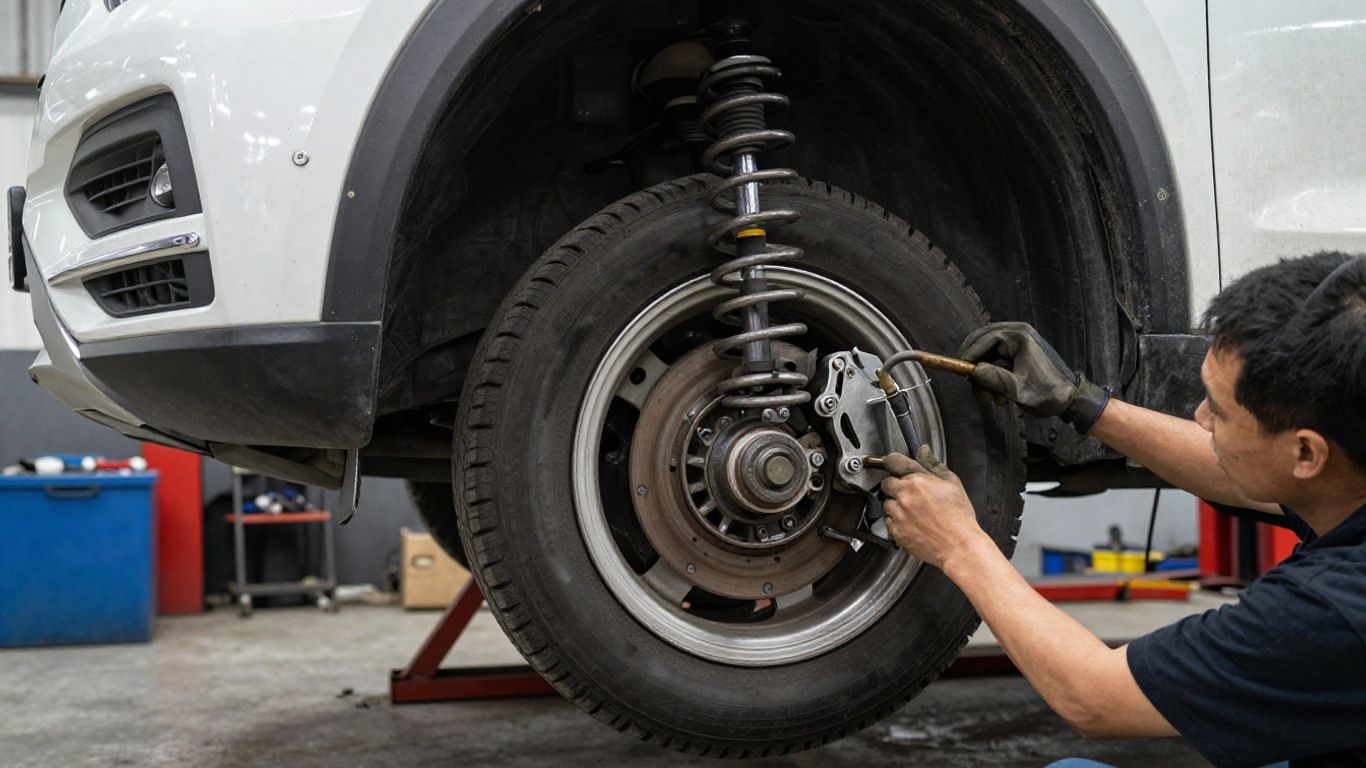
Clunking, rattling, or squeaking over bumps
A repeated clunk or rattle over bumps may come from a loose or worn suspension component, including a mount or fastener near a strut. Squeaking can have several causes and is not, by itself, a reliable diagnosis. Pay attention to whether the sound occurs during turns, over small bumps, or when the suspension compresses. Describe those conditions during an inspection rather than asking for a strut replacement based on sound alone.
Excessive bouncing or a rough ride
If the vehicle continues to bounce after a bump or feels unusually unsettled, the suspension may not be controlling movement as well as it should. A rough ride can also result from tire pressure, tire condition, or other worn components. Notice whether the change is consistent and whether it affects one end or the whole vehicle. An inspection can separate strut wear from those other possibilities.
Uneven tire wear or changes in handling
Uneven tire wear can point to alignment or suspension concerns, but it does not identify a strut as the cause on its own. Likewise, a drifting or less settled feel may have more than one explanation. Check tire condition and pressure, and note any recent impact or repair. Pairing those observations with a suspension inspection is more useful than replacing parts by guesswork.
Visible fluid leaks or damage to a strut
A visibly damaged strut or fluid around its body deserves a closer look. Dirt and road grime can make it hard to tell whether a surface is damp from a leak, so a technician may need to clean and inspect the area. Also check nearby components for damage or looseness. Avoid treating a visual clue as a complete diagnosis until the assembly and surrounding suspension have been assessed.
Choosing the right struts for your SsangYong
The right part depends on the vehicle’s exact configuration, not just its make or model name. Differences in year, trim, drivetrain, and suspension setup can affect fitment. Before buying, compare the vehicle details with a parts catalog or a knowledgeable supplier. A careful check up front is simpler than discovering a mismatch during installation.
Identify your model, year, trim, and drivetrain
Start with the full model name, model year, trim, and drivetrain, then verify those details against the vehicle identification number where possible. Some vehicles have different parts across production years or equipment levels. Front and rear assemblies can differ as well. Give the supplier all relevant details instead of relying on a broad search for “SsangYong struts.”
Check OEM numbers and vehicle-specific fitment
An original equipment number can help identify a matching replacement, but confirm that it applies to the exact vehicle and position. Catalog listings may include notes or superseded numbers, and those details should be checked before ordering. This compact comparison can help organize the decision:
| Check | What to confirm | Why it matters |
|---|---|---|
| Vehicle details | Year, trim, and drivetrain | Narrows the fitment search |
| Position | Front or rear, left or right if applicable | Avoids ordering the wrong assembly |
| Part reference | OEM number and catalog notes | Helps confirm a compatible replacement |
| Included items | Mounts or hardware listed with the part | Clarifies what else may be needed |
Treat the table as a starting point, not a substitute for a fitment lookup. If catalog details conflict, pause and ask the supplier or repair shop to verify before installation.
Compare OEM, aftermarket, and performance options
Replacement choices may include genuine parts, aftermarket parts, and products marketed for performance use. Compare stated fitment, included components, warranty terms, and intended use rather than assuming that one category always suits every driver. A part should be appropriate for the vehicle and its suspension setup. If your priority is restoring ordinary road behavior, make that clear when discussing options.
Decide whether to replace one strut or a pair
The decision depends on the condition of both sides, the vehicle’s guidance, and the repair plan. Replacing a pair on the same axle may help maintain more consistent behavior when both units have similar wear, but an individual replacement may be appropriate in some cases. Ask the technician to explain the inspection findings and recommendation. Consider the related labor and alignment needs as part of the choice.
What to expect during strut replacement
A replacement is more than removing one part and fitting another: access, spring design, and related component condition all affect the job. A qualified technician should follow the vehicle’s service information and use appropriate equipment. Ask what will be inspected and whether the quote includes the work needed after installation. That conversation also helps clarify why labor time can vary.
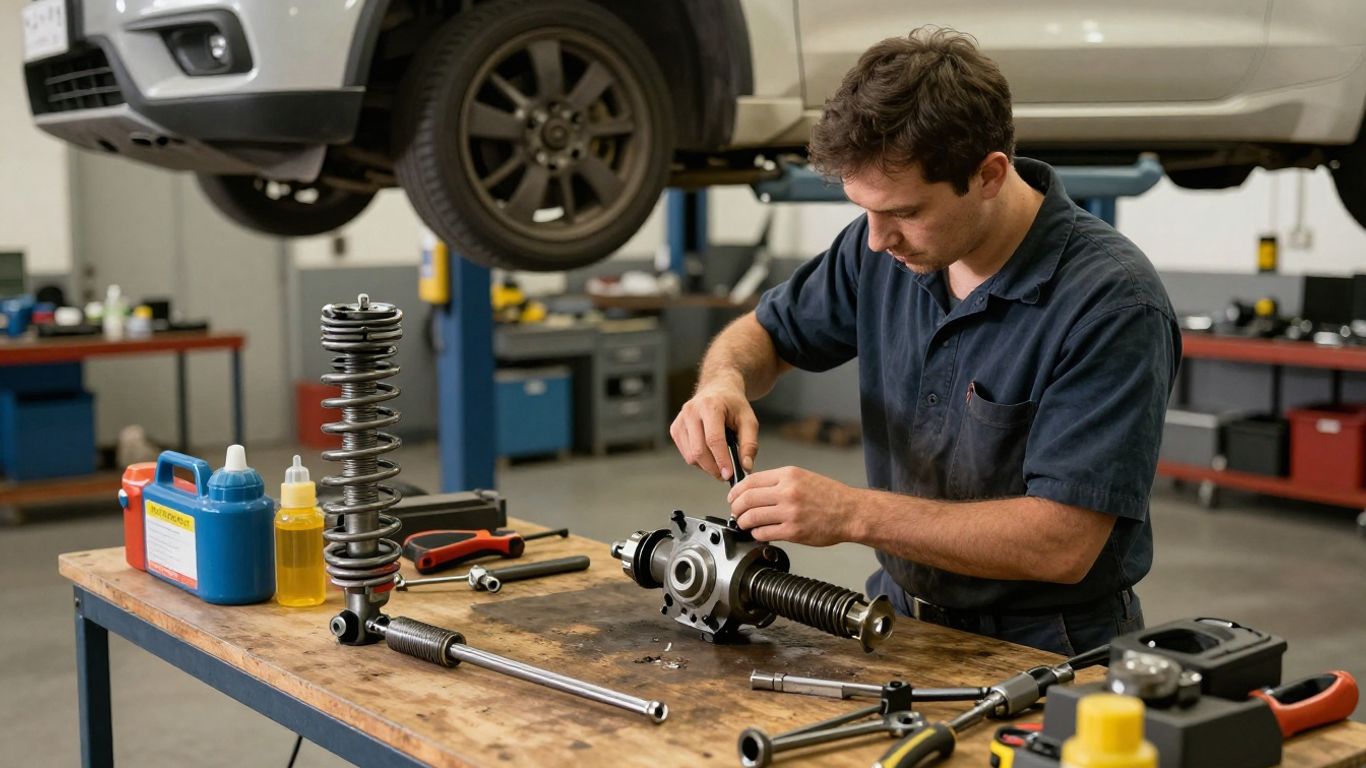
Inspect related suspension components before installation
Before fitting a new strut, inspect nearby parts such as mounts, bearings, springs, bushings, and fasteners for wear or damage. If one of these is the actual source of a noise, replacing only the strut may not address it. A technician can explain any additional recommendation with the inspection findings. For general preventive care beyond vehicles, web searches may also surface unrelated subjects such as solar hail protection; keep those separate from suspension diagnosis.
Understand why a spring compressor may be required
Some strut assemblies include a spring that remains under substantial tension. When a spring must be transferred to a replacement assembly, a suitable spring compressor may be required to contain it safely. This is hazardous work without the right tools and procedure, so it is generally best left to a trained technician. The exact process depends on the assembly design.
Replace mounts and hardware when needed
A technician may recommend replacing a mount, bearing, or hardware if inspection shows wear, damage, or a need for new one-time-use fasteners. Whether those items come with the replacement strut varies, so check the parts list before authorizing the job. A repair quote should distinguish required parts from optional recommendations. That makes it easier to understand what the total covers.
Get a wheel alignment after the repair
Strut work can disturb suspension geometry, so an alignment check is often appropriate after installation. The technician can advise whether the vehicle’s design and the work performed call for adjustment. Ask for the alignment to be included in the estimate or listed separately. Keeping the tires properly aligned helps avoid unnecessary wear and supports predictable handling.
SsangYong strut replacement costs and factors
There is no single reliable price for a strut replacement without knowing the vehicle, parts, and local labor rates. The total can include more than the strut itself, especially if related components need attention. Ask for an itemized estimate so you can compare like with like. If you are researching a repair business, search results may include material on repair shop SEO, which addresses business marketing rather than the parts or labor in your quote.
Compare parts and labor costs
Parts and labor are usually separate elements of an estimate, and the time involved can vary with access and assembly design. Compare quotes that specify the part, quantity, labor, and any additional work. A cheaper part price does not necessarily mean a lower finished bill if the estimate excludes related items. If a quote is unclear, ask the shop to explain each line.
See how model and strut type affect the price
Different model years and suspension configurations can call for different parts and labor procedures. A complete strut assembly may differ in price and included components from a part that requires transferring other pieces. Confirm that the quoted part matches the vehicle and axle position. For unrelated browsing, broad results can also include Surge Platinum Mastercard information; it is not a guide to repair pricing.
Account for mounts, springs, and alignment
Mounts, springs, hardware, and alignment can change the final amount if inspection or the repair procedure calls for them. Ask whether the estimate includes these items, and whether each recommendation is necessary now or can be monitored. A clear breakdown helps prevent surprises when the vehicle is ready. Keep the scope of the repair focused on the diagnosed issue.
Evaluate a repair quote and warranty coverage
Read the estimate for the exact parts, labor, alignment, and warranty terms. Check what the warranty covers, how long it applies, and whether it includes parts, labor, or both. Ask how the shop handles a fitment issue or a concern after installation. Broad online results can wander into unrelated subjects, including safe earring materials, so judge a quote by its actual repair details.
How to maintain struts and extend their service life
Struts wear over time, and driving conditions can affect how quickly suspension parts need attention. Routine checks and prompt follow-up on new symptoms can help catch problems before they lead to additional wear. Maintenance cannot guarantee a particular service life, but it can make changes easier to notice. Keep records of repairs and recurring symptoms.
Check suspension components during routine service
During routine service, ask for tires and visible suspension components to be checked for unusual wear, damage, looseness, or signs of leakage. A brief inspection is not always a definitive diagnosis, but it can identify something that needs a closer look. Keep track of persistent noises or changes in ride quality. A sensible search can also turn up unrelated local services such as Saakshi’s Kitchen; distinguish those results from vehicle maintenance advice.
Adjust driving habits on rough roads
Slow down for potholes, broken pavement, and speed bumps when it is safe to do so. Avoid striking a curb or driving quickly over a rough section, since hard impacts can stress tires and suspension parts. If a road cannot be avoided, reduce speed and keep both hands on the wheel. A gentler approach can reduce unnecessary jolts, though it cannot prevent all wear.
Keep tires properly inflated and aligned
Use the recommended tire pressure for the vehicle and check it regularly, including after major temperature changes. Underinflated or overinflated tires can affect ride and handling, making suspension symptoms harder to interpret. Keep alignment in mind after suspension work or when wear patterns suggest a problem. Proper tire care supports a more useful assessment of the rest of the suspension.
Address suspension symptoms before they worsen
If a new clunk, leak, or handling change persists, arrange an inspection rather than waiting for several symptoms to appear. Record when it happens and whether it changes with speed, turns, or road surface. Ask for the diagnosis and recommended next steps in clear terms. Early investigation can help identify the cause before other components are affected.
Conclusion
Choosing and replacing struts starts with a reliable diagnosis and exact vehicle fitment, then continues with a clear repair plan and a post-repair check. Look beyond the part price to related components, labor, alignment, and warranty coverage. When a symptom appears, an inspection is a better first step than guessing at the cause.
Frequently Asked Questions
How long do struts usually last?
Service life varies with vehicle design, road conditions, load, and maintenance. Follow the vehicle’s service guidance and have symptoms or visible damage inspected rather than relying on a fixed mileage interval.
Can I drive with a worn strut?
A worn or damaged strut can affect ride and handling, and the underlying cause may be more serious than it first appears. Arrange an inspection promptly, especially if control feels compromised or the component is visibly damaged.
Should struts be replaced in pairs?
It depends on the condition of both sides, the vehicle’s guidance, and the technician’s findings. Ask whether the other strut has comparable wear and why a single-side or paired repair is recommended.
Do new struts always require an alignment?
Not every design or repair is identical, but strut work can affect suspension geometry. Ask the technician whether an alignment check or adjustment is appropriate for the vehicle and work performed.
What causes a clunk after strut replacement?
A clunk may come from a loose fastener, mount, another suspension part, or an installation issue. Have the repair checked rather than assuming the new strut itself is defective.
Can a strut leak be repaired?
Whether a leaking unit can be serviced depends on its design and the applicable repair guidance. A technician can determine whether replacement is needed and check for related damage.
What information do I need to order a replacement strut?
Have the vehicle’s year, model, trim, drivetrain, and vehicle identification number available. Confirm the axle position and any relevant part number with a reliable fitment source before ordering.