

Key Takeaways
A throttle body problem can look like several other engine faults, so diagnosis should come before buying parts. A careful fitment check matters just as much as the repair itself.
- The throttle body meters air entering the engine, while sensors and engine controls help manage its operation.
- Rough idle, stalling, hesitation, or warning lights can have causes beyond the throttle body.
- Use the vehicle’s year, model, engine code, diagnostic data, and inspection findings to guide diagnosis.
- Cleaning may help when deposits are the issue; damaged components or persistent faults may call for replacement.
- Compare part numbers, connectors, seals, and any required adaptation procedure before considering the job complete.
What the throttle body does in a Ssangyong
The throttle body sits in the engine’s intake path and regulates the air entering the engine. Its operation affects how the engine responds to the accelerator, but it is only one part of a larger system. Knowing its basic role makes it easier to separate a likely throttle fault from a symptom that merely feels similar.
How it controls airflow into the engine
A plate inside the throttle body opens or closes to change the amount of air that can pass into the intake. When the driver presses the accelerator, the engine is expected to respond by adjusting airflow and coordinating fuel delivery. Deposits around the plate can interfere with smooth movement or alter the airflow at small openings, though that alone does not prove the part has failed.
Electronic throttle bodies and their components
On an electronic system, the accelerator pedal sends a signal to the engine control unit, which commands a motor in the throttle body. Position sensors report how far the plate has moved, allowing the system to compare the requested position with the actual one. The full assembly matters: a motor, sensor, wiring fault, or mechanical obstruction can each produce a problem that feels like a single “throttle body” issue.
How the throttle body works with the engine control system
The engine control system uses throttle-position information alongside other inputs to manage engine operation. If the requested and reported positions do not agree, or if a circuit signal falls outside expected limits, the system may store a fault code or limit engine response. A code is a useful clue, not a verdict; it points toward a circuit or condition that needs testing rather than automatically identifying a part to replace.
Common signs of throttle body problems
A dirty or faulty throttle body may contribute to unstable running, hesitation, or reduced power. Those signs can be unsettling, especially when they appear together, but none is exclusive to this component. Consider when the symptom occurs and whether it changes with engine temperature, load, or recent work before settling on a cause.
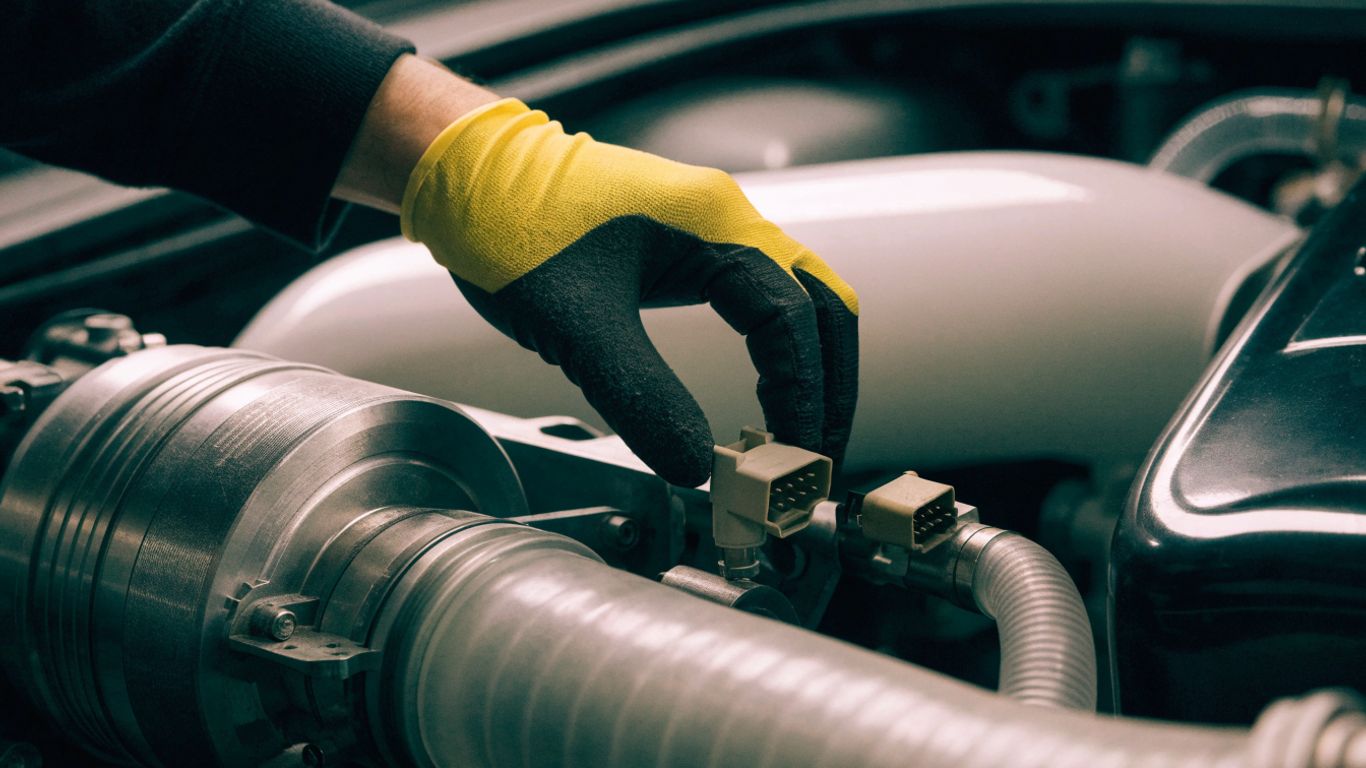
Rough idling or stalling
An engine that idles unevenly, dips in speed, or stalls may not be receiving the expected airflow at idle. Deposits, an electrical fault, an intake leak, or another engine-management issue can all be involved. If the engine stalls repeatedly, avoid relying on it in traffic and arrange a proper inspection rather than trying to compensate by repeatedly revving it.
Hesitation, poor acceleration, or reduced power
A pause when accelerating or a noticeable loss of response can occur if airflow control is inconsistent. The same sensation can also come from fuel delivery, ignition, a sensor, or a transmission-related issue, so a road test alone cannot confirm a throttle body fault. Note whether the hesitation is constant or intermittent and whether a warning light appears at the same time.
Warning lights and throttle-related fault codes
A warning light may come on when the control system detects an abnormal signal or operation. Codes can help narrow the investigation, but their wording should be interpreted alongside live data and a physical check. For example, a circuit-related code may lead a technician to inspect a connector or wiring before deciding that the throttle body itself needs replacement.
Why similar symptoms can have other causes
Symptoms overlap because the engine depends on several systems working together. A cracked intake hose, weak electrical connection, air leak, or unrelated engine fault can mimic a throttle problem. The comparison below is a starting point for investigation, not a substitute for testing the vehicle.
| Symptom | Possible throttle-related cause | Other checks to consider |
|---|---|---|
| Uneven idle | Deposits or inconsistent plate position | Intake leaks, ignition, sensors |
| Hesitation | Delayed or incorrect throttle response | Fuel delivery, wiring, transmission |
| Warning light | Throttle-position or circuit fault | Stored codes, connectors, other sensors |
Treat the table as a way to organize observations, not as a parts-ordering guide. A confirmed diagnosis should connect the symptom to test results and inspection findings.
How to diagnose a throttle body issue
A sound diagnosis starts with the exact vehicle configuration, then combines electronic checks with a careful inspection. Different engines and model years may use different assemblies or procedures, so avoid assuming that a part shown for a similar vehicle will fit. Record what the vehicle is doing before clearing codes or disconnecting components, since that information can help preserve useful diagnostic clues.
Check the vehicle’s year, model, and engine
Write down the model year, model, engine size or code, and any relevant trim or market details. The vehicle identification number can help a parts supplier or repairer confirm the configuration. Even where two vehicles look alike, variations in engine, connector, or calibration can change which throttle body is appropriate.
Read diagnostic trouble codes and live data
Use a suitable scan tool to retrieve stored and pending codes, then review relevant live data where available. A technician may compare the requested throttle position with the reported position and check whether readings change smoothly as commanded. Keep the original codes and freeze-frame information if available; clearing them too early may remove context without resolving the underlying fault.
For an orderly first pass, keep the checks simple and record what you find:
- Note the exact warning lights and when they appear.
- Save stored and pending fault codes before clearing anything.
- Observe whether idle or acceleration symptoms are constant or intermittent.
- Compare scan-tool readings with the vehicle’s reported symptoms.
Those notes help distinguish a repeatable electrical or mechanical problem from a symptom that appeared only once. If testing involves exposed wiring or a running engine, follow the vehicle’s service information or leave the work to a qualified technician.
Inspect the throttle body and electrical connections
With the engine off, inspect the intake path and accessible throttle body area for obvious contamination, loose connectors, damaged wiring, or signs that a hose has shifted. Do not pull on wires or probe terminals casually; connector damage can create a second fault. If the plate or assembly needs to be moved or tested, follow the correct service procedure for that vehicle.
Rule out intake leaks and other possible faults
Check the intake ducting, clamps, and nearby hoses for cracks or poor seating, and consider other causes suggested by the codes and symptoms. A diagnostic process should test likely alternatives rather than treating every airflow-related code as proof of a failed assembly. A repair quote for a cleaning service, such as this Korando throttle body clean, describes a service option; it does not establish that cleaning is the right diagnosis for a particular vehicle.
Cleaning or replacing the throttle body
Cleaning and replacement solve different problems. Removing deposits may be worthwhile when inspection supports that approach, while an internal electrical or mechanical failure may require a replacement assembly. The correct choice depends on the part’s condition, diagnostic results, and the service procedure for the specific vehicle.

When cleaning may be appropriate
Cleaning may be considered when visible deposits are restricting the plate area and the throttle body otherwise appears intact. Use the vehicle’s service guidance to determine whether the unit can be cleaned in place or should be removed. Cleaning is not a cure for damaged wiring, a failed motor, or a sensor that is reporting incorrectly.
When replacement is the better option
Replacement may be appropriate when testing identifies an internal failure, the housing or plate is damaged, or the fault remains after a suitable cleaning and required checks. Before ordering, compare the part number and confirm the exact vehicle fitment. A listing for an electronic throttle body or an Actyon 2.3 throttle assembly can help identify what a seller describes, but the listing alone is not confirmation that a specific vehicle needs that part.
Risks of using unsuitable cleaners or forcing the throttle plate
Some cleaners can harm coatings, seals, or electrical components, and forcing an electronic throttle plate can damage its mechanism. Use only a product and method approved for the assembly, and do not spray directly into sensitive electrical areas. If the service instructions do not clearly permit manual movement or in-place cleaning, stop and check the repair information before proceeding.
What to check after cleaning or installation
After the work, check that the intake duct and clamps are secure, connectors are fully seated, and no tools or loose items remain in the engine bay. Start the vehicle and observe idle and warning lights, then confirm whether the original symptom has changed. Some vehicles require a specified relearn or adaptation procedure; use the correct service information rather than assuming that a battery reset will complete it.
Choosing a compatible Ssangyong throttle body
A compatible part must match the vehicle, not just the general description “throttle body.” Check the engine code, original part number, connector, and any supplier fitment notes before purchase. Online search results can mix unrelated categories—a dishwasher repair, long-distance move, Stoic Futurism, servant leadership, or single-bed topper page is not evidence of automotive fitment—so verify that a result is actually about the component and vehicle in question.
Match the part to the vehicle and engine code
Start with the vehicle identification details and engine code, then compare them with the seller’s stated application. A broad model name may cover multiple engines or production years. If a listing refers to an original throttle body for a 2.0 XDi engine, treat that description as a fitment lead to verify against the vehicle, not as proof that it suits every version of that model.
Compare the original part number and connector
If the existing assembly is accessible, record its part number and compare the connector shape and pin arrangement with the proposed replacement. Do not rely on appearance alone: similar housings can have different electrical specifications or applications. A listing for part number I1621413025 is useful for checking that reference, but the number should still be matched to the exact vehicle configuration.
Check whether the part is genuine, aftermarket, or remanufactured
Ask the supplier to identify whether the part is genuine, aftermarket, or remanufactured and what is included in the sale. Check the stated condition, warranty terms, and return policy, particularly if fitment is uncertain. These details help you compare options without assuming that a label alone guarantees suitability or quality.
Confirm fitment with a supplier before ordering
Give the supplier the vehicle identification number, year, model, engine code, and original part number where available. Ask for written confirmation of fitment and whether any gasket, seal, or related item is supplied. Clear confirmation before purchase can prevent delays and avoid the cost of returning an incompatible part.
What to expect during replacement
Replacement is a repair procedure, not simply a matter of swapping a visible component. Access, fasteners, sealing surfaces, and electrical connections vary by vehicle, and the correct sequence should come from service information. If you are not experienced with engine work or electrical diagnosis, having a qualified technician complete the job is the safer choice.
Prepare the vehicle and disconnect the battery if required
Park on a level surface, allow the engine to cool, and keep the keys away from the vehicle while preparing to work. Follow the vehicle’s service information to determine whether the battery must be disconnected and whether doing so affects settings or procedures. Gather the correct tools and replacement seals before removing anything, so the intake is not left exposed longer than necessary.
Remove and install the throttle body safely
Remove only the components needed for access, noting hose and connector positions as you go. Keep dirt and loose material out of the intake, and avoid prying against the housing or damaging the sealing surface. Install the replacement according to the specified sequence and tightening requirements rather than guessing at fastener torque.
Check seals, hoses, and electrical connections
Inspect the gasket or seal and replace it if required by the service procedure or if it is damaged. Refit hoses and clamps securely, then confirm that the connector locks into place without strained wiring. A small air leak or poorly seated plug can cause symptoms after installation and make it difficult to tell whether the original repair worked.
Complete any required relearn or adaptation procedure
Some systems need a throttle-position relearn or adaptation after cleaning, battery disconnection, or replacement. The exact requirement varies, so consult vehicle-specific repair information or a qualified technician. Once any required procedure is complete, check for warning lights and codes and confirm that idle and accelerator response are stable under safe conditions.
Conclusion
A throttle body can contribute to rough idle, stalling, hesitation, or reduced power, but those symptoms are not enough to diagnose it on their own. Check codes, live data, wiring, intake condition, and vehicle fitment before cleaning or replacing parts, then follow the correct installation and relearn procedure. Careful verification is usually more useful than guessing from a symptom or a product listing.
Frequently Asked Questions
What does a throttle body do?
It regulates how much air enters the engine through the intake, responding to driver input and the engine control system.
Can a dirty throttle body cause rough idling?
Deposits can interfere with airflow or plate movement and may contribute to rough idle, but other faults can cause the same symptom.
Does a warning light mean the throttle body has failed?
No. A warning light and related code indicate a detected condition that needs diagnosis; wiring, connectors, or other systems may be involved.
Is cleaning always better than replacement?
No. Cleaning may help with deposits on an otherwise serviceable assembly, while internal damage or an electrical failure may require replacement.
Can I force the throttle plate open to clean it?
Do not force it unless the vehicle-specific service procedure explicitly permits that method. Forcing an electronic plate can damage the mechanism.
How can I check whether a replacement part will fit?
Compare the vehicle year, model, engine code, original part number, and connector, then confirm fitment with the supplier before ordering.
Does a replacement throttle body need to be relearned?
Some vehicles require an adaptation or relearn procedure after service. Check the repair information for the specific vehicle rather than assuming one procedure fits all.