

Key Takeaways
A mass air flow (MAF) sensor is one possible source of drivability trouble, but similar symptoms can come from other parts of the intake or engine system. A careful diagnosis and exact fitment check help avoid replacing the wrong component.
- A MAF sensor measures incoming air so the engine control system can use that information when managing fuel delivery.
- Rough idle, hesitation, reduced power, and a warning light are clues, not proof that the sensor has failed.
- Check diagnostic codes alongside live data, wiring, the intake path, and possible air leaks.
- Use only cleaner intended for MAF sensors, and avoid touching the delicate sensing element.
- Confirm replacement fitment using the vehicle’s model, year, engine, connector, and part number.
What the mass air flow sensor does
The mass air flow sensor sits in the engine’s intake path and reports information about the air entering the engine. That reading helps the engine control system make decisions about fuel delivery and operation. Understanding its role makes it easier to tell what a fault might explain—and what it cannot prove.
How the sensor measures incoming air
Many MAF sensors use a heated element: as air passes over it, the sensor detects changes in heat and converts them into an electrical signal. The vehicle’s control system interprets that signal as information about incoming airflow. The specific design and expected readings can vary, so use vehicle-specific service information when checking a particular Ssangyong mass air flow sensor.
How its readings affect fuel delivery and engine performance
The engine control system uses airflow information along with other inputs to manage fuel delivery. If the signal is inaccurate, the engine may not respond as expected when idling, accelerating, or carrying a load. A single symptom is not a diagnosis: fuel, ignition, wiring, and air leaks can create similar behavior.
How the MAF sensor differs from a MAP sensor
A MAF sensor measures air moving through the intake, while a manifold absolute pressure (MAP) sensor measures pressure inside the intake manifold. Some vehicles use one approach, and others may use both as part of a broader engine-management system. They are not interchangeable parts, and a fault in one should not be assumed from symptoms alone.
Common signs of a faulty Ssangyong mass air flow sensor
A sensor problem can affect how smoothly the engine runs, but its symptoms overlap with many other faults. Treat changes in idle, acceleration, or fuel use as reasons to investigate rather than as confirmation that the MAF sensor is bad. Note when the issue occurs and whether it changes with temperature, load, or engine speed.
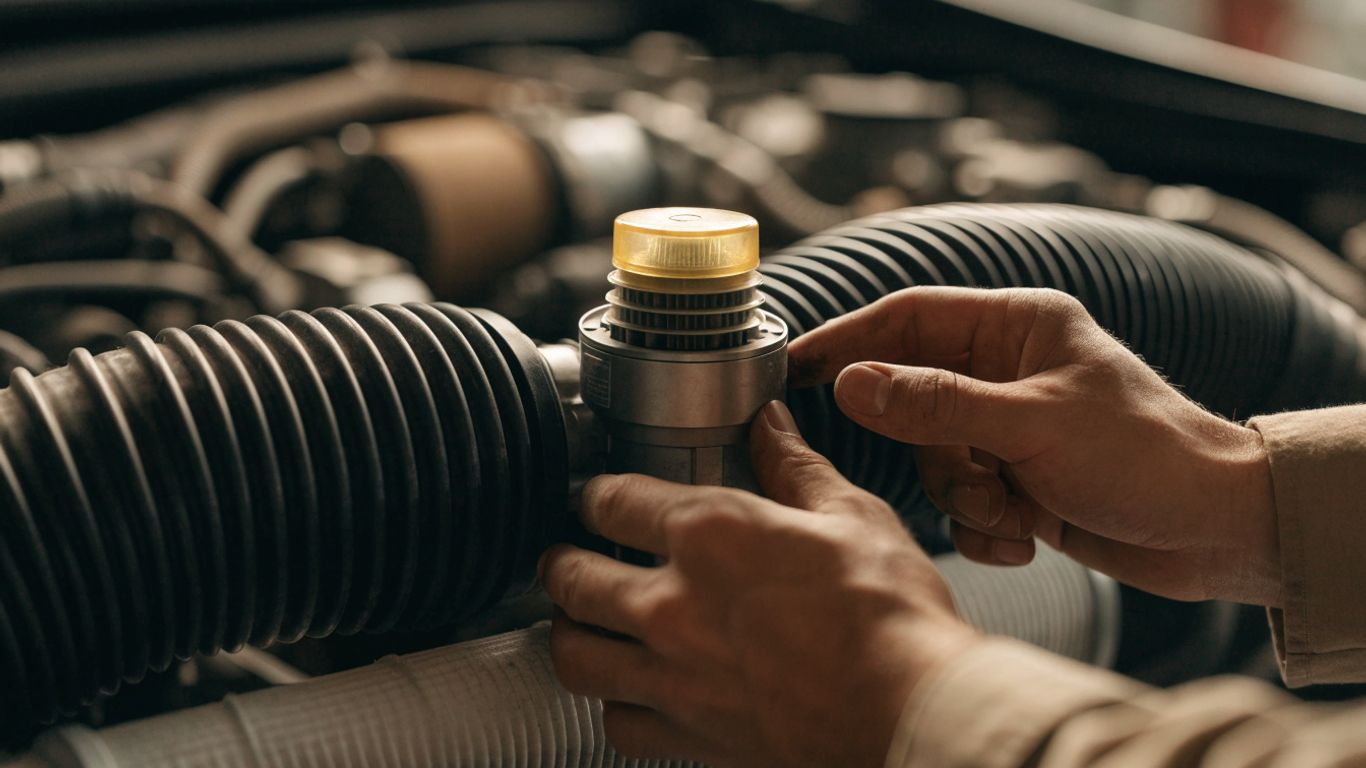
Rough idling, hesitation, or stalling
An engine that idles unevenly, hesitates as the accelerator is pressed, or stalls may be receiving incorrect airflow information. But these behaviors can also result from an air leak, a dirty throttle body, fuel-delivery trouble, or an electrical problem. The pattern matters: record whether it happens at startup, at idle, or during acceleration before testing parts.
Reduced power and poor fuel economy
A change in power or fuel economy can accompany a faulty airflow reading, especially when the engine’s response feels inconsistent. Those changes are broad clues, not MAF-specific evidence; driving conditions and unrelated engine faults can affect them too. Compare the vehicle’s current behavior with its normal baseline, and look for other signs before deciding on a repair.
Check engine light and possible fault codes
A check engine light may appear when the control system detects a problem involving airflow readings or the circuit, but a code identifies a diagnostic direction—not necessarily a failed sensor. Code definitions and test procedures vary by vehicle. Record all stored and pending codes before clearing anything, since that information can help guide the next checks.
How to diagnose the sensor
A useful diagnosis combines scan-tool information with a physical inspection. Start with what the vehicle is reporting, then check whether the sensor and intake system could reasonably produce those readings. If the results do not agree or the required tests are unfamiliar, a qualified technician can help prevent an unnecessary parts swap.
Scan for codes and review live data
Read stored and pending codes, then compare live airflow data with the conditions under which the problem occurs. A reading that is implausible or does not change as expected may justify further testing, but interpretation depends on the engine and service specifications. This overview helps separate the main clues from the next checks:
| Check | What it can indicate | What to do next |
|---|---|---|
| Stored or pending code | A system or circuit concern | Follow the vehicle-specific diagnostic procedure |
| Airflow live data | Whether the signal appears plausible | Compare with the correct service specifications |
| Engine behavior at idle | Whether the complaint is repeatable | Note conditions and check for other causes |
| Connector or wiring fault | A possible interruption or poor connection | Inspect and test the circuit as specified |
Use the table as a starting point, not a substitute for the vehicle’s test procedure. For an additional reference, air-flow sensor videos include listed part-number cross-references; confirm any number against the vehicle itself before relying on it.
Inspect the sensor, connector, and intake system
With the engine off, inspect the sensor housing and nearby intake ducting for visible damage, loose clamps, or disconnected hoses. Look over the electrical connector and wiring for corrosion, damaged insulation, or a poor fit, without pulling on the wires. A listing for a mass air flow sensor describes compatibility with select Actyon, Kyron, Rexton, and Rodius applications, but that broad listing is not enough to confirm fitment for an individual vehicle.
Rule out vacuum leaks and other possible causes
Air entering the engine downstream of the sensor can make the measured airflow differ from the air the engine actually receives. Inspect hoses and connections, and consider other possible causes such as fuel, ignition, or electrical faults. Avoid replacing the MAF simply because a leak or unrelated fault produces similar symptoms; diagnosis should point to the component before it is changed.
Cleaning the mass air flow sensor
Cleaning may help if contamination is affecting the sensor, but it will not repair a failed electrical component or damaged sensing element. First check whether the sensor is accessible and whether the manufacturer’s service information permits cleaning. Handle it gently: the sensing element can be delicate, and a rushed cleaning attempt can make the problem worse.

When cleaning may help
A coating of dust or oily residue may interfere with the sensor’s ability to read airflow. If inspection suggests contamination and the service information allows cleaning, a dedicated MAF cleaner may be appropriate. If the housing, wiring, or sensing element is damaged—or cleaning does not change the symptoms—continue diagnosis rather than repeating the treatment.
How to use MAF-safe cleaner
Follow the cleaner’s label and the vehicle’s service instructions. The general approach is to remove the sensor carefully, apply only a product labeled for MAF sensors, and allow it to air-dry fully before reinstalling it. A few careful steps are more useful than trying to scrub the element:
- Switch off the ignition and follow any battery-disconnection guidance for the vehicle.
- Release the connector and remove the sensor without pulling on its wiring.
- Spray the sensing area with MAF-safe cleaner as directed on the product label.
- Let the part dry completely before reinstalling it.
This approach avoids unnecessary contact with the sensing element. If you are unsure how the sensor comes out or how the connector releases, stop and consult the service information or a technician.
What to avoid when handling the sensor
Do not touch, wipe, or brush the sensing element, and do not use household solvents or compressed air unless the vehicle’s service information specifically permits it. Keep moisture away from electrical connections and do not reinstall the sensor while it is still wet. If the part looks damaged, cleaning is not a substitute for a proper electrical and mechanical diagnosis.
Replacing the sensor
Replacement makes sense when testing supports a sensor fault and other likely causes have been checked. Before ordering, verify the exact application rather than relying on a model name alone. Once the right part is confirmed, careful removal and a post-installation check help catch a loose connection or intake leak before the vehicle returns to regular use.
Confirm fitment by model, year, and engine
Confirm the vehicle’s model, model year, engine, and any relevant production details using reliable parts information or the vehicle identification number. Compare the part number and connector shape, too; similar-looking sensors can have different applications. One listing for Korando and Musso sensors gives specific part numbers and application details, which still need to be checked against the exact vehicle.
Remove the old sensor and install the replacement
Work with the ignition off and follow the vehicle’s service procedure. Disconnect the electrical connector carefully, release the sensor from the intake, and note the orientation and any seals before removing it. Fit the replacement in the same direction, make sure the seal and duct connections sit correctly, then reconnect the wiring without forcing the plug.
Clear fault codes and check operation afterward
After installation, follow the service procedure for clearing codes; do not erase diagnostic information before recording it. Start the engine and check that it idles normally, that the warning light behaves as expected, and that the connector and intake joints are secure. A test drive can help confirm whether the original complaint remains, but persistent symptoms call for further diagnosis rather than another assumption.
Choosing the right replacement part
Choosing a replacement is as much about exact compatibility as price. Parts listings can cover several engines or production years, so treat broad fitment descriptions as a first filter and verify details before purchase. Our car parts network connects customers with quality used, genuine, and aftermarket parts; whichever route you choose, make sure the part matches the vehicle and the seller’s terms are clear.
Compare the part number and connector
Match the number on the original part, where available, with a verified catalogue listing and the vehicle’s specifications. Compare the connector shape, mounting points, and housing design as well. If information conflicts, pause and confirm with a knowledgeable parts supplier rather than guessing from appearance alone.
Weigh OEM and aftermarket options
A genuine part, a quality aftermarket part, or a suitable used part may each be worth considering depending on availability and budget. Check that the listing identifies the actual application and part number, and weigh the condition and warranty rather than assuming a label guarantees compatibility. Our car parts network connects customers with these types of parts across Melbourne, Sydney, Brisbane, and nationwide, so buyers can compare availability without treating every listing as interchangeable.
Check warranty, seller, and return terms
Before ordering, read the warranty, return window, and any conditions that apply if the part has been installed. Check who is responsible for confirming fitment and what information the seller needs if a mismatch occurs. Careful research also matters in unrelated areas: readers may be comparing a Sol scanner, checking case status, assessing metalwork services, learning about Lluis Law, or reviewing garage-door safety. Those topics are distinct, but each calls for checking the specific details that apply.
Conclusion
A mass air flow sensor can affect engine behavior, but rough running or a warning light alone does not prove it has failed. Check codes, live data, wiring, and the intake for other causes before cleaning or replacing anything, then confirm the replacement by exact vehicle fitment. A few careful checks can save time and help avoid installing the wrong part.
Frequently Asked Questions
These answers cover common questions about identifying, cleaning, and replacing a MAF sensor. Vehicle-specific service information remains the best guide for exact tests and procedures.
What does a mass air flow sensor do?
It measures air entering the engine and sends that information to the engine control system, which uses it alongside other inputs when managing operation and fuel delivery.
Can a faulty MAF sensor cause rough idle?
It can contribute to rough idle, but air leaks, fuel or ignition problems, and electrical faults can cause similar symptoms. Testing is needed to identify the cause.
Will a check engine light always come on if the MAF sensor is faulty?
Not necessarily. A warning light or diagnostic code may appear, but the absence of one does not by itself confirm that the sensor is working correctly.
Can I clean a mass air flow sensor myself?
Possibly, if the vehicle’s service information permits it and you use cleaner specifically labeled for MAF sensors. Avoid touching the sensing element and let it dry fully before reinstalling.
Can I use regular electrical contact cleaner on a MAF sensor?
Use only a product labeled as safe for MAF sensors unless the vehicle or product instructions explicitly say otherwise. A cleaner that is not suitable may damage the sensing element or leave residue.
How do I know which replacement sensor fits my vehicle?
Check the model, year, engine, part number, connector, and vehicle-specific catalogue information. Confirm conflicting details with a reliable supplier before ordering.
Should I replace the sensor if cleaning does not help?
Not automatically. Persistent symptoms may point to wiring, an air leak, or another engine issue, so diagnose the fault before deciding whether the sensor needs replacement.